History may not repeat, but it often rhymes. In the current diplomatic overtures toward Moscow, that rhyme is sounding uncomfortably familiar to some veteran observers.
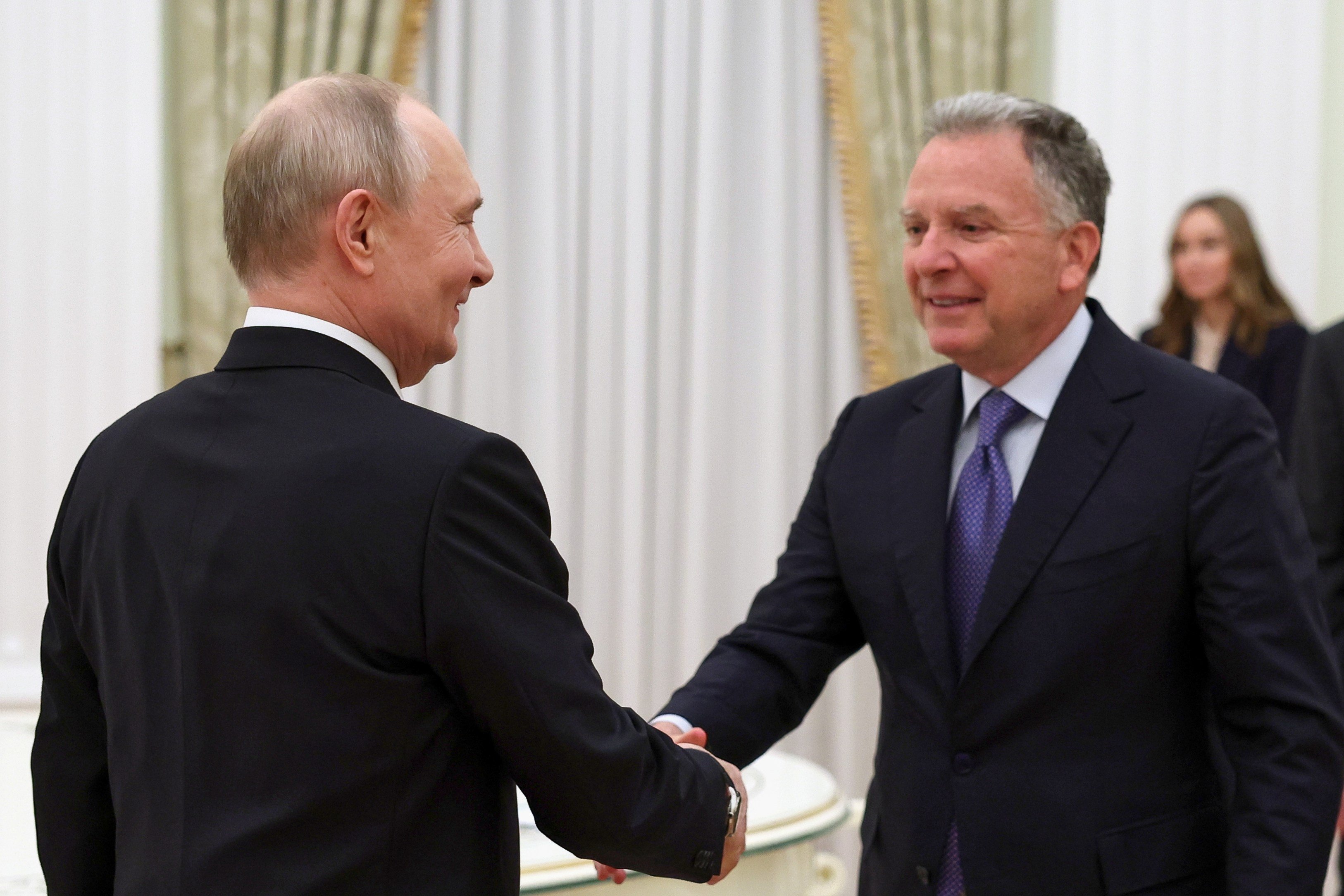
Steve Witkoff, the administration's special envoy, has been publicly courting Russian President Vladimir Putin with remarkable warmth, even calling him "a humanitarian." That praise has drawn sharp comparisons to British Prime Minister Neville Chamberlain's ill-fated trust in Adolf Hitler before World War II. A former senior White House official under George H.W. Bush put it bluntly: "Witkoff says he trusts Putin. It's the same thing that Neville Chamberlain said about [Adolf] Hitler."
Chamberlain, despite his later reputation for appeasement, never harbored such illusions. In September 1938, weeks before signing the Munich Agreement that allowed Hitler to dismantle Czechoslovakia, Chamberlain privately described the Nazi leader as "a gangster," "the commonest little dog I have ever seen," and "entirely undistinguished." He saw Hitler for what he was—a brutal thug, not a humanitarian.
Putin, for his part, has played the gracious host, telling Witkoff and fellow negotiator Jared Kushner, "We are comfortable working with you." But as with Hitler's charm offensive on Chamberlain, public pleasantries may mask contempt. Hitler privately mocked Chamberlain as "the old a——"; Putin's private view of his American interlocutors remains unknown.
The historical parallels extend beyond personal trust. Hitler justified his seizure of the Sudetenland by claiming ethnic Germans were oppressed, while also demanding a revision of the European security order imposed by the Versailles Treaty. Putin echoes that rhetoric, arguing for the incorporation of four Ukrainian oblasts with Russian-speaking majorities and seeking to roll back NATO's post-1997 expansion.
Witkoff's framing of the conflict as a distant quarrel—echoing Chamberlain's dismissal of Czechoslovakia as "a quarrel in a faraway country, between people of whom we know nothing"—suggests a similar willingness to sacrifice Ukraine for the sake of a deal. The Czechs, though militarily capable, were abandoned by Britain and France. Ukrainian President Volodymyr Zelensky, by contrast, has fought Russia to a standstill for five years with intermittent American and growing European support.
Washington is reportedly pressing Zelensky to accept a ceasefire that would cede four oblasts to Moscow, possibly more. But Zelensky has little incentive to capitulate. With the Democrats set to control Congress in weeks, he can expect far stronger backing. As one analyst noted, "He is unlikely to cave to the Russians; nor should he."
The lesson of Munich is that appeasement emboldens aggressors. Whether Witkoff's courtship of Putin leads to a similar catastrophe remains to be seen, but the stakes could not be higher for Ukraine and the post-war order.