The United Nations has conceded that the world will miss its primary climate target, marking a significant retreat in the global fight against global warming. In a stark new report released Wednesday, the UN Environment Programme (UNEP) acknowledges that Earth is set to breach the 1.5°C threshold agreed upon in the 2015 Paris climate accord, due to continued emissions from fossil fuels. Instead of abandoning hope, the report outlines a strategy to limit the overshoot and eventually return temperatures to safer levels, but warns that the coming decades will bring increased extreme weather, rising seas, and ecosystem collapse.
UN Secretary-General António Guterres delivered a blunt warning: "Humanity is speeding past the limit to avoid climate catastrophe." The report, the first of its kind to explicitly plan for exceeding the 1.5°C target, calls for a "reality check" and a new approach that involves peaking temperatures, then actively cooling the planet by ending fossil fuel use and deploying carbon removal technologies.
"It's a reality check. We have to live with this warmer world," said Richard Betts, a climate scientist at the University of Exeter and a report co-author. "But there's still a lot we can do to limit warming."
Passing the Longtime Warming Threshold
The 1.5°C goal was adopted after scientific assessments showed that impacts at 2°C would be far more severe. The world has already warmed about 1.4°C above pre-industrial levels, and the report projects that the 1.5°C mark will be crossed within the next few years. Under the most optimistic scenario, temperatures would peak at 1.8°C around mid-century, but current government policies could push warming to 2.6°C by 2100.
The UN now recommends a "overshoot" approach: allow temperatures to rise above 1.5°C, then engineer a decline back to that level by the end of the century. "Let's be very clear, 1.5 target is still the goal. But now we need to approach it differently from above," said UNEP Executive Director Inger Andersen.
Overshoot: A Risky Strategy
Experts stress that overshooting is not a free pass. "Every tenth of a degree we avoid still means less damage," said Andrew Weaver, a climate scientist at the University of Victoria. The report emphasizes that limiting the peak temperature and the duration of overshoot is critical. Each five-year delay in emission cuts adds at least a tenth of a degree to peak warming, said co-author Joeri Rogelj of Imperial College London.
The report warns of "tipping points" that could trigger irreversible changes, including the collapse of ice sheets, loss of the Amazon rainforest, and disruption of Atlantic Ocean currents. "Some locations might become more or less uninsurable or even uninhabitable," it states.
Coping with a Hotter World
During the overshoot period, the report projects more deaths and illnesses from extreme weather, reduced food production, water shortages, and economic harm. It calls for enhanced adaptation efforts, especially for the poorest nations. "Some impacts simply cannot be avoided," Andersen said.
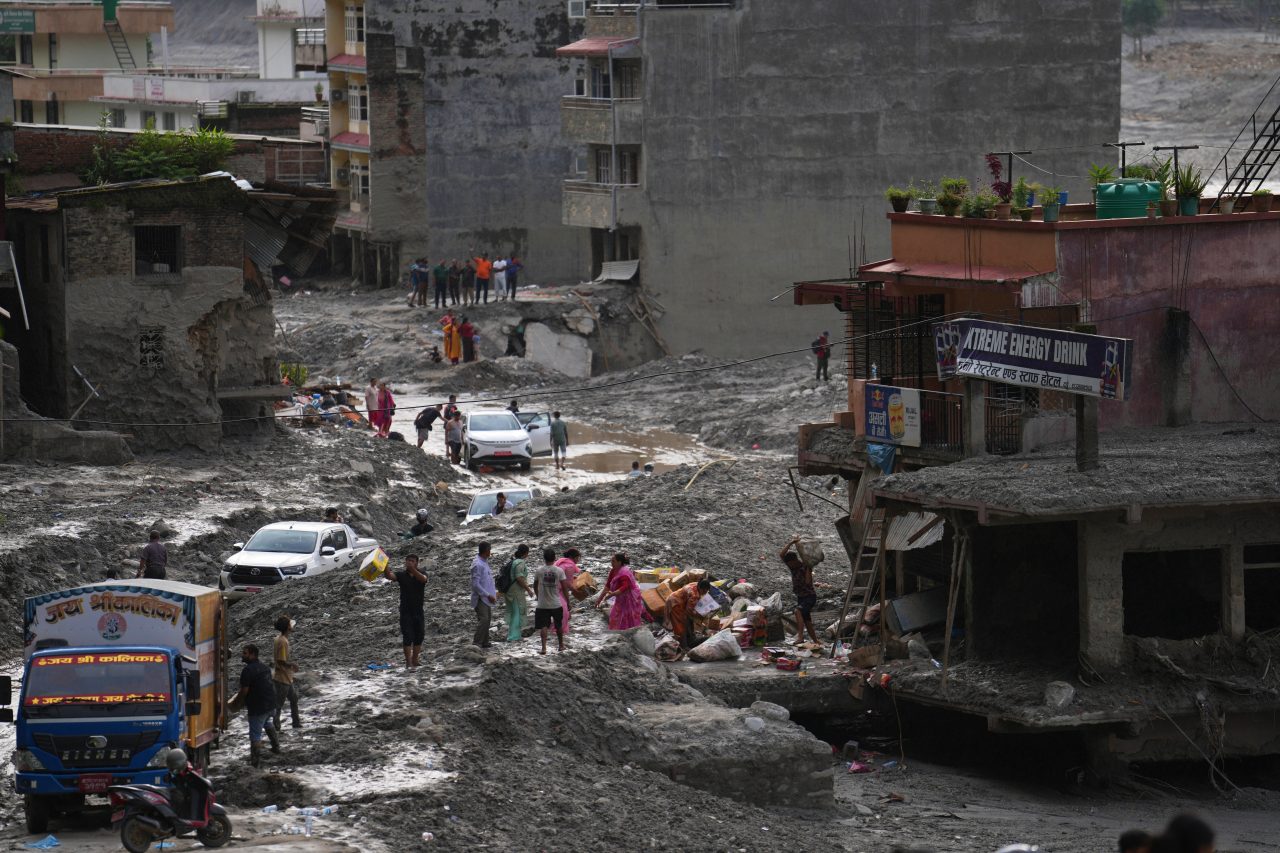
The recent deadly flooding in Nepal, linked to a glacial lake outburst, is a harbinger of what to expect. "Unfortunately we do expect to see more of such things and this is exactly why we need to limit peak warming," Betts said.
Path to Cooling
The final phase of the strategy involves removing carbon dioxide from the atmosphere, primarily through reforestation, though the report notes that planting trees can only shave a tenth of a degree. More novel carbon capture technologies will be needed, but their feasibility remains uncertain.
Bill Hare, CEO of Climate Analytics, offered a mixed review: "Although UNEP does a good job of describing the hole we've dug ourselves into, it does a poor job of showing us that there's a way out."
The report's tone is one of urgency, not resignation. As Weaver put it, "This is among the bleakest U.N. climate reports I have read. It carries the unmistakable tone of desperation, frustration and urgency — but not resignation."
For readers tracking policy shifts, this development intersects with other geopolitical pressures, such as shifting global oil routes due to the Iran conflict and oil market reactions to sanctions, which influence energy policy decisions. The UN's admission underscores that climate action is not just an environmental issue, but a central political and economic challenge of our time.