President Trump on Tuesday sidestepped questions about whether he would back Vice President JD Vance in a potential 2028 presidential run, telling reporters in the Oval Office that the two have never discussed it and that it is too soon to make such a commitment.
Trump's remarks came a day after Vance said in an interview that he believed the president would endorse him if he entered the race.
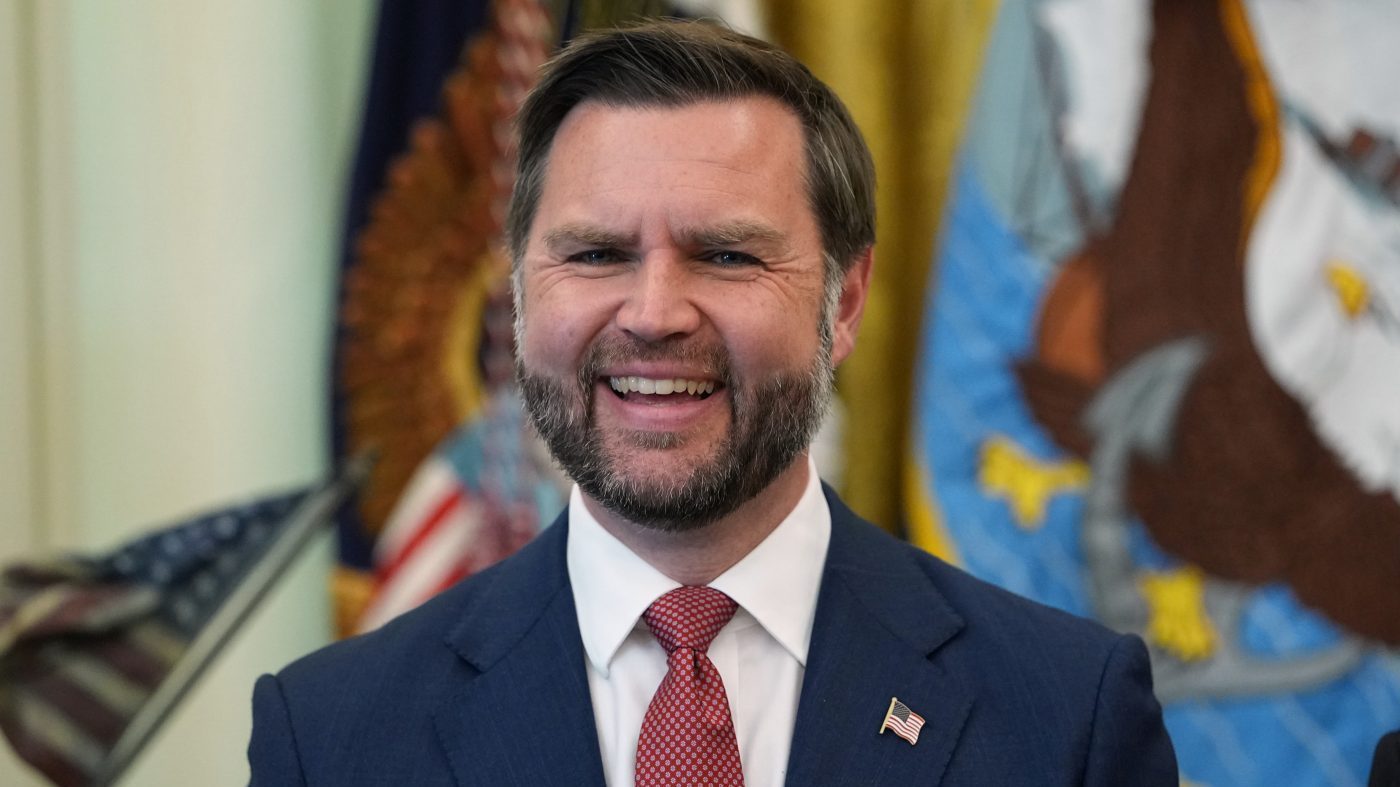
"He's a very talented person and he's a very good person," Trump said when asked alongside Vance. But when pressed on an endorsement, the president demurred: "I don't think we've ever talked about it."
Vance quickly concurred. "No, sir. I said that too," the vice president chimed in.
Trump continued: "Who would believe that? I don't talk about it with him. He doesn't talk about it [with me]. It's early." He added, "We have to get through the midterms. We'll see how it goes."
The exchange highlights the delicate balance Trump maintains with a vice president who is widely seen as a top contender for the 2028 Republican nomination. Vance, for his part, has repeatedly said his focus is on helping Republicans hold their majorities in Congress in the upcoming midterms, a battle that is already consuming significant resources. Trump has been actively raising money for the effort, recently claiming that $300 million has already been spent on the midterms and pledging $400 million by Election Day.
In his Monday interview with 2Way, Vance expressed confidence that Trump would ultimately support him but also acknowledged that the president's endorsement is so influential that he might choose to let the race unfold without preemptive interference.
"I think I would get his endorsement, but I also think there's something to be said for people actually running their own race," Vance said. "And because the president's endorsement is so dispositive, you could absolutely see a scenario where the president says, 'You know what? We need to let like this race play out and not preemptively prejudge the results.'"
Vance also noted that he has not spoken with Trump about a potential run. "If I run, I think the president would endorse me. But I also haven't talked to him about it yet," he said.
The vice president's comments come as the GOP gears up for a challenging midterm environment, with economic headwinds and foreign policy crises looming large. Trump has sought to tie various issues to the midterm stakes, including recent unrest in France, which he cited as a warning about what could happen in the U.S. if Democrats win.
Meanwhile, the administration has rolled out initiatives aimed at energizing the base, such as a $25 million whistleblower incentive program launched by Trump and Vance. The program, which offers payouts for information on fraud, is part of a broader push to highlight government accountability ahead of the elections.
Despite the uncertainty over Trump's endorsement, Vance remains a formidable figure in Republican politics. His allies argue that he brings a compelling mix of youth, ideological alignment with the Trump base, and a compelling personal story. But Trump's reluctance to anoint a successor this early is typical of his style, keeping potential rivals on their toes and preserving his own influence.
For now, both men say their focus is on the midterms. As Trump put it, "We'll see how it goes."