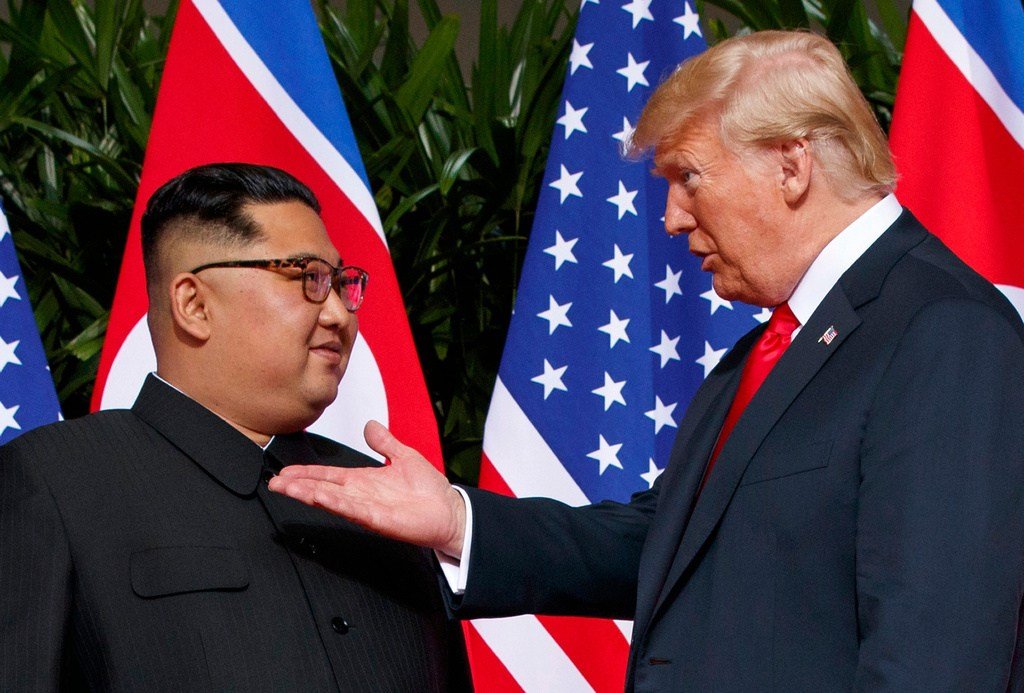
President Trump's decision to ease military pressure and pursue direct talks with Kim Jong Un is drawing sharp criticism from human rights advocates who say the move downplays and effectively legitimizes North Korea's brutal record on human rights. Aaron Rhodes, a former executive director of the International Helsinki Federation for Human Rights, argues that the regime's treatment of its own people represents a fundamental challenge to the moral principles that all governments are expected to uphold.
North Korea's expanding nuclear arsenal, ballistic missile program, and large conventional forces pose a direct threat to South Korea, Japan, and broader regional stability. Yet, as Rhodes points out, the ongoing atrocities committed against North Korean citizens—including murder, enslavement, torture, rape, and forced abortions—are arguably worse than in any other country on Earth. A 2014 United Nations report documented these abuses, and independent groups like Human Rights in North Korea estimate that around 160,000 people are currently detained for "political crimes," a figure that has increased from previous estimates. Satellite imagery and witness testimony have confirmed the existence of at least 27 political prison camps.

The regime's Songbun classification system determines a person's access to employment, education, and food based on their family's perceived loyalty to the Kim dynasty. Those classified as "hostile"—including descendants of capitalists, Christians, Buddhists, and relatives of executed individuals—face severe discrimination and potential imprisonment. Rhodes, who has interviewed numerous North Korean defectors, describes their accounts of torture as so harrowing that they brought him to tears.
Despite overwhelming evidence, North Korean diplomats continue to deny the existence of political prison camps and the use of torture. In international forums, the regime has even received praise for ratifying the UN Convention on the Rights of Persons with Disabilities, a move that critics say masks its ongoing abuses. The current South Korean administration under President Lee Jae-myung has also come under fire for its appeasement policy, which includes ending radio broadcasts to the North and withdrawing support for defector organizations. Suzanne Scholte, chair of the North Korea Freedom Coalition, testified before Congress that President Lee has "abandoned the people of North Korea."
Now, Congress is considering the Peace on the Korean Peninsula Act, a bill that would direct the State Department to pursue a formal peace agreement to replace the 1953 armistice and reallocate military resources. Rhodes and other critics argue that such legislation would reward a regime that not only brutalizes its citizens but also provides military support to Russia's invasion of Ukraine and defends Iran's crackdown on protesters. The bill, they contend, would undermine regional security and set a dangerous precedent by treating North Korea as a legitimate nuclear power.
Trump's claims of a warm friendship with Kim and his characterization of North Korea as "non-threatening" and "respectful" further erode the moral distinction between democratic societies and totalitarian regimes. By engaging with Pyongyang without addressing its humanitarian record, the administration risks corrupting the international standards that are essential for defending freedom and dignity worldwide.
As the debate over the Peace on the Korean Peninsula Act unfolds, human rights advocates are urging lawmakers to consider the broader implications. "We cannot separate diplomacy from human rights," Rhodes warns. "To do so is to betray the very values we claim to uphold."