With the 2026 midterms on the horizon, Republicans face a mounting electoral threat, and the source of that danger is increasingly clear: President Trump's hold on the party's message. A former Republican National Committee official argues that Trump's constant, often off-topic commentary is undermining GOP candidates in competitive races, turning what should be a referendum on his presidency into a liability.
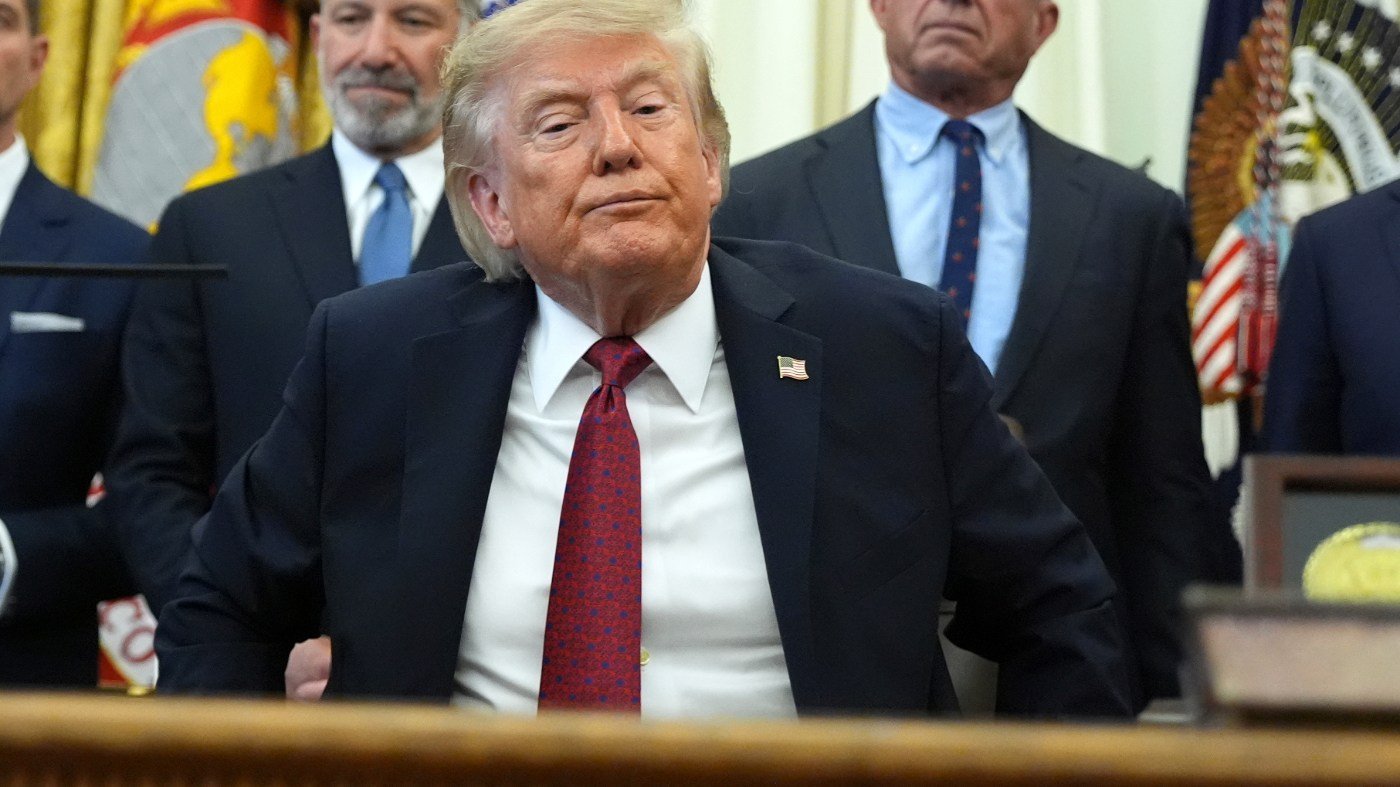
Kevin Igoe, who served as deputy chief of staff at the RNC and executive director of the Maryland Republican Party, writes that while Trump's base may see him as an unmatched communicator, his appeal is limited to a narrow slice of the electorate. "If you actually want to win an election that is a referendum on Trump's presidency, I suggest you get him off camera and take his phone away," Igoe says.
The president's penchant for veering into issues voters don't prioritize, coupled with rapid policy reversals, has left Republican candidates struggling to keep pace. Igoe points to Trump's focus on projects like redesigning Dulles Airport or planning a White House ballroom as a diversion from the kitchen-table concerns that matter to families, such as the cost of a Friday night pizza.
Instead of addressing economic anxieties, Trump has picked fights with allies, including threats against Oman and an economic confrontation with Canada that has hurt businesses in Maine, upstate New York, and Michigan. These moves have put vulnerable Republicans like Sen. Susan Collins (R-Maine) and Michigan Senate candidate Mike Rogers in a tough spot, as local economies suffer from reduced cross-border traffic.
Trump's frustration with Senate Republicans over the SAVE Act ignores polling that shows his leadership is steering the party toward a significant defeat in November. A compilation of Senate polls shows Republican candidates trailing or tied in Maine, Michigan, Georgia, North Carolina, Ohio, Texas, and Alaska, with Iowa close behind. Igoe suggests that agricultural states, hit by tariffs and trade uncertainty, could swing toward Democrats.
Igoe criticizes Trump's habit of dismissing fact-based positions and his string of questionable claims, from calling affordability issues a "hoax" to falsely asserting Iran had no radar before two U.S. jets were shot down. The Wall Street Journal has also flagged Trump's credibility gap on Iran, urging "more resolve and consistency" than he has shown.
Trump's insistence on the "One, Big, Beautiful Bill" last year, which polled negatively, cost Republicans the chance to push a more popular message like "The Tax Reduction for Working Families Act." His petulant blowup at the housing bill signing ceremony denied GOP lawmakers a moment of bipartisan achievement.
Igoe's prescription for salvaging the Senate is for Trump to talk less and stay off camera—a scenario he acknowledges is unlikely. As 2028 approaches, this remains a problem for Vice President JD Vance, who will inherit the challenge of navigating Trump's unpredictable messaging.
The broader lesson for Republicans is clear: voters are focused on their families' economic well-being, not process issues like the filibuster. If the party's leader can't pivot to those concerns, the midterms could be a reckoning.