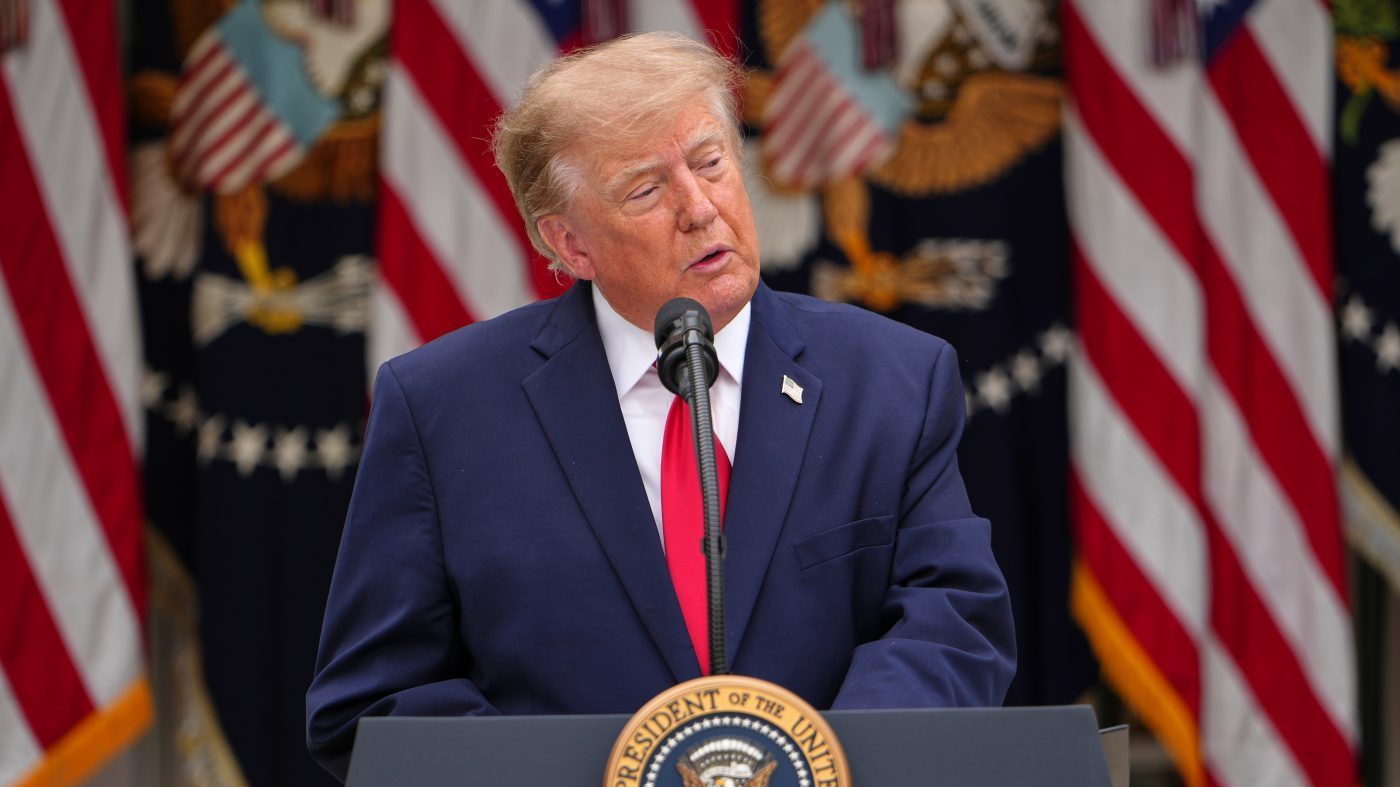
The United States has officially crossed a fiscal milestone that many economists had long dreaded: the national debt now exceeds $40 trillion. The figure, which has grown by nearly $4 trillion since President Trump's second term began in January 2025, is straining the federal budget to its breaking point. Interest payments on that debt now consume more taxpayer dollars than the Pentagon's entire budget or the federal government's spending on healthcare programs like Medicare and Medicaid.
This shift marks a fundamental change in how Washington operates. Instead of investing in infrastructure, education, or scientific research, the federal government is now primarily a vehicle for transferring wealth to bondholders. Every dollar spent on interest is a dollar that cannot go toward fixing crumbling roads, funding disaster relief, or supporting medical innovation. The result is a slow but steady erosion of public services that millions of Americans rely on.
The situation is made more galling by the personal financial gains of the president's family. According to reports, Trump's net worth has increased by $2.2 billion during his second term. His sons, Eric and Donald Jr., have joined investment firms, and Barron Trump has reportedly amassed a $150 million cryptocurrency fortune. While the public treasury hemorrhages trillions, the first family is building private wealth at a pace that underscores the disconnect between political rhetoric and fiscal reality.
This debt crisis did not happen overnight. Both parties have spent decades adding to the national ledger, but the speed of recent accumulation is unprecedented. The ongoing conflict with Iran has added tens of billions to the tab, while domestic needs go unmet. The result is a system where the government's obligations outpace its revenue, forcing it to borrow more just to keep the lights on.
When interest payments consume the federal budget, the consequences are immediate and tangible. Public health systems lose funding, transportation infrastructure deteriorates further, and disaster response agencies find themselves stretched thin. The role of state and local leaders in filling these gaps has become more critical than ever, as Washington's fiscal paralysis forces them to step in.
To cover its obligations, the Federal Reserve has resorted to printing money, which directly erodes the purchasing power of the dollar. As the money supply expands, prices rise, and every American feels the pinch at the grocery store and the gas pump. This hidden tax on savings and wages is perhaps the most insidious consequence of the debt spiral, hitting low- and middle-income families the hardest.
The political class, meanwhile, seems content to kick the can down the road. But history is clear: no nation has ever borrowed its way to lasting prosperity. The illusion of free money persists only as long as global markets retain confidence in the dollar. Once that confidence wanes, the abstract numbers on Washington's spreadsheets will translate into immediate hardship for ordinary households.
This is not a random act of financial misfortune. It is the predictable outcome of a government that spends without restraint, managed by leaders who profit from the very policies that are bankrupting the country. The system is designed to convert public debt into private advantage, shifting the ultimate risk onto those least equipped to bear it.
As the debt continues to climb, the choices facing policymakers become starker. Either they will be forced to cut essential services or they will continue to debase the currency. Neither option is palatable, but the longer they delay, the more painful the reckoning will be. The era of fiscal discipline has long passed; what remains is the hard math of an overdue bill.