Democrats are struggling to find a coherent message beyond simply opposing President Trump, whose approval rating hovers around 37 percent. But a potent issue may be staring them in the face: the pervasive corruption in Washington. Last year, Trump personally brought in over $2 billion, more than half from crypto, even as his administration gutted the industry's primary regulator.
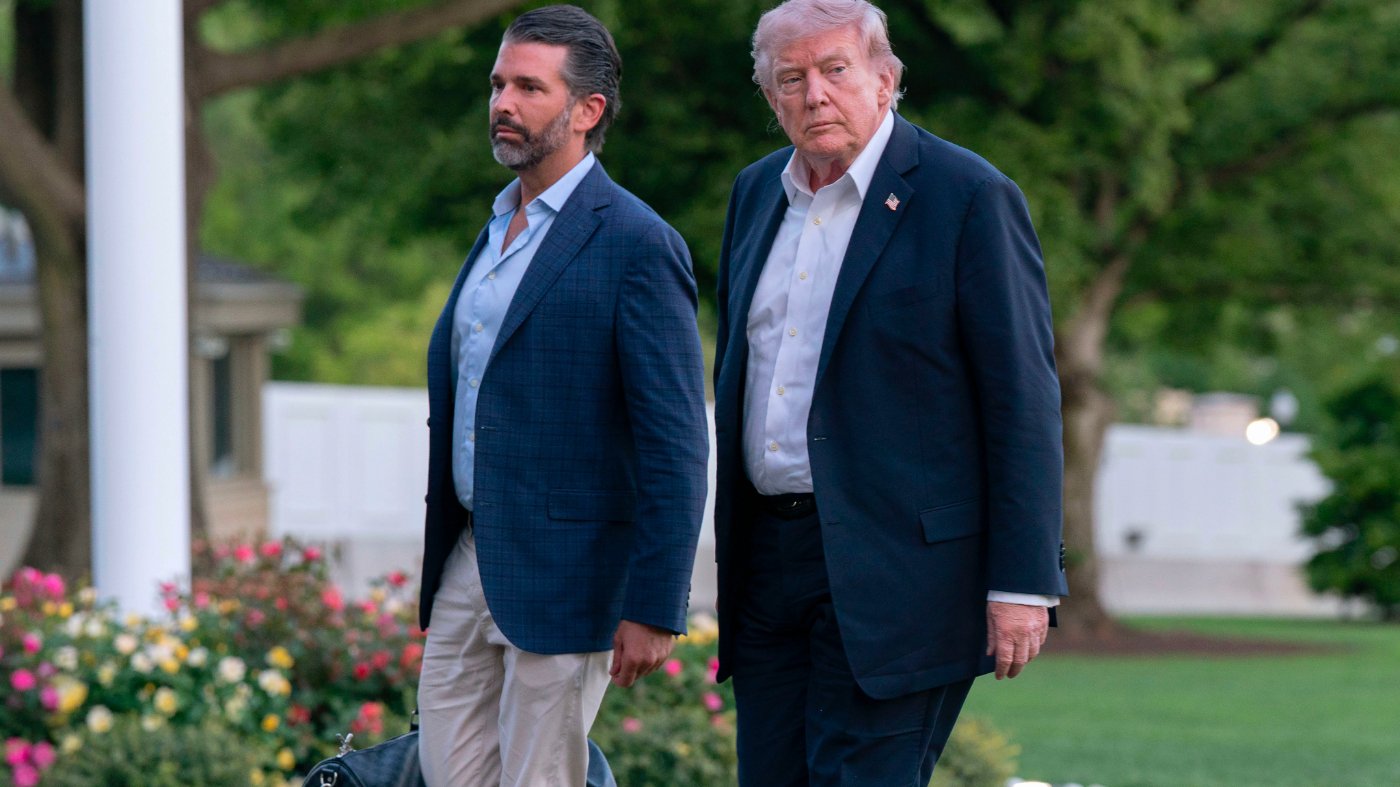
Take Donald Trump Jr., who serves as a director of GrabAGun, an online firearms retailer dubbed the "Amazon of guns." The Trump administration has proposed regulatory changes that would significantly benefit the company, though a White House official insists the rules are "driven by the administration’s interest in protecting the Second Amendment" and unrelated to Trump Jr.'s business ties.

The centerpiece of the controversy is 1789 Capital, a venture capital firm run by Trump Jr. and his partner Omeed Malik. The firm, whose name evokes the year of the U.S. Constitution, has invested in artificial intelligence and defense technology companies that have tripled in value within a month. Many of these firms are seeking large government contracts or have directly benefited from new Trump policies or rollbacks of existing regulations.
One standout investment is Polymarket, a prediction market betting site whose fortunes hinge on government policies. When 1789 Capital invested, Polymarket was valued at $300 million; after it was granted a U.S. operating license, the platform is now worth $15 billion. Malik, a former Democratic fundraiser who backed Hillary Clinton and Joe Kennedy III, now revels in his ties to MAGA donors and senior officials.
Trump Jr. told the New York Times his investment approach is "F— all you guys," and insists he talks to his father only "every few weeks" and never discusses business. But the numbers tell a different story: 1789 Capital now oversees more than $3 billion, up from a few hundred million two years ago, with returns of roughly 200 percent as of June 30—far exceeding the average 21 percent returns for venture capital firms started in 2023.
Another investment, Vulcan Elements, a rare earths magnet company, was valued at around $200 million before 1789's investment last fall. Shortly after, it landed a $620 million loan from the Department of Defense and is now valued at $2 billion. The CEO of 3D printing firm VulcanForms bragged that 1789's political connections could bring opportunities, though Malik said he can't police what companies say about the firm.
Then there's Reflection AI, an open-source AI model builder. 1789 invested last summer when it was valued at $3.5 billion. Malik secured South Korean conglomerate Shinsegae Group—an investor in 1789—as a customer, and the two firms are now building a multibillion-dollar data center in South Korea. Reflection AI is now valued at $25 billion, a sevenfold increase in a year.
The pattern echoes a 1953 moment when Defense Secretary Charles Wilson said he believed what was good for General Motors was good for the country. Trump Jr. channeled that sentiment in a prerecorded video for Reflection AI, calling it "good for America." Meanwhile, Jared Kushner, Trump's son-in-law, was involved in Iran negotiations while his firm solicited funds from Arab countries.
For Democrats, the question is whether they can turn this into a winning campaign message. As Trump's trade policies and other issues dominate headlines, the corruption angle offers a clear contrast: politics under Trump is a business, not an ideology. With Trump Jr. and his partners openly profiting from government connections, the party may have found its horse to ride back into town.