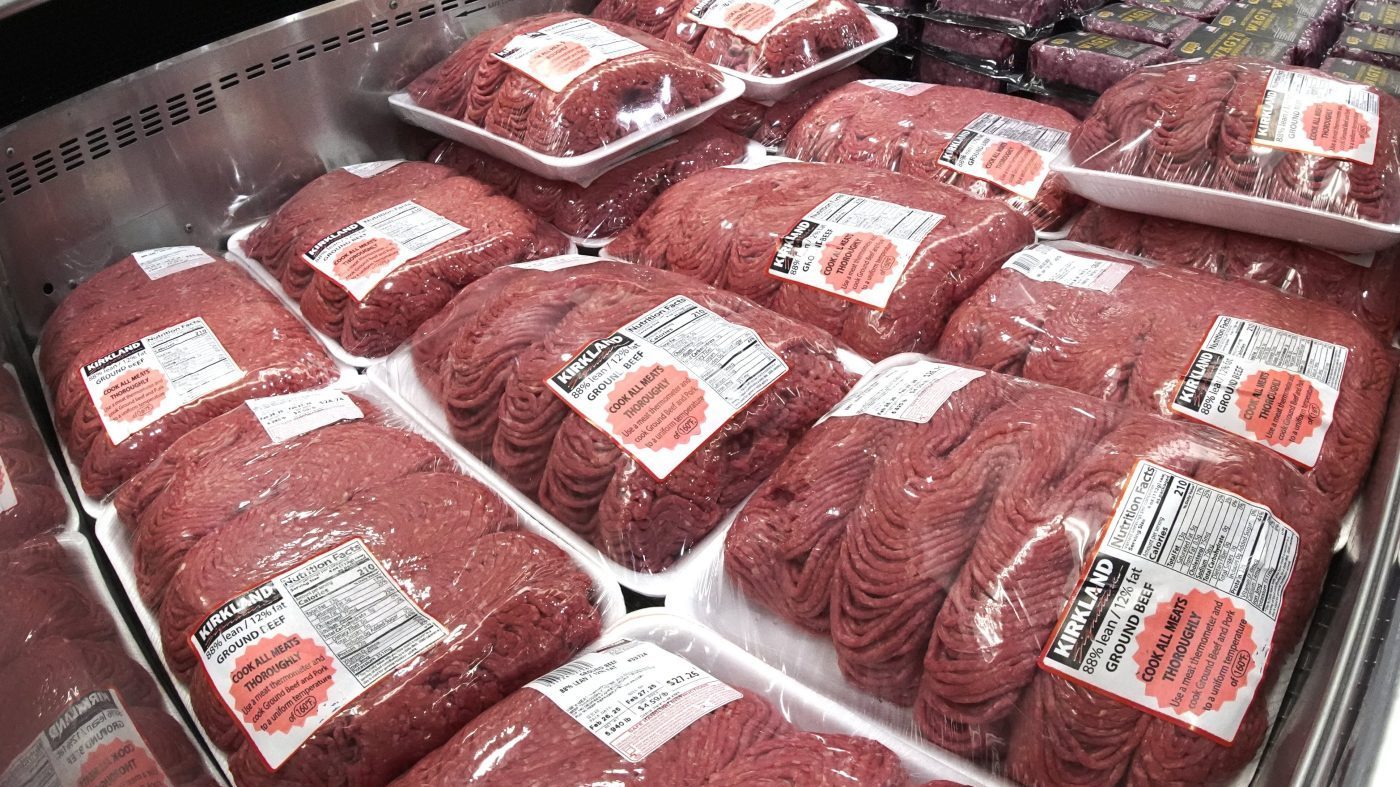
President Trump on Friday announced a temporary suspension of higher tariffs on ground beef imports, a move aimed at lowering consumer prices and giving domestic ranchers breathing room to rebuild the nation's cattle herd. The 90-day pause, detailed in a Truth Social post, allows up to 300,000 metric tons of ground beef to enter the country without the “out-of-quota tariff” that typically applies when import volumes exceed a set threshold.
“As we work to rebuild this herd and help our ranchers,” Trump wrote, the administration is taking this step to ease pressure on prices. He framed the decision as a direct response to what he called soaring beef costs and a historic contraction in the American herd under the previous administration. “The price of beef soared at their fastest rate and the American beef herd fell to its smallest size in modern history,” he asserted.
The president also claimed that importers have committed to selling this beef at 25 percent below current market prices. “This deal will reduce prices for Americans while giving space for our Great American Beef Herd to grow again,” he said. According to data from the U.S. Bureau of Labor Statistics, as shared by the Federal Reserve Bank of St. Louis, the average price of 100 percent ground beef is roughly $6.89 per pound.
The decision is likely to draw sharp criticism from the cattle industry, which has long opposed increased imports as a threat to domestic producers. Ranchers argue that flooding the market with foreign beef undercuts their livelihoods and could undermine long-term herd recovery efforts. The administration's move, however, appears to prioritize immediate consumer relief over industry concerns.
This is not the first time the White House has floated such a plan. According to Politico, Trump considered a similar measure in May but shelved it after facing pushback from his inner circle. The renewed push comes as food prices remain a key political vulnerability, with inflation and grocery costs weighing on voters' minds ahead of the next election cycle.
The tariff pause is part of a broader pattern of trade interventions by the administration, which has used tariffs as both a negotiating tool and a domestic price-control mechanism. Critics argue that such moves can distort markets and create uncertainty for producers and importers alike. Supporters, however, see them as necessary steps to address affordability and bolster domestic agriculture in the long run.
As the 90-day window begins, the administration will face the challenge of balancing consumer price relief with the concerns of a politically influential cattle sector. The effectiveness of the measure will likely be judged by whether retail prices actually drop and whether the promised commitments from importers hold up under scrutiny.
For now, the move signals that the White House is willing to use trade policy to address kitchen-table economic issues, even if it means angering a key constituency. The coming months will test whether this approach can deliver both lower prices and a stronger American beef industry.