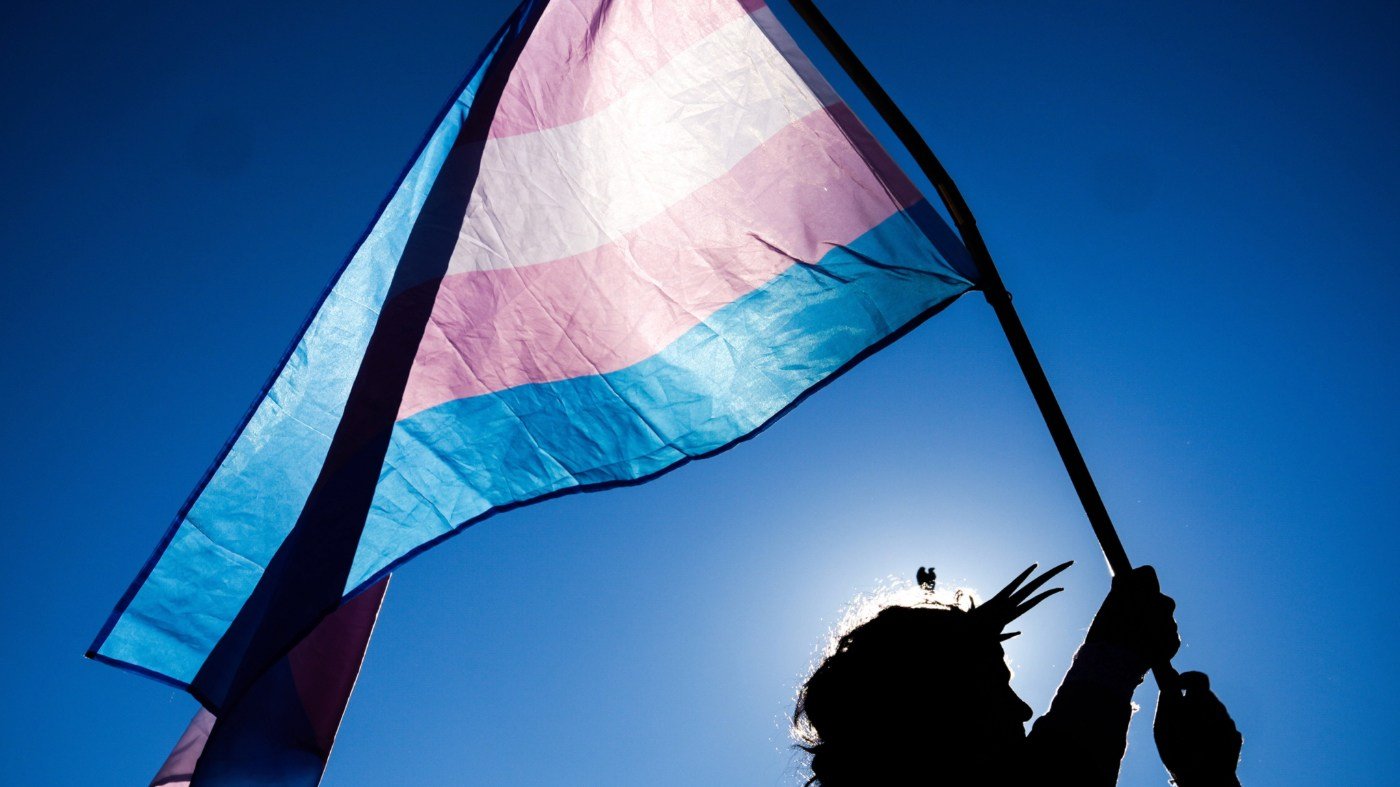
In the aftermath of the 2026 midterms, where candidates who poured nearly $400 million into anti-transgender advertising were largely rejected at the ballot box, the push to restrict transgender youth participation in school sports has not subsided. Instead, advocates have shifted focus, successfully passing four ballot measures in Arizona, Colorado, Washington, and Nebraska that bar transgender student athletes from competing on girls' or women's teams.
Casey Pick, senior director of law and policy at The Trevor Project, a leading LGBTQ+ suicide prevention organization, argues that these measures are not about fairness or safety but are a calculated political strategy. “These efforts are not actually about fairness, safety or even sports,” she wrote in a recent analysis. “They are a political strategy that aims to isolate transgender Americans to score political points.”

The impact, however, is far from abstract. Peer-reviewed research by The Trevor Project found that transgender and nonbinary youth in states with such laws reported up to a 72% increase in past-year suicide attempts. “The impact of these policies, however, is all too real,” Pick stated.
Pick, a former high school athlete in Iowa, draws on her own experience to illustrate the unintended consequences. Standing 5'11" and strong, she faced bullying for not being “feminine enough.” Sports became her refuge. “My teammates and coaches didn’t bully me for being different; they embraced me,” she recalled. “There were many days when the only reason I went to school was so I could go to practice after.”
She warns that these bans create a climate where any girl can be challenged based on her appearance. In Utah, a school official falsely accused a basketball player of being transgender, sparking harassment. The Washington measure, which requires all girls to “verify biological sex,” could lead to invasive exams for tens of thousands of students, according to Pick. Legal challenges are already underway, but if implemented, “school sports for girls in Washington will become significantly more dangerous.”
With 29 states already enforcing similar restrictions, and transgender people making up less than 1% of the population, Pick argues that the attention is disproportionate. “Transgender kids are playing school sports for the same reasons as all other children,” she said. “They just want a chance to be part of the team.”
Pick calls for nuance rather than blanket bans. “Thoughtful discussion about rules and regulations in sports is one thing. But the solution is not to ban an entire demographic of young people from all participation whatsoever,” she wrote, noting that different sports have different rules and that a one-size-fits-all approach is contrary to how athletics work.
She concludes with a personal plea: “For the sake of every girl who wants the chance to play, we have to stay in the game.”