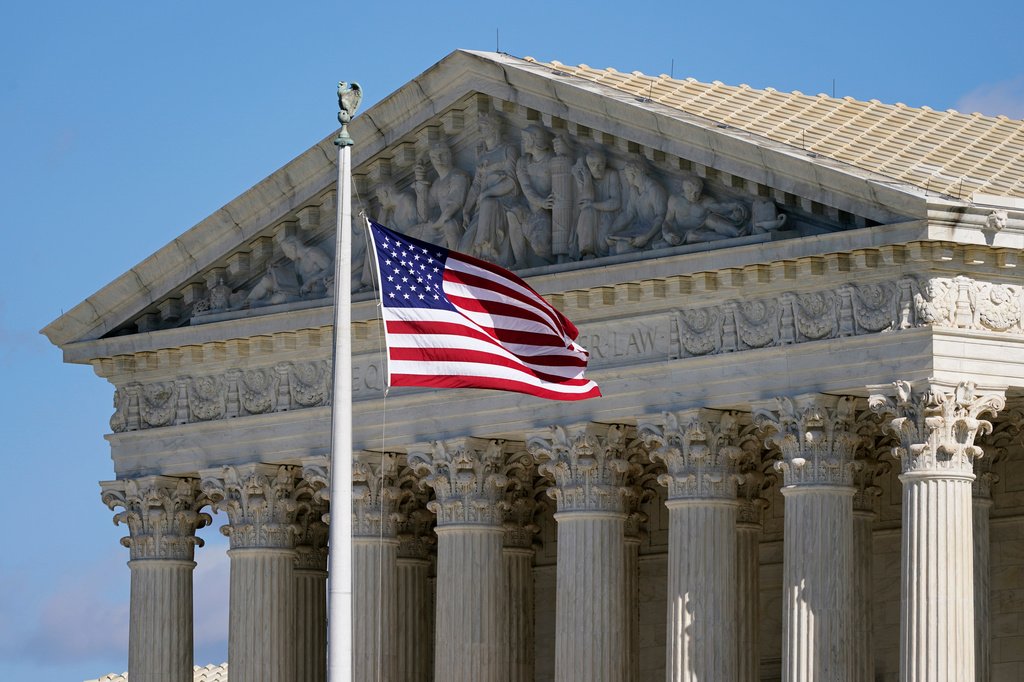
The Supreme Court is weighing a case that could fundamentally alter how asylum seekers enter the United States, but the real power to craft a durable border policy rests with Congress, not the judiciary or the White House.
In Mullins v. Al Otro Lado, argued before the justices in March, the court is examining whether the government can block asylum seekers from crossing at official ports of entry. Historically, migrants have been allowed onto U.S. soil to file their claims. A ruling against that practice could push thousands to cross illegally between ports, fueling chaos at the border.

The case centers on a practice known as “metering,” first used by the Obama administration in 2016 and continued under the first Trump administration. It limited the number of daily asylum claims at ports. Though currently suspended, the Trump administration wants the option to reinstate it if migration surges again.
During oral arguments, justices zeroed in on whether the law’s requirement that a migrant “arrive” in the U.S. to request asylum means physical presence on American soil. If the court says yes, and the government refuses entry, the result could be makeshift refugee camps in Mexico and a boom in smuggling as desperate migrants seek to cross illegally to make their claims.
“That would again create chaos and instability,” the authors warn, “but Congress could avoid all that with a stronger approach to managing regional migration.” The piece, written by Theresa Brown and Laura Collins of the George W. Bush Institute, argues that the current system is unsustainable.
Most border migrants are subject to expedited removal, a fast-track deportation process created in 1996 with an exception for asylum claims. Initially limited to ports of entry, that exception was expanded in 2005 to cover illegal crossers. By 2013, as families and children arrived in large numbers, the system became overwhelmed. By 2024, hundreds of thousands were filing asylum claims each month.
“It’s difficult to maintain facilities or surge capacity throughout the immigration system to address large increases in migration,” the authors note. Three Cabinet departments—Homeland Security, State, and Health and Human Services—share responsibility for asylum processing, each with separate appropriations and little coordination. In an era of persistent deficits, Congress rarely funds standby capacity.
The United States remains bound by international treaty to protect genuine refugees, but it can create orderly processes. The Bush Institute fellows recommend engaging neighboring countries to manage migrant flows before they reach the border. They propose revising refugee processing in the hemisphere, developing pre-arrival screening, updating encounter procedures, and speeding up asylum decisions.
Several recent bills in Congress lay groundwork for reform: limiting asylum for those who cross illegally, investing in overseas screening, expanding refugee processing in the region, and accelerating decisions for border applicants. But no legislation has passed.
The decision in Mullins v. Al Otro Lado is expected later this year. Meanwhile, Congress faces a clear choice: modernize asylum policy or watch the courts and crises dictate outcomes at the border.
Theresa Brown is an immigration fellow at the George W. Bush Institute, where Laura Collins is the director of immigration policy.