The Los Angeles mayoral race, often a predictable affair, has taken an unexpected turn. Republican candidate and former reality TV star Spencer Pratt has injected volatility into the contest, turning what was expected to be a straightforward reelection for Mayor Karen Bass into a genuinely competitive race.
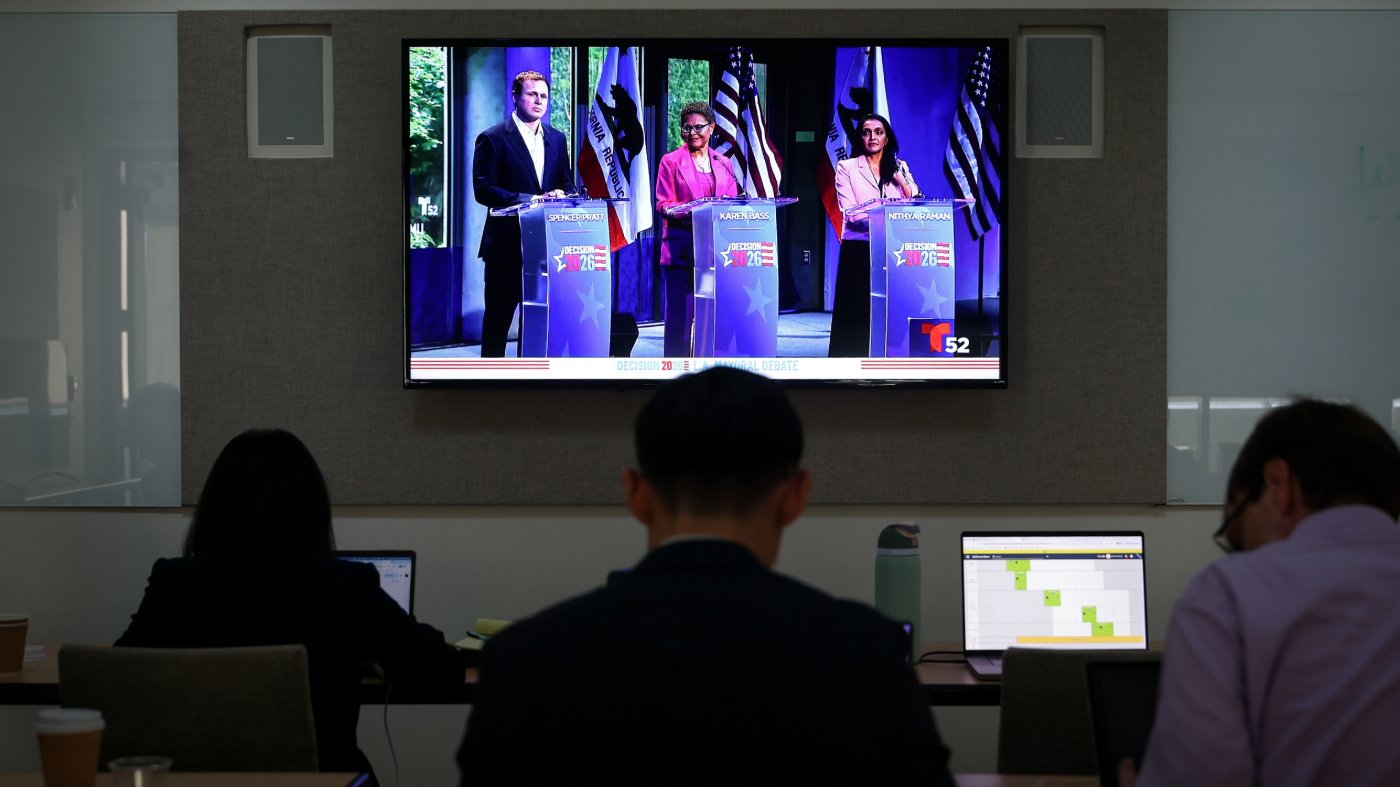
Pratt's campaign ads have racked up tens of millions of views, sparking national conversation and tapping into deep-seated voter frustration over the city's slow recovery from the Palisades fire, as well as broader quality-of-life issues like homelessness, crime, and the cost of living. These concerns were front and center during last week's debate, where Pratt, Bass, and City Councilmember Nithya Raman clashed sharply.
The debate effectively narrowed the race to two credible candidates—Pratt and Bass—as Raman came off as inexperienced and unprepared, according to the Los Angeles Times. Pratt displayed a mix of confidence and message discipline for a political newcomer, focusing his attacks on Bass's leadership while arguing that Los Angeles needs a change from the governing approach she represents.
Bass put up a solid fight, often appearing more fluent on policy specifics. However, the Times noted that Pratt's mockery of Bass and Raman could be seen as possibly sexist. Still, the debate gave Pratt a platform to build on the attention from his viral ads, which have boosted his standing by speaking to issues Angelenos care about.
One ad, filmed outside the homes of Bass and Raman, contrasts their pristine neighborhoods with the remains of Pratt's own home, which burnt down and has yet to be rebuilt. In it, Pratt slams them for not living in the mess they created, a message with obvious resonance in a city still grappling with fire recovery. Another ad, created with AI, portrays Los Angeles as Gotham-like, ruled by out-of-touch progressives like Gov. Gavin Newsom, Bass, and former Vice President Kamala Harris.
Donors are taking notice. Pratt has raised over half a million dollars this year—more than either Bass or Raman—including a maximum contribution from Lakers owner Jeanie Buss. Political observers are also paying close attention. One Democratic strategist warned that the ads are so good that Democrats should take this seriously. Meghan McCain outright predicted that Pratt is going to win.
Polling suggests an opening for Pratt. A UCLA Luskin School survey from April put Bass at 25 percent, Pratt at 11 percent, and Raman at 9 percent, but critically, four in 10 respondents were undecided—a pool large enough to propel Pratt into the November runoff, particularly in a low-information race. Recent precedent from New York City, where Zohran Mamdani leveraged social media and a populist message to upset former Gov. Andrew Cuomo, shows the potential for outsider campaigns.
Bass's position may be weaker than her frontrunner status suggests. Her approval rating—31 percent—is 25 points underwater, and the UCLA survey found that among virtually every demographic except Black women, Bass's support was outpaced by other candidates or undecided voters. The Luskin Center Quality of Life index shows Los Angeles residents' satisfaction at historic lows, with fire recovery efforts being the largest contributing factor—an issue Pratt has made the cornerstone of his campaign.
None of this guarantees a Pratt breakthrough. Los Angeles has not elected a Republican mayor since 1997, and Bass has experience, incumbency, and the support of the city's powerful labor unions in an overwhelmingly Democratic city. But the broader political environment is increasingly rewarding disruptive outsiders who are combative, media-savvy, and sharply focused on perceived failures of the status quo.
Whether the sentiments Pratt is tapping into translate into a general election berth remains the central question. But it is clear that he has already reshaped the race's dynamics, turning what once appeared predictable into something far less certain. If this trend continues, it may be a much closer race than anyone expected.