Democratic socialist Darializa Avila Chevalier is projected to win the House seat representing New York's 13th Congressional District, according to Decision Desk HQ, in a significant win for the city's socialist movement. The political newcomer's victory over five-term incumbent Rep. Adriano Espaillat came after a contentious primary that divided progressives.
Avila Chevalier defeated Espaillat in the summer primary, a race that saw New York City Mayor Zohran Mamdani, a fellow democratic socialist, endorse her over the incumbent. The general election, held in the solidly Democratic district that includes parts of Harlem, Washington Heights, and the Bronx, was a foregone conclusion, with DDHQ projecting her win at 9 p.m. EST on Tuesday.
The primary was a clash within the left, with Espaillat, the first formerly undocumented immigrant to serve in Congress, drawing support from progressive heavyweights like Reps. Maxwell Frost (D-Fla.) and Pramila Jayapal (D-Wash.), as well as the Congressional Progressive Caucus. Avila Chevalier, however, positioned herself as a more radical alternative, attacking Espaillat for accepting support from the American Israel Public Affairs Committee (AIPAC) and calling for an end to U.S. military aid to Israel.
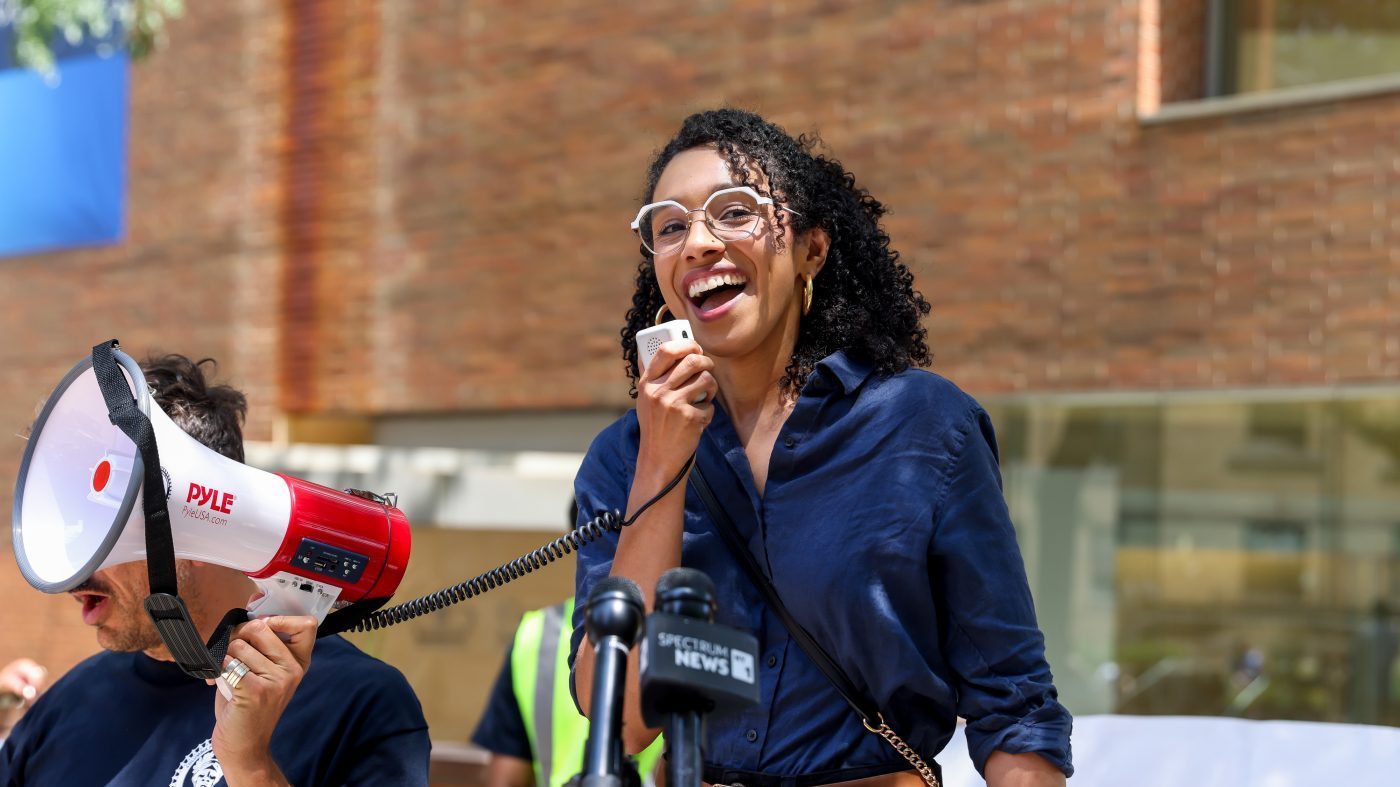
Her activism has been a defining feature of her campaign. In September, Avila Chevalier was among protesters arrested during a demonstration against Israeli Prime Minister Benjamin Netanyahu's speech at the United Nations headquarters in Manhattan. She also organized protests against Israel at Columbia University, a stance that resonated with the district's progressive base.
Avila Chevalier is one of two Democratic Socialists of America members expected to represent New York in the House. State Assembly member Claire Valdez is on track to replace outgoing Rep. Nydia Velázquez in the 7th Congressional District, signaling a broader shift to the left in the city's delegation. The results come amid a broader national narrative of socialist gains, as seen in Manhattan's new House representative and other races where progressive candidates have made inroads.
The win is a setback for the more moderate wing of the Democratic Party, which had backed Espaillat, and a boost for the socialist movement that has gained traction in New York politics. Espaillat's loss in the primary was a surprise to many, given his seniority and institutional support, but Avila Chevalier's grassroots campaign and the mayor's endorsement proved decisive.
Political analysts note that Avila Chevalier's victory could have implications beyond New York, as it signals the growing influence of the DSA in Democratic primaries. The midterm elections have already shown a surge in Democratic energy, and this result adds to the narrative of a party shifting leftward.
Avila Chevalier will take office in January, joining a freshman class that includes several other progressive newcomers. Her arrival is expected to bolster the ranks of lawmakers pushing for policies like Medicare for All, the Green New Deal, and a more confrontational approach to U.S. foreign policy, particularly regarding Israel.