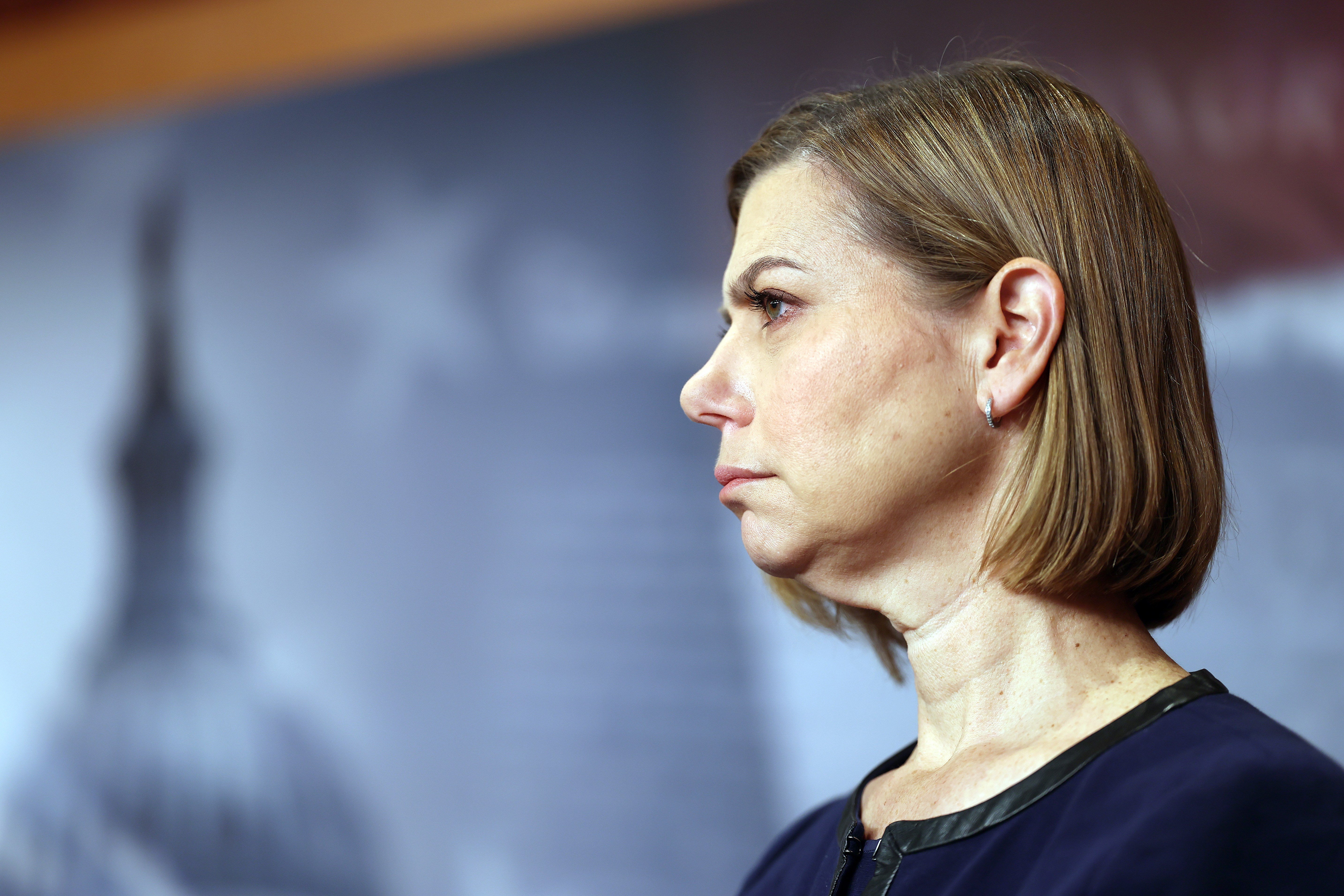
Sen. Elissa Slotkin (D-Mich.) is under fire for encouraging recent college graduates to avoid seeking employment in the Trump administration, a stance critics say undermines the nonpartisan nature of the federal workforce. Speaking at a University of Chicago forum last week, Slotkin said she wants young people to view such jobs as a potential liability, stating, “I want them to be like, Lord, that might be buying myself a ton of problems that I don’t want, and so let me avoid participating in that.” She added, “I want that deterrence message.”
While some federal agencies have become deeply politicized—such as immigration enforcement or the Justice Department’s legal team targeting Rep. Ilhan Omar (D-Minn.)—the vast majority of government openings are apolitical roles that keep the nation running. The USAJobs portal lists thousands of positions for recent graduates, including a staff psychologist at the Veterans Affairs Department ($107,000 starting salary in Denton, Texas), a cybersecurity specialist at the Defense Information Systems Agency ($57,000, Fort Meade, Md.), an industrial hygienist at OSHA ($50,000, Overland Park, Kan.), and a safety engineer at the FAA ($53,000). These are permanent, career posts not subject to presidential whim.
Slotkin’s remarks come as the federal government faces a retirement wave. According to Federal News Network, 105,858 employees retired in 2025, with the Defense Department losing 31,689 and other major agencies—including Veterans Affairs, Homeland Security, Agriculture, Justice, Treasury, and Health and Human Services—each seeing more than 6,000 departures. The need for new talent is acute, and discouraging graduates from public service could exacerbate the shortage.
The senator’s advice also clashes with a troubling trend: graduates of top public policy schools are increasingly choosing private or nonprofit work over government. A survey of 13 such programs, including Harvard, Berkeley, and Princeton, found that only a third of graduates entered public service—and that figure may be inflated by foreign students returning home.
Critics argue that Slotkin is breaking with a bipartisan tradition that has long encouraged qualified Americans to serve their country. The Public Service Loan Forgiveness program, created in 2007 under George W. Bush and preserved through subsequent administrations, reflects this ethos by forgiving student debt after 120 monthly payments for those in government or nonprofit roles. Both parties have supported this policy, and it remains a vital incentive for new graduates.
Howard Husock, a fellow at the American Enterprise Institute, wrote in a recent column that Slotkin’s “deterrence message” is a disservice to the nation. “One can only wonder why Slotkin deems it a good idea to break from the bipartisan path and discourage capable young graduates from staffing the government,” he said. His commentary echoes broader concerns about sagging public confidence in federal institutions and the potential long-term damage to the civil service.
Slotkin’s defenders, however, argue that her warning is a necessary check on an administration that has politicized career positions and targeted political opponents. Some see her stance as a reaction to the administration’s use of prosecutorial power, and they contend that steering graduates away from such environments is a form of protest. But even some Democrats worry that her blanket advice could hurt efforts to recruit talent into essential roles, particularly in areas like cybersecurity and public health.
The debate comes at a time when Republicans are already facing midterm headwinds, and Slotkin’s comments have become a flashpoint in the broader fight over the federal workforce. As the government continues to hire for critical positions, the question remains whether political rhetoric will deter a new generation from answering the call to serve.