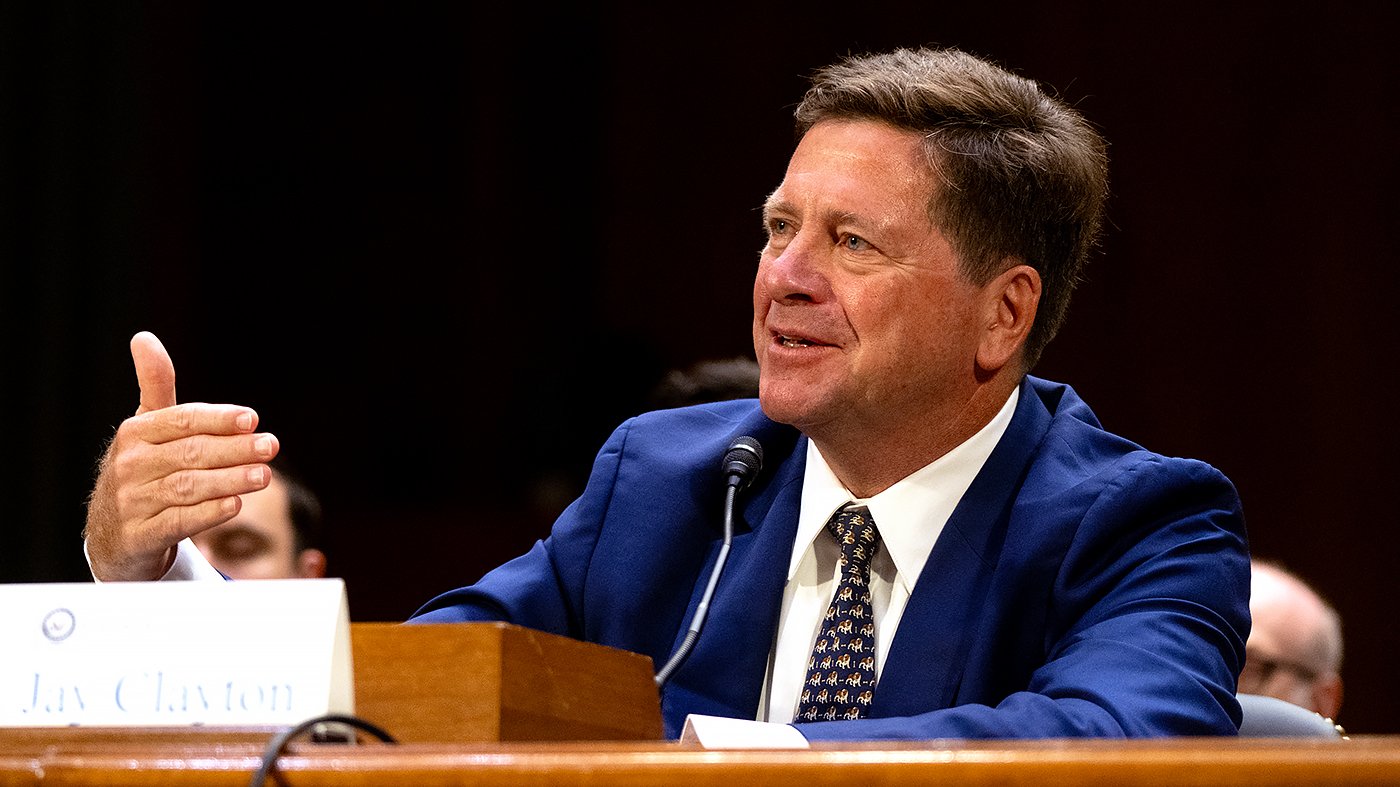
The Senate Intelligence Committee voted along party lines Tuesday to advance the nomination of Jay Clayton to become the next Director of National Intelligence, sending his candidacy to the full Senate for a confirmation vote.
The 9-8 decision, which broke strictly on partisan lines, clears the way for Clayton to take over an agency currently led on an interim basis by Bill Pulte, a figure who has drawn sharp criticism from both parties for his management style and controversial public statements.
Committee Chair Tom Cotton (R-Ark.) praised Clayton as a highly capable nominee with extensive experience confronting a broad array of national security challenges. “Jay Clayton is a highly qualified nominee with a deep experience combatting a wide range of national security threats,” Cotton said after the closed-door session. “I’m pleased that the Senate Intelligence Committee voted to advance his nomination to be Director of National Intelligence.”
Cotton added that he looks forward to working with Clayton on keeping Americans safe and continuing reforms within the Office of the Director of National Intelligence.
Clayton currently serves as the U.S. Attorney for the Southern District of New York and previously chaired the Securities and Exchange Commission during the first Trump administration. His background in both law enforcement and financial regulation has drawn attention, but his nomination has also faced scrutiny over his refusal to acknowledge President Joe Biden’s 2020 election victory during his confirmation hearing.
Senator Jon Ossoff (D-Ga.) pressed Clayton on that point, as noted in recent coverage of the hearing. Ossoff exposed Clayton's refusal to acknowledge Biden's 2020 win in hearing, raising questions about Clayton’s willingness to uphold the nonpartisan integrity of the intelligence community.
The committee’s advancement of Clayton’s nomination comes amid broader intelligence community shake-ups, including former National Security Adviser H.R. McMaster’s scheduled testimony before the House Intelligence Committee on post-9/11 terror threats.
If confirmed, Clayton would inherit an agency that has been without a permanent director for months, and he will face immediate challenges including ongoing threats from foreign adversaries, election security concerns, and the need to rebuild trust with career intelligence professionals.
Democrats have signaled they will press Clayton further on his past statements and his plans for the agency when the full Senate takes up the nomination. The timeline for a floor vote remains unclear.