As conflicts in Europe and the Middle East eventually wind down, the Pentagon will face a strategic fork: where to reposition its military weight. Rep. Keith Self (R-TX) argues that the answer is clear—Europe must remain the primary focus, with Russia as the most immediate and violent threat to Western security.
Self, a 25-year Army veteran and chairman of the House Foreign Affairs Europe Subcommittee, contends that Moscow's pattern of aggression—from Georgia in 2008 to Crimea in 2014 and the full-scale invasion of Ukraine—proves that Putin's Russia is not a defensive actor but an imperial one. He points to Russia's war economy, its tolerance for massive casualties, and its endurance under sanctions as evidence of a regime that values territorial ambition over human life, posing a continued danger to Eastern Europe's fragile democracies.
While acknowledging China's authoritarian tactics—economic coercion, cyber intrusions, and political influence—Self draws a critical distinction: Beijing has not engaged in a major war for centuries, and its last significant military foray in 1979 ended poorly. He argues that Chinese military doctrine emphasizes deterrence and information dominance, not open warfare, and that a full-scale amphibious invasion of Taiwan would be an unprecedented and self-defeating move, uniting the West and threatening the Communist Party's grip on power.
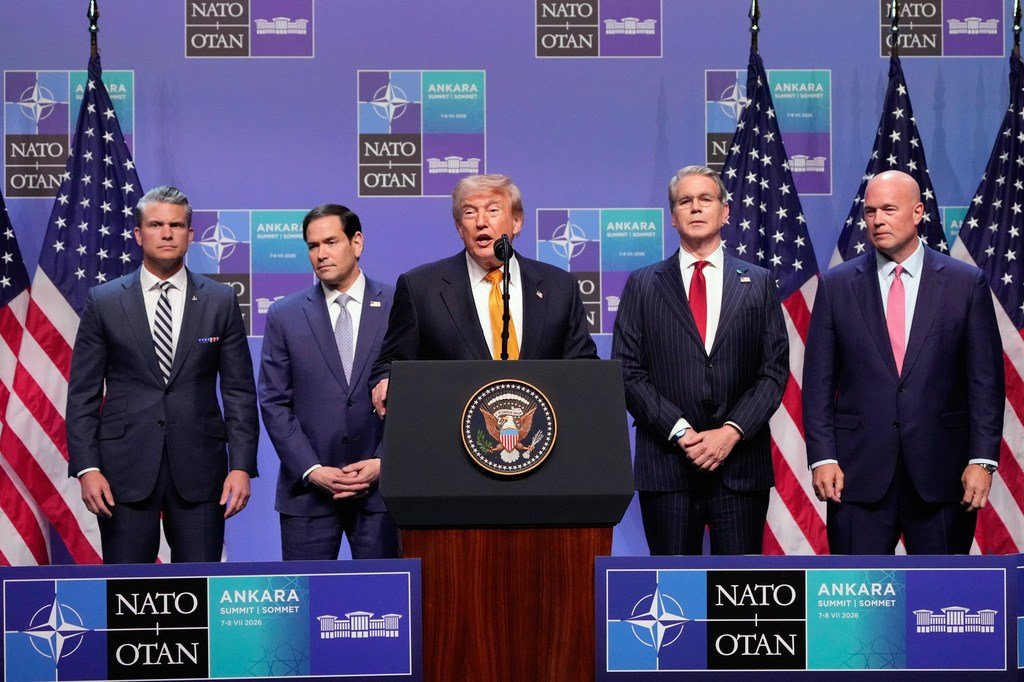
Instead, Self calls for continued strengthening of Indo-Pacific alliances, but insists that strategic prioritization demands focusing readiness on active, escalating violence. He notes that Europe has been the anchor of Western democracy, with American blood shed there twice in the 20th century to stop tyranny. That legacy now faces its toughest test since the Cold War, as Russia's posture aims to fracture NATO. Reinforcing NATO's eastern defenses and modernizing European command infrastructure are, in his view, sound investments in deterrence.
Self criticizes current procurement priorities, which he says are overly centered on a hypothetical war with China, while munitions stockpiles are being depleted in Europe and the Middle East, exposing gaps in the industrial base—from artillery shells to long-range missiles. He argues that rebuilding defense industrial capacity around real threats is essential, and that strengthening NATO does not weaken the Indo-Pacific posture but enhances global deterrence.
He specifically calls for renewed investment in the Army and Air Force, noting that European defense depends on land and air dominance, rapid logistics, and intelligence coordination—areas that have been underfunded relative to the Navy's Indo-Pacific focus. Rebalancing resources toward these domains is, he says, both prudent and necessary.
Self also sees a strategic ripple effect: a steadfast US commitment to Europe would deter China as well. A strong, united NATO reduces Beijing's incentive to test American resolve elsewhere. He warns that misdirecting military resources could prove disastrous, as Russia is actively redrawing borders through kinetic conflict. Confronting that aggression now, by sustaining European allies, would eliminate a strategic dilemma at a smaller price—especially in American lives.
Self represents Texas's 3rd District and serves on the House Foreign Affairs and Veterans' Affairs committees. His remarks come amid broader debates over Pentagon leadership and future defense priorities, and as the administration weighs responses to recent strikes on Iranian targets. The question of where to focus military resources is not just strategic but political, with implications for alliances and budgets.