As the 2026 midterms approach, the financial disclosures of Congress's wealthiest members offer a snapshot of the political and economic dynamics shaping the next session. According to the latest live net worth estimates from Quiver Quantitative, which tracks members' financial reports, the top of the list features a mix of incumbents, retirees, and candidates in high-stakes races.
Top of the Wealth List
Rep. Jefferson Shreve (R-Ind.) leads with an estimated net worth of $715.2 million. A former Indianapolis city council member, Shreve amassed his fortune through Storage Express, a self-storage company he sold for $590 million in 2022. He narrowly survived a primary challenge in May and will face Democrat Cynthia "Cinde" Wirth in November, a rematch of their 2024 contest.

Sen. Jim Justice (R-W.Va.) ranks second at $664.4 million, though his financial picture is complex. Forbes once valued him at $1.9 billion but stripped his billionaire status in 2021, and by 2025 estimated his net worth had fallen below zero due to liabilities. Justice also agreed to pay nearly $5.2 million in overdue personal taxes after the IRS filed liens exceeding $8 million against him and his wife. He won his Senate seat in 2024 and serves through 2030.
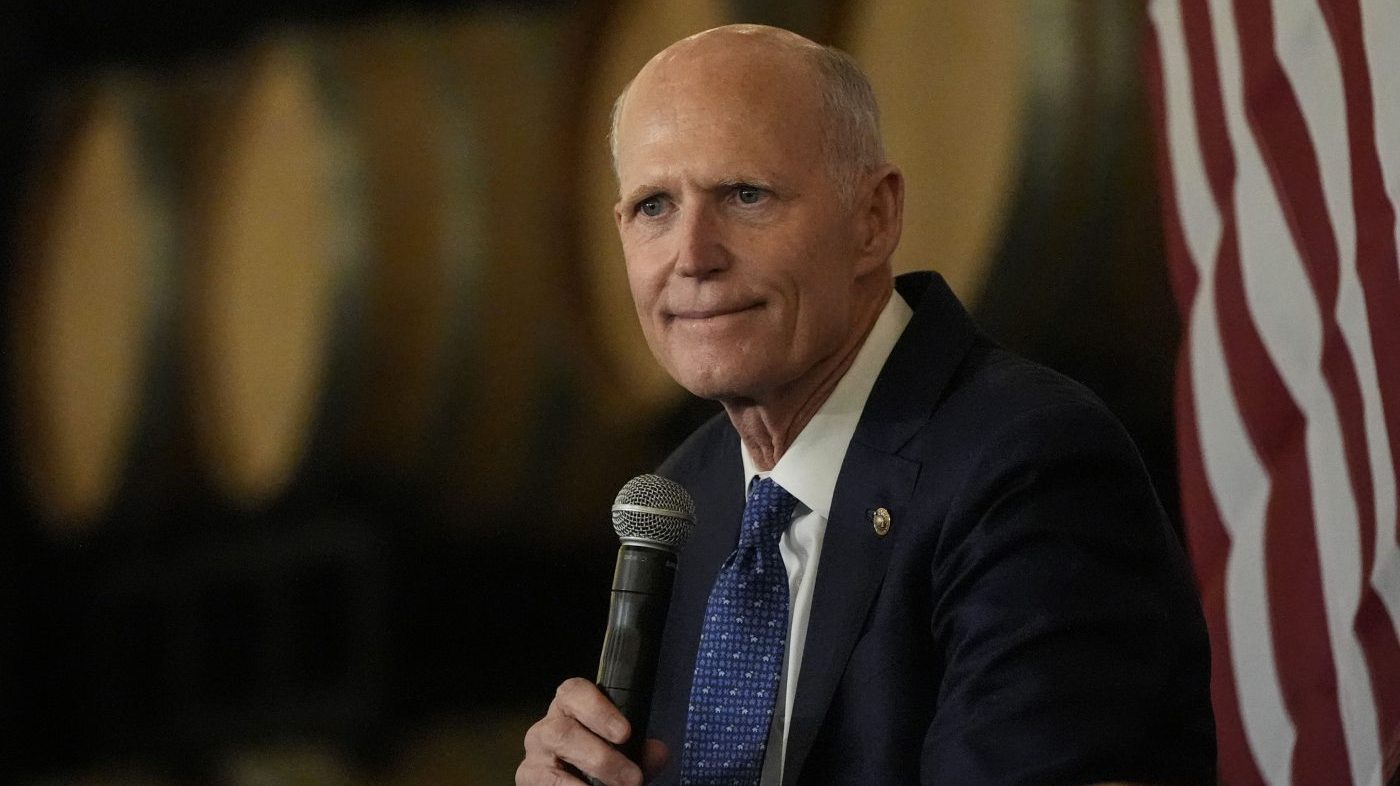
Sen. Rick Scott (R-Fla.), who led most wealth lists last year, is now third with $509.4 million. Scott co-founded HCA Healthcare and Solantic before serving as Florida's governor from 2011 to 2019. His next race is the 2030 Florida Senate election.
Notable Departures and Races
Rep. Darrell Issa (R-Calif.), worth $399.3 million, ended his reelection campaign on March 6 and endorsed San Diego County Supervisor Jim Desmond. California's new congressional map shifted his district from safely Republican to leaning Democratic. Issa made his money as CEO of Directed Electronics, a car-alarm maker.
Rep. Vern Buchanan (R-Fla.), with an estimated $272.1 million from car dealerships, an aircraft leasing company, and Speedy Printing, announced on Jan. 27 that he will not seek reelection.
Rep. Nancy Pelosi (D-Calif.) is the wealthiest Democrat, with $262.4 million, largely from her husband Paul Pelosi's stock holdings. She has served since 1987 and was the first female House Speaker. Pelosi announced she will not run again after her term ends in 2027 and has endorsed San Francisco Supervisor Connie Chan for her seat.
Sen. Mark Warner (D-Va.), worth $210.1 million, made his money in telecommunications venture capital, including early involvement with Nextel. He is seeking a fourth term against Republican Bert Mizusawa and has said this will be his last reelection campaign.
Rep. Daniel Goldman (D-N.Y.), an heir to the Levi Strauss fortune, is estimated at $208 million. He lost the June 23 Democratic primary to former New York City comptroller Brad Lander, who won roughly 66% to 34%.
Other Wealthy Members in the Spotlight
Sen. Pete Ricketts (R-Neb.), worth $206.6 million, is the eldest son of TD Ameritrade founder Joe Ricketts. He served as Nebraska's governor from 2015 to 2023 and is now in one of the most closely watched Senate races against independent Dan Osborn, a union mechanic who has highlighted Ricketts' family wealth.
Rep. April McClain Delaney (D-Md.), a first-term lawmaker with $199.1 million, is a lawyer and former Commerce Department official. Her husband, former Rep. John Delaney, held the same seat from 2013 to 2019. She beat former Rep. David Trone in the June primary, 48% to 36%, and faces Republican Robin Ficker in November.
These wealth rankings come as departing House members reshape the lame-duck agenda, and as several of these lawmakers face pivotal elections. The concentration of wealth among a few members also raises questions about accountability and representation in Congress. As the midterms approach, the financial standing of these candidates is likely to remain a focal point for voters and analysts alike.