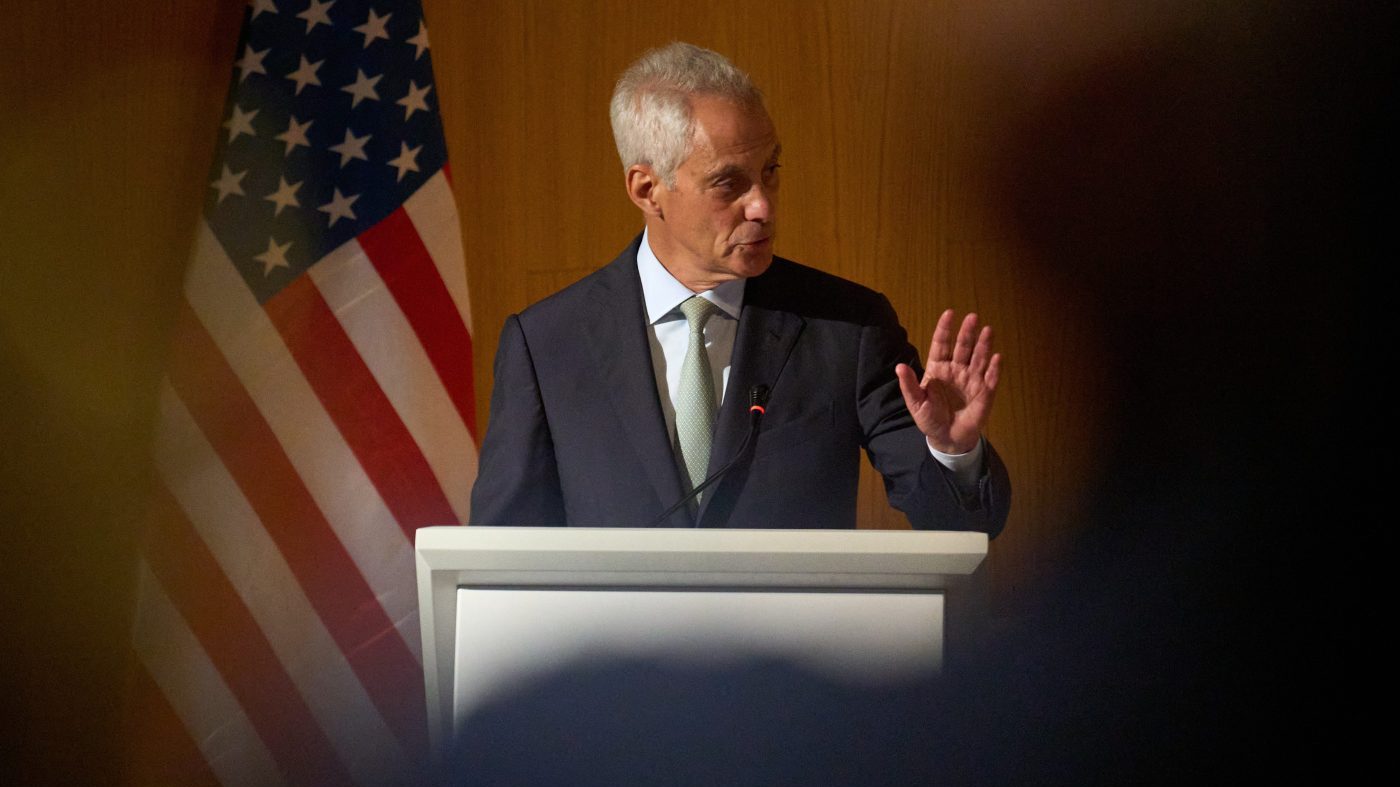
Former U.S. Ambassador to Japan Rahm Emanuel, a name frequently floated as a potential Democratic presidential contender for 2028, has dismissed early frontrunner predictions as a political liability. In a candid interview with Politico’s Jonathan Martin, Emanuel argued that being anointed the party’s leading candidate years before the election would be a strategic mistake.
Emanuel’s Warning on Early Polling
“So, here’s the thing. One is, both Bill Clinton and Barack Obama were exactly where I am,” Emanuel said, referencing the two former Democratic presidents he served under. “I wouldn’t want to be the frontrunner right now for ’28. Not a chance.” When pressed by Martin, Emanuel doubled down, calling it a “kiss of death” and challenging the notion that George W. Bush was a frontrunner early in the 2000 cycle, noting he was tied with John McCain at that point.
Emanuel, a former Chicago mayor and White House chief of staff, emphasized his working-class roots, noting his father was a pediatrician and mother a nurse, to contrast with political dynasties. He framed his current media engagement as a platform for policy ideas, saying, “I have at least started to put out … more ideas about the future and how to solve real problems than others.”
Timeline for a Decision
The former ambassador clarified he has not committed to a 2028 run, telling Martin he will decide with his wife, Amy Rule, after the midterm elections. “I’ll make a decision basically right after the midterms, one way or another,” he said. “It’s not that hard from there, but that’s the time frame. You don’t take these decisions lightly.” Emanuel cited his undefeated record in his own races and his role in national victories, including helping secure Nancy Pelosi’s speakership and the presidencies of Clinton and Obama.
“Every time my name has been on the ballot, I have won,” he asserted. “And every time I’ve worked on a national race … I have won. And it’s time the Democrats win.”
Clash with Progressive Wing
Emanuel has been a vocal critic of the progressive left, warning in a Wall Street Journal op-ed that “Bernie bros” could spoil the midterms for Democrats. Sanders rejected Emanuel’s warning, dismissing the former mayor’s concerns. In the interview, Emanuel took aim at cultural battles within the party, saying, “I’m tired of discussions about bathroom access, and I want to start having discussions about classroom excellence.” He insisted he believes in equity but questioned how it can be achieved when “50 percent of your kids can’t read at grade level.”
This internal Democratic struggle over messaging and priorities is likely to shape the 2028 primary landscape. Emanuel’s positioning as a centrist pragmatist could appeal to voters wary of the party’s leftward drift, but his past clashes with progressives may limit his appeal in a primary field that could include figures like Sanders or others from the party’s activist base.
For now, Emanuel is content to stay out of the spotlight as a frontrunner, preferring to build his case through policy proposals rather than early polls. As he put it, avoiding the “kiss of death” may be the smartest move for any Democrat eyeing the White House in 2028.