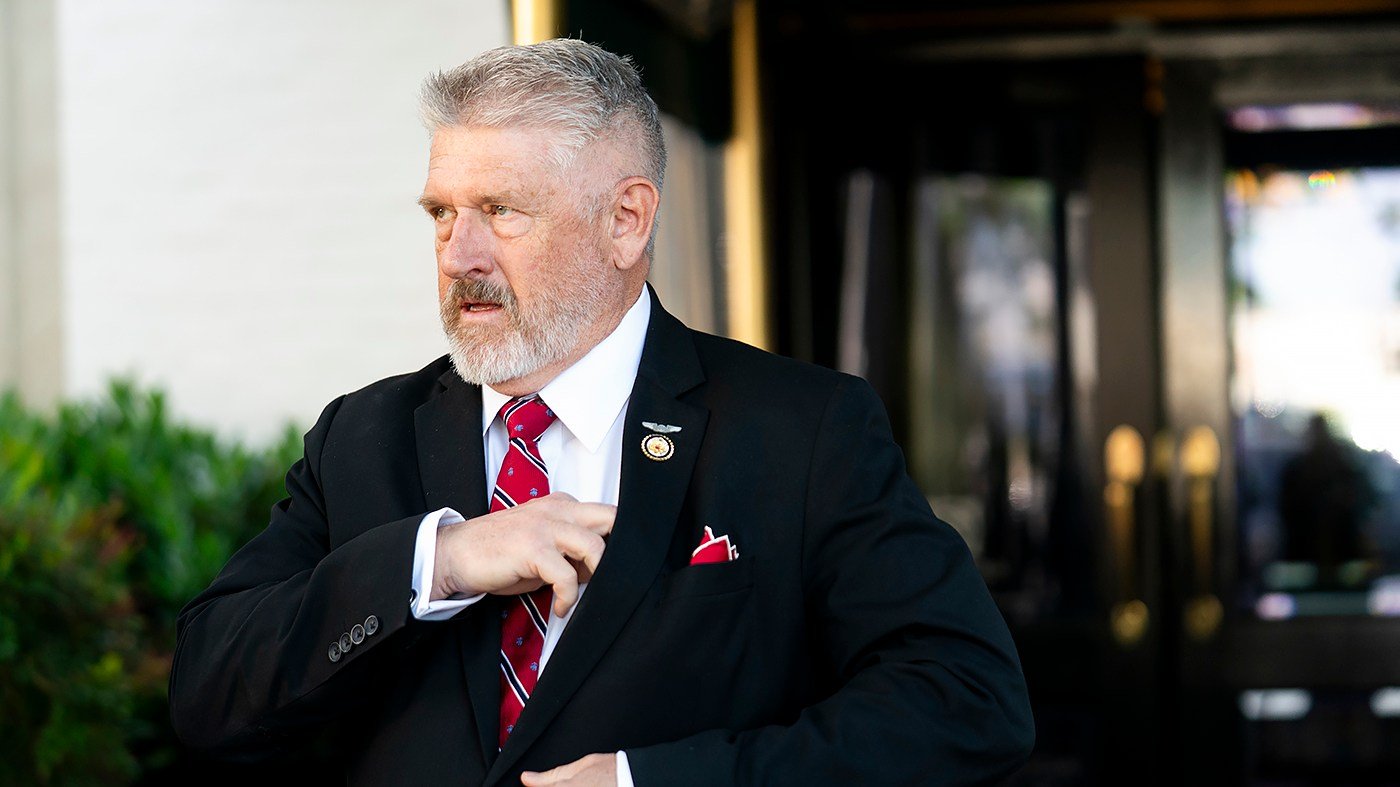
Montana Republican Rep. Troy Downing said Tuesday that President Trump's plan to temporarily suspend tariffs on beef imports has already inflicted damage on the market, even as the administration frames the move as a way to lower grocery prices for struggling Americans.
In an interview on NewsNation, Downing was asked whether GOP lawmakers are pressing the White House to reverse the decision. He replied that the damage is done, noting that the announcement alone has roiled cattle markets. "That's already affected the market," Downing said. "So really what we need to do is have serious conversations with the administration before making decisions like this."
Downing, whose state has roughly twice as many cattle as people, stressed that ranchers need stability. "Our ranchers are producing the best beef in the world. They need to have market stability," he said. "Don't move a market as my producers are going to market, and that's our biggest issue there."
The controversy stems from Trump's plan to allow 300,000 tons of ground beef to enter the U.S. without out-of-quota tariffs for 90 days, a move aimed at easing food prices. The president has simultaneously threatened Canada with 50 percent tariffs on its goods, adding to trade uncertainty. In a Truth Social post in August, Trump defended the suspension, claiming a commitment that the beef would be sold at 25 percent below current market prices, and arguing it would reduce prices while allowing the American beef herd to expand. He did not specify the source of the imported beef.
Downing acknowledged Trump's motivations but urged more consultation. "I understand his motivations — but before doing this, make sure you're talking to the stakeholders," he said. "Make sure you're talking to us to understand what the unintended consequences are, especially on timing."
He is not alone among Republicans in agriculture-heavy states. Sen. Thom Tillis (R-N.C.) called the exemption a "mistake," warning that subsidized beef imports would not lead to systemic price declines. "If you think that providing subsidized beef for some period of time is going to make farmers happy and prices go down on a systemic basis, you're wrong," Tillis said. "It doesn't happen."
The pushback comes as beef prices remain elevated, with the average cost of 100 percent ground beef hovering around $6.89 per pound, according to data from the U.S. Bureau of Labor Statistics shared by the Federal Reserve Bank of St. Louis. Downing noted that the U.S. cattle herd is at a historic low, citing droughts, lack of grazing land, and rising operational costs as contributing factors.
The tension highlights a broader rift within the GOP over trade policy, as some lawmakers worry about the political fallout ahead of the 2026 midterms. Trump's messaging dominance has often overshadowed legislative concerns, but this time, rural lawmakers are pushing back publicly. Downing's comments reflect a growing unease that the president's tariff tactics, while popular with some voters, are creating instability for key constituencies.
For now, the administration appears unmoved, but the criticism from within his own party suggests that the battle over beef tariffs is far from over. As Downing put it, the market has already spoken — and it is not happy.