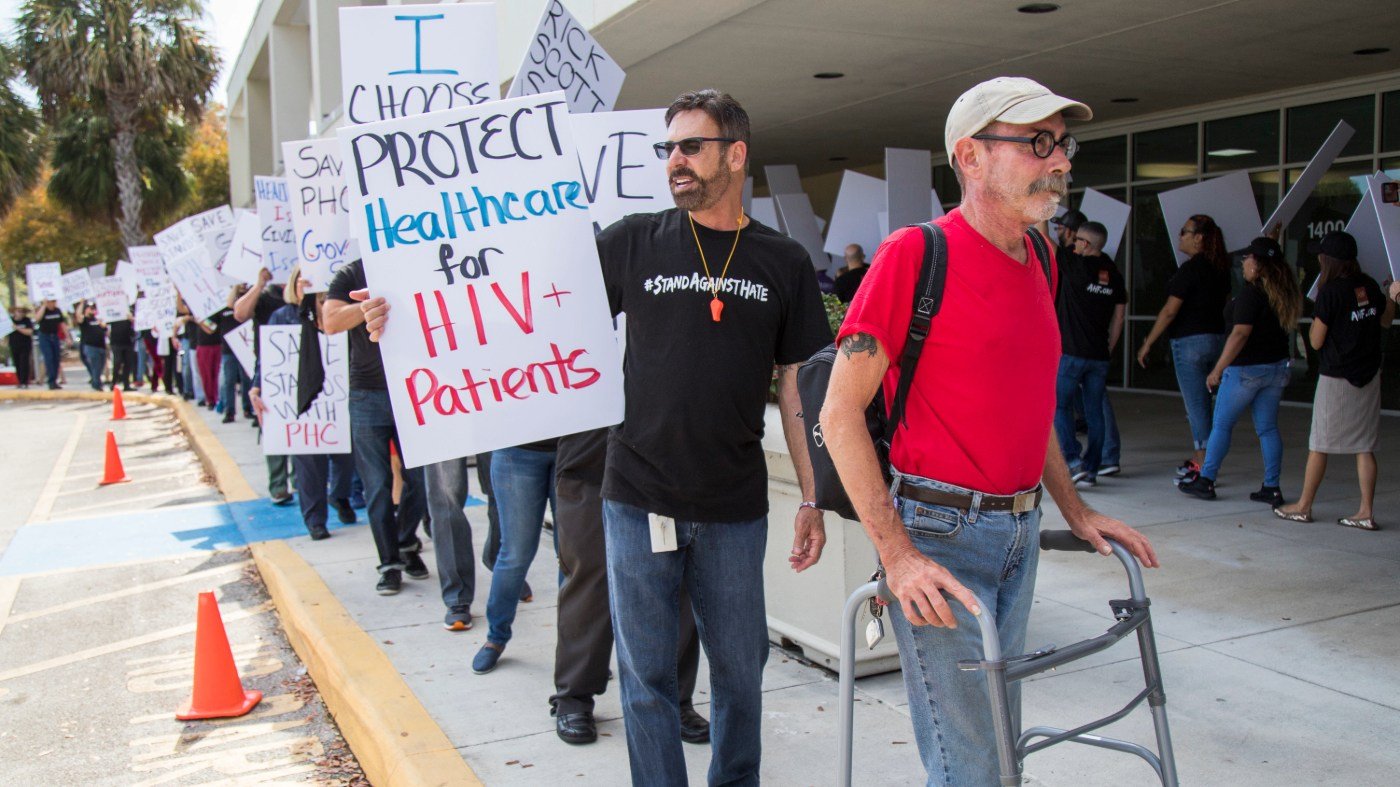
As an infectious disease physician in Kentucky, I've witnessed the devastating consequences when patients lose access to health coverage. One young man arrived at our hospital after eight months of deteriorating health—neurologic decline, severe weight loss, high fever, and confusion. Uninsured and without consistent care, he was finally diagnosed with advanced HIV.
More than 1.2 million Americans live with HIV, with roughly 38,000 new diagnoses each year. A staggering 22 percent are diagnosed late, after their immune systems are already severely compromised. Continuous antiretroviral therapy can suppress the virus to undetectable levels, keeping patients healthy and preventing transmission. Yet only 69 percent of those diagnosed achieve viral suppression—a gap that reflects barriers to care.

HIV is fatal without reliable access to comprehensive treatment, which requires at least biannual medical visits and lab work. Many patients also need mental health, substance use, or chronic disease management. Before the Affordable Care Act, nearly 40 percent of my patients were uninsured. After Medicaid expansion, that dropped to 10 percent, mirroring national trends. Today, almost half of all Americans with HIV rely on Medicaid.
Before the ACA, insurer practices excluded most people with HIV due to pre-existing conditions. Medicaid was largely available only through disability programs, forcing patients to prove they were too sick to work. When expansion launched in 2014, my patients wept with relief—finally, they had insurance that covered the care their lives depended on.
That progress is now under threat. The 2025 H.R. 1 legislation would require most Medicaid expansion enrollees aged 19–64 to report 80 hours of monthly work or “community engagement” starting in 2027. It includes an exclusion for people with serious or complex conditions—but the Centers for Medicare and Medicaid Services have narrowed that exclusion to those who are “seriously impaired.” That means many HIV patients, even those with well-managed disease, could lose coverage.
These work requirements ignore the realities my patients face. Many live on low incomes, lack reliable transportation or internet access, and struggle to navigate bureaucratic hurdles. Missing a deadline can lead to months of interrupted therapy, causing irreversible immune damage or death. Our clinic already spends significant time helping nearly 40 percent of our Medicaid patients re-file paperwork every six months. New requirements would strain medical teams further—and for what? Arkansas’s experiment with work rules increased uninsured rates without boosting employment.
My patient’s late diagnosis exposed the cracks in our system, but Medicaid expansion has shown what works. It has provided affordable coverage to low-income people, improved health outcomes, and strengthened communities. As similar work rules in Illinois threaten cancer patients, the stakes are clear. Reliable healthcare access is a lifeline for people with HIV and other serious conditions. Policymakers should not let red tape undo a decade of progress. As Medicaid drug pricing deals and other policy shifts unfold, the urgency of protecting this coverage grows. We must not go back to a time when HIV was a death sentence for the uninsured.