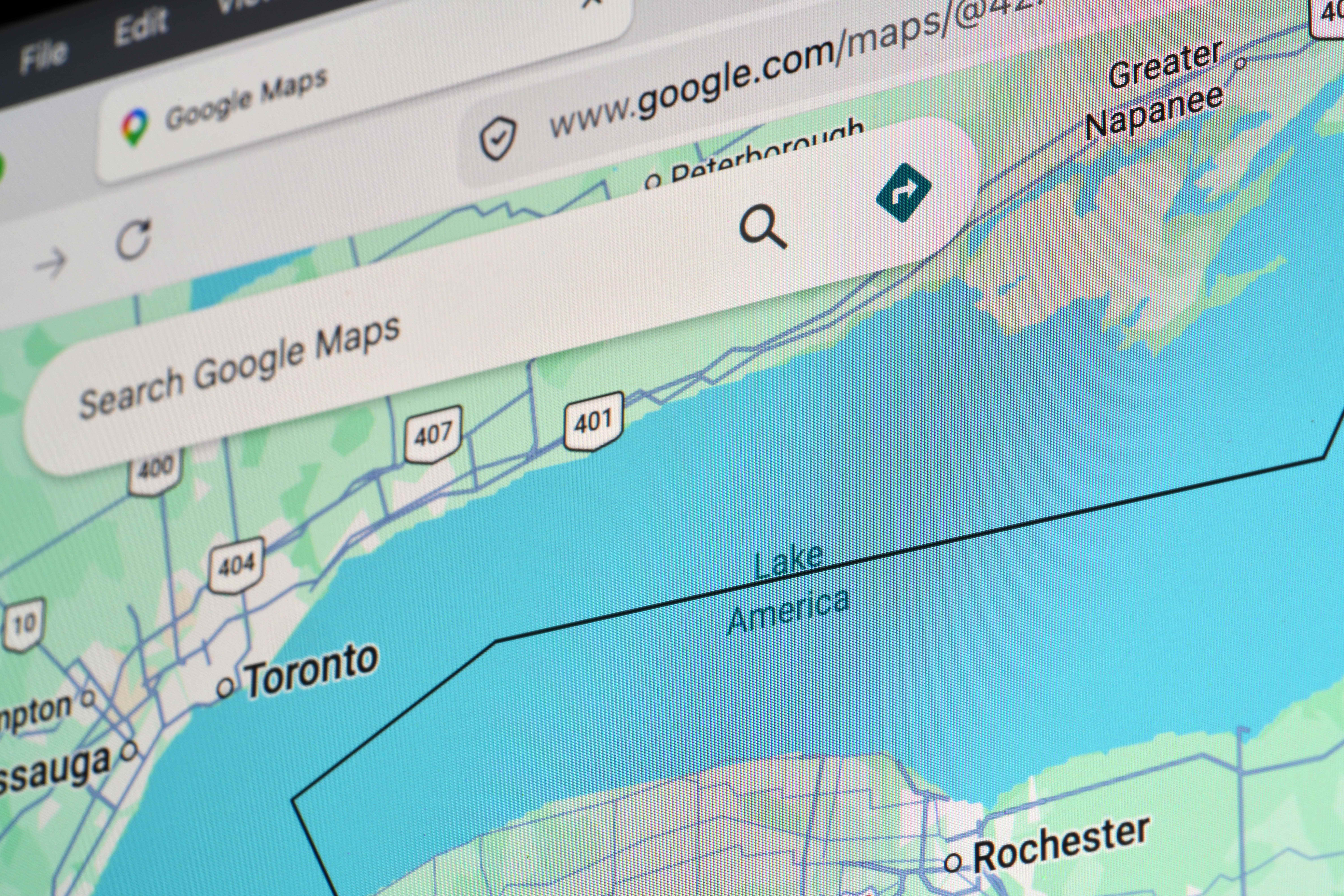
MapQuest has rocketed up the app store charts after publicly refusing to adopt the Trump administration's renaming of Lake Ontario to Lake America, a decision that has resonated with users on both sides of the border.
The mapping service announced Thursday that it would keep the traditional name on its platform, despite President Trump's executive order directing the Interior Department to update the lake's designation in the Geographic Names Information System (GNIS). By Monday morning, MapQuest had climbed to the top spot among navigation apps in Apple's U.S. App Store and ranked fourth among all non-gaming apps. In Canada, which shares the lake with the U.S., the app hit No. 2 overall over the weekend.

According to MapQuest, usage of its app surged to roughly 50 times its normal level, with hundreds of thousands of new downloads. The company's general manager, Doug Berger, framed the move as a continuation of its stance on the Gulf of Mexico, which Trump also renamed to Gulf of America on his first day back in office. "We took the same approach we did with the Gulf of Mexico: be part of the conversation, and give people an app that keeps the names they're familiar with," Berger said in a statement. "Hundreds of thousands of people signaled to us this weekend that we got it right, by downloading our app."
The contrast with competitors is stark. Google Maps began displaying "Lake America" for U.S. users on Saturday after the name was added to the GNIS, while Canadian users continue to see Lake Ontario, and users elsewhere see both names. Apple Maps has so far kept Lake Ontario, though Interior Secretary Doug Burgum said Monday that Trump had directly pressured Apple to change it. The administration's push for tech companies to fall in line has drawn criticism from Canadian officials.
Trump signed the executive order last week amid an escalating trade war with Canada, after negotiations between the longtime allies collapsed. Canadian leaders have uniformly rejected the renaming. Ontario Premier Doug Ford dismissed it as "something out of 'Saturday Night Live,'" while Prime Minister Mark Carney invoked the lake's deep history. "We know that America is changing. Their trading relationships, their foreign policies, their national monuments, their hydronyms," Carney said. "Canadians also know that naming reality means calling it Lake Ontario — then, now and always."
The episode highlights a broader pattern of Trump's unilateral actions on naming and foreign policy, which some analysts say are losing their shock value. As allies and foes alike tune out his threats, the MapQuest surge suggests a public appetite for pushback. The company's decision also taps into a growing consumer preference for brands that take stands on political issues, even as others like Google comply with federal directives.
For now, MapQuest is capitalizing on its newfound popularity, though whether the spike translates into long-term loyalty remains unclear. The app, once a pioneer in online mapping, has long been overshadowed by Google and Apple. But its refusal to rename the lake has given it a moment in the spotlight, and the company appears eager to leverage it.
As the trade war with Canada continues and Trump's approval ratings hover near historic lows, the renaming controversy is unlikely to fade quickly. MapQuest's stance may resonate with users who see the move as an overreach, and the app's surge suggests that many are voting with their downloads.