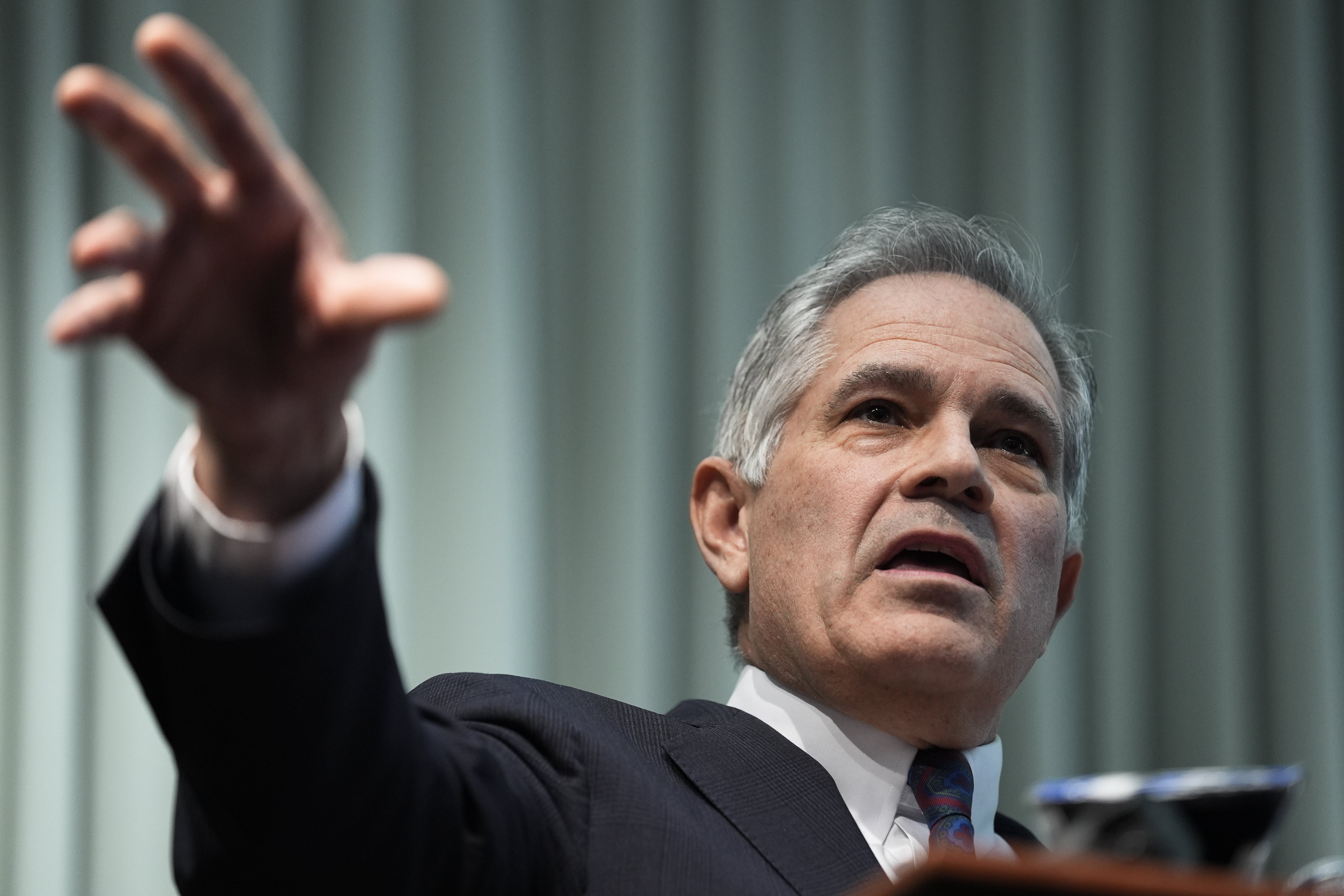
Philadelphia District Attorney Larry Krasner issued a direct threat Wednesday to arrest and prosecute federal Immigration and Customs Enforcement agents deployed to Philadelphia International Airport, dramatically escalating tensions over the Department of Homeland Security shutdown.
During a press conference, Krasner stated he would treat any criminal violations by ICE agents within his jurisdiction like any other offense. "You commit crimes within the jurisdiction that is the city and county of Philadelphia, I prosecute you," Krasner declared. "No, I don't take a phone call from the president saying, 'Let them go.' No, the president cannot pardon you."
He intensified his warning with specific reference to past ICE operations. "I will put you in handcuffs and I will put you in a courtroom and, if necessary, I will put you in a jail cell if you decide to make the terrazzo floor of this airport anything like what you did in the streets of Minneapolis, which involved the criminal homicide of unarmed, innocent people. We are not having that," Krasner added.
Nationwide Airport Deployment Amid Shutdown
The confrontation stems from the Trump administration's decision to deploy hundreds of ICE officers to major airports, including those in Philadelphia, Atlanta, New York, and Houston, to address Transportation Security Administration staffing shortages during the ongoing DHS funding lapse. The administration has framed the move as necessary for aviation security, with Acting DHS Assistant Secretary Lauren Bis stating, "President Trump is taking action to deploy hundreds of ICE officers, that are currently funded by Congress, to airports being adversely impacted."
However, DHS has refused to officially confirm specific deployment locations, citing operational security. The move represents an unusual use of immigration enforcement personnel for general airport security functions, a point of contention for congressional Democrats.
Political Standoff Over DHS Funding
The deployment occurs against the backdrop of a 40-day shutdown of DHS, with Democrats refusing to fund the agency without significant reforms to ICE operations. Democrats are demanding judicial warrants for immigration actions, mandatory body cameras for agents, and the removal of facial coverings during operations. Republicans have rejected Democratic proposals to fund non-ICE agencies within DHS separately.
President Trump has stated ICE agents will remain at airports until the shutdown ends. In a related development, a Trump proposal to end the shutdown faced immediate criticism from both Democrats and conservative Senate Republicans, delaying a potential vote. This political deadlock mirrors broader conflicts over immigration policy that have repeatedly stalled congressional action.
The situation highlights how local prosecutors are increasingly willing to challenge federal immigration enforcement, creating a patchwork of jurisdictional conflicts. Krasner's threat follows a pattern of the administration's controversial use of ICE personnel during the funding crisis, which has drawn criticism from civil liberties groups and some security experts.
This confrontation also unfolds as both parties assess their political positioning on immigration ahead of the next election cycle. Recent electoral shifts, including a Democratic capture of a Florida House seat in Trump's Mar-a-Lago district, have intensified debates over enforcement strategies. Meanwhile, legal challenges to administration policies continue to mount, with federal judges recently rebuking procedural approaches that threaten broader legal stability.
The standoff at Philadelphia International Airport now serves as a flashpoint in the larger battle over immigration enforcement, federal authority, and the limits of prosecutorial discretion in an era of deep political polarization.