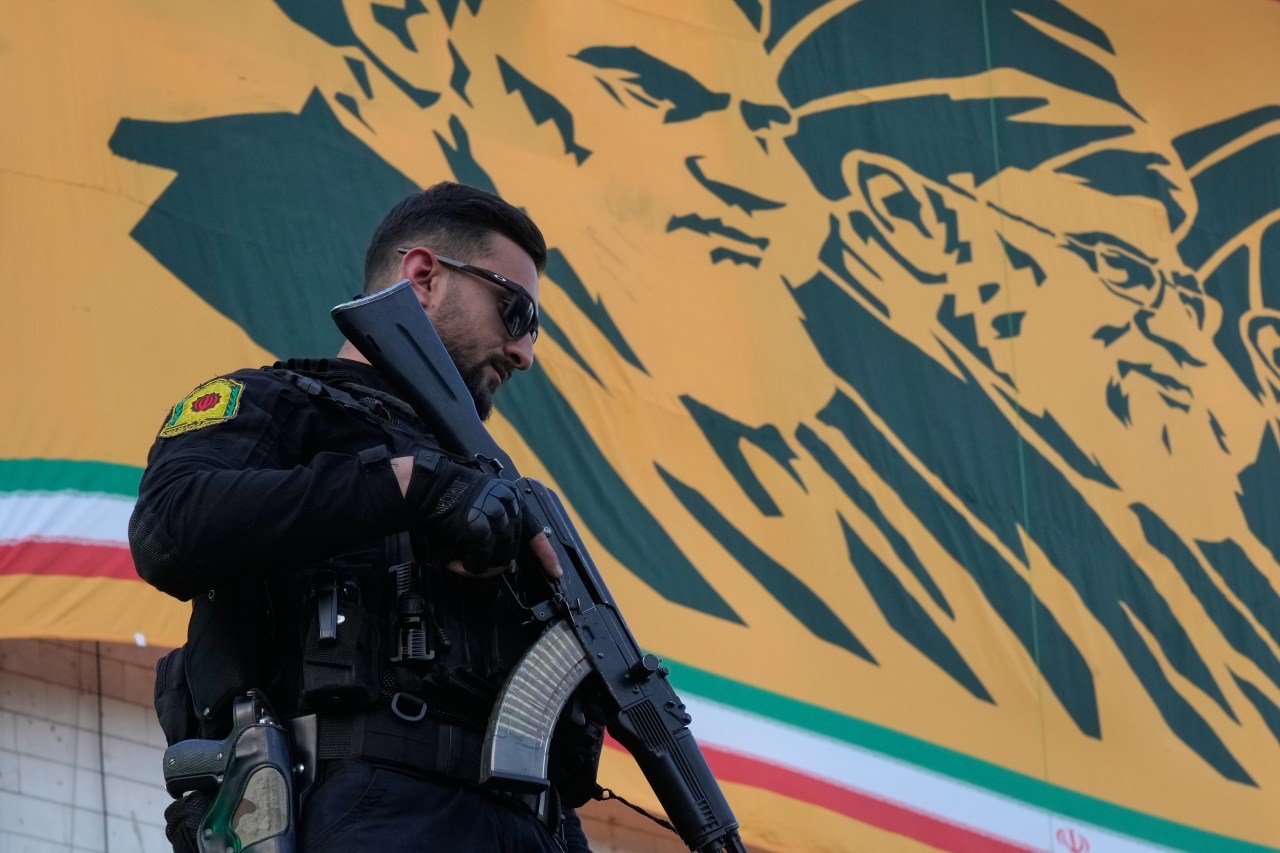
Iran's Supreme Leader Mojtaba Khamenei on Thursday declared that the Islamic Republic will safeguard its nuclear and missile capabilities as a national asset, signaling a hard line as President Donald Trump presses for a broader agreement to shore up a fragile ceasefire in the region.
In a written statement read on state television, Khamenei struck a defiant tone, asserting that the only place for Americans in the Persian Gulf is “at the bottom of its waters.” He framed the current moment as a “new chapter” in regional history, as Iran faces mounting economic pressure from a U.S. Navy blockade that has choked its oil exports.
The standoff has sent benchmark Brent crude for June delivery surging to $126 a barrel, as Iran maintains its grip on the Strait of Hormuz, a vital chokepoint through which one-fifth of the world's traded oil and gas passes. The blockade is designed to starve Iran of revenue, but the strait's closure has also driven up global energy prices, putting pressure on Trump ahead of critical midterm elections.
“By God’s help and power, the bright future of the Persian Gulf region will be a future without America,” Khamenei said. He reportedly was wounded in the February 28 attack that killed his father, former Supreme Leader Ayatollah Ali Khamenei. “We and our neighbors across the waters of the Persian Gulf and the Gulf of Oman share a common destiny. Foreigners who come from thousands of kilometers away to act with greed and malice there have no place in it — except at the bottom of its waters.”
Khamenei's remarks came as Iran proposed delaying talks on its nuclear program, a key sticking point. Trump has cited preventing Iran from developing nuclear weapons as a major war aim, though Tehran insists its program is peaceful despite enriching uranium to near-weapons-grade levels of 60%. Khamenei made clear that neither the nuclear file nor Iran's ballistic missile program are up for negotiation.
“Ninety million proud and honorable Iranians inside and outside the country regard all of Iran’s identity-based, spiritual, human, scientific, industrial and technological capacities — from nanotechnology and biotechnology to nuclear and missile capabilities — as national assets, and will protect them just as they protect the country’s waters, land and airspace,” he said, referring to the U.S. as the “Great Satan.”
Khamenei also signaled that Iran will maintain its control over the Strait of Hormuz, which lies within Iranian and Omani territorial waters. Tehran has reportedly charged some ships up to $2 million each to transit the waterway, a practice Gulf Arab states like the United Arab Emirates have condemned as piracy. Khamenei argued that Iran's “legal rules and new management” of the strait will enhance security and benefit all regional nations, despite the international community viewing the strait as an open waterway.
The standoff has strained the ceasefire and left Trump weighing how to respond as oil prices climb. His administration has rejected Iran's offer to delay nuclear talks, with Trump demanding Tehran “cry uncle” to end the blockade. The situation underscores the deepening crisis as Iran's oil industry faces a revenue crunch and the global economy absorbs the shock of higher energy costs.