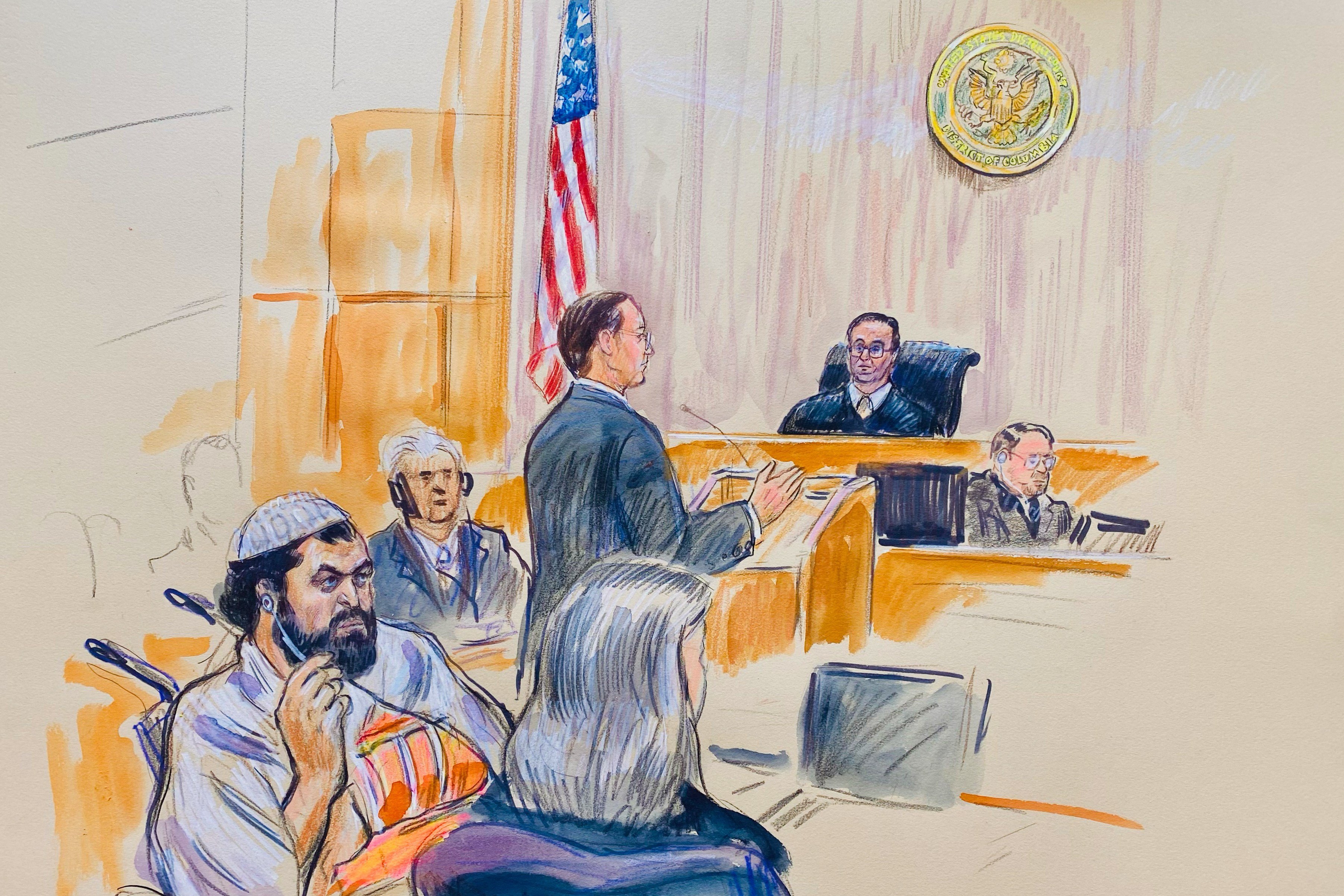
A federal judge on Saturday cleared the way for prison authorities to force-feed an Afghan national accused of ambushing two National Guard members in Washington, D.C., last year, after the suspect stopped eating.
U.S. District Judge Amit Mehta issued a brief order allowing the Bureau of Prisons (BOP) to provide “nonconsensual nutrition and medical treatment” to Rahmanullah Lakanwal, who has been in custody since the November shooting. The judge’s directive authorizes nasogastric tube feeding, intravenous feeding, or use of an existing gastrostomy tube “as necessary to preserve defendant Rahmanullah Lakanwal’s life or to prevent a foreseeable deterioration in his condition that if not treated is likely to lead to death.”
Lakanwal was hospitalized in July after U.S. Marshals flagged concerns about his health, according to Justice Department filings. The government said he had refused to consume adequate nutrition for an extended period. At an emergency hearing last month, Mehta noted that the defendant’s condition had “deteriorated quite substantially,” though he later observed signs of improvement.
The judge’s order allows the forced feeding to continue until Lakanwal resumes adequate oral intake and accepts medical treatment, or until his life is no longer in danger. The authorization remains in effect at least until Oct. 28, when prosecutors can seek an extension.
Lakanwal faces 17 charges, including murder, in connection with the shooting near Farragut Square Metro Station that killed U.S. Army Spc. Sarah Beckstrom, 20, and wounded U.S. Air Force Staff Sgt. Andrew Wolfe. The two West Virginia National Guard members were deployed to the capital as part of the Trump administration’s crime crackdown, a mission extended through January 2029.
Beckstrom died on Thanksgiving from her injuries. Wolfe, shot in the head, is scheduled for skull reconstructive surgery this week, his mother said in a Facebook video. She expressed hope that the procedure would help address his aphasia, a language processing disorder.
Lakanwal, who was shot during the confrontation before being arrested, has pleaded not guilty. Federal prosecutors have not said whether they will seek the death penalty, and his attorneys have voiced concerns about the government accessing his medical records during that deliberation.
This case adds to a series of high-profile rulings by federal judges on detention and medical care. In a separate matter, a judge recently halted a USPS mail ballot rule that could have affected voting. Meanwhile, other courts have weighed in on HUD’s fair housing grant changes and Texas’s drag performance ban.