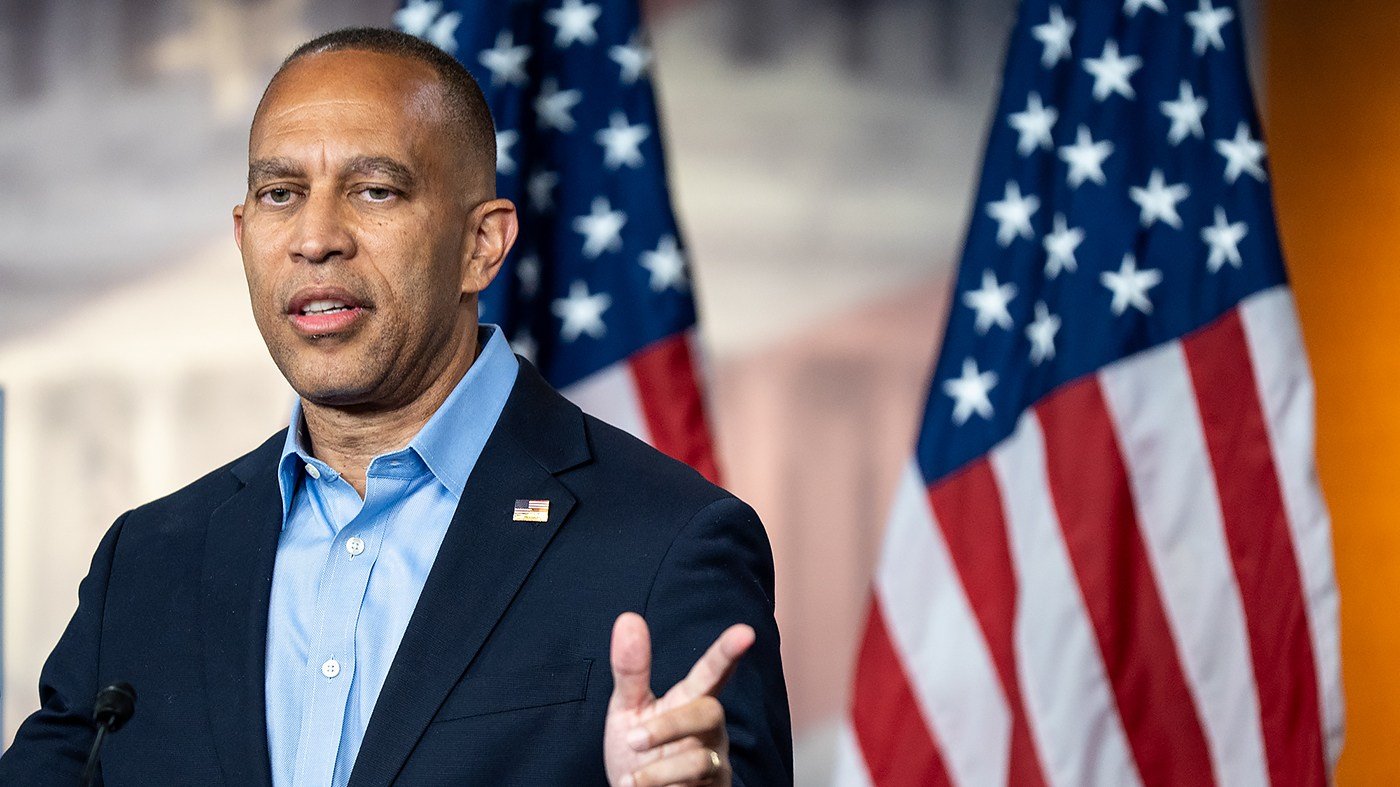
House Minority Leader Hakeem Jeffries (D-N.Y.) on Monday expressed serious reservations about a Senate-passed measure that would impose new penalties on nations purchasing Russian oil, as Moscow continues its war in Ukraine. While Jeffries stopped short of outright opposition, he cautioned that the legislation could effectively endorse President Trump's tariff strategy, ultimately driving up costs for American consumers.
Speaking to reporters in the Capitol, Jeffries noted that key Democratic committee leaders—including future Ways and Means Chairman Richie Neal and incoming House Foreign Affairs Chairman Greg Meeks—have voiced strong objections. "We haven't had a conversation about it yet," Jeffries said, "but both ... have expressed strong opposition to the bill, because it risks providing tariff and sanctions authority to Donald Trump and his administration that we believe they will abuse." He added, "And so I have serious concerns with the legislation."
The bill, championed by the late Sen. Lindsey Graham (R-S.C.), passed the Senate earlier this month with overwhelming bipartisan support, 86-11. It would target countries that continue to buy Russian energy, aiming to cut off revenue that funds the Kremlin's war effort. Ukrainian President Volodymyr Zelensky, who was in Washington during the Senate debate, has backed the measure, and some Democratic senators are pressing House lawmakers to act swiftly.
Sen. Richard Blumenthal (D-Conn.) underscored the urgency on CBS News's "Face the Nation" on Sunday, saying, "It is a moment of extreme urgency, for the reason that Putin may try to escalate, but also because Putin is on his heels economically. And this kind of sanctions bill, throttling the flow of revenue to his war machine, could undercut completely his ability to wage this brutal, murderous war."
Jeffries has long supported Zelensky and Ukraine's fight for autonomy, a stance he reiterated Monday even as he highlighted Democratic concerns about expanding Trump's trade powers. "Our record on that ... has been very clear," he said. "We'll take a look at the sanctions bill and have a caucus conversation about it."
The legislation is not currently on the House calendar as lawmakers return from a lengthy summer recess, leaving its fate uncertain. The Senate-passed sanctions bill may face a tougher path in the lower chamber, where Democratic leadership's skepticism could stall momentum. Jeffries is set to face the press as the House reconvenes for a shutdown showdown, and the Russia sanctions measure is likely to be a topic of discussion.
The debate comes amid broader questions about Trump's approach to Russia and sanctions. Recent reporting has highlighted Trump's ambiguous stance on Russia-Iran ties, and his administration has hinted at hidden sanctions on Chinese banks. Jeffries's concerns reflect a broader Democratic worry that the bill could grant Trump sweeping authority to impose tariffs without congressional oversight, a power they believe he would wield to advance his political agenda rather than national security interests.
Proponents argue the sanctions are essential to cripple Russia's war machine, especially as Putin seeks to escalate. But Democrats like Jeffries are wary of setting a precedent that could enable Trump to use economic tools against allies and adversaries alike. The bill's future in the House remains unclear, with no scheduled vote and leadership signaling a need for further discussion.