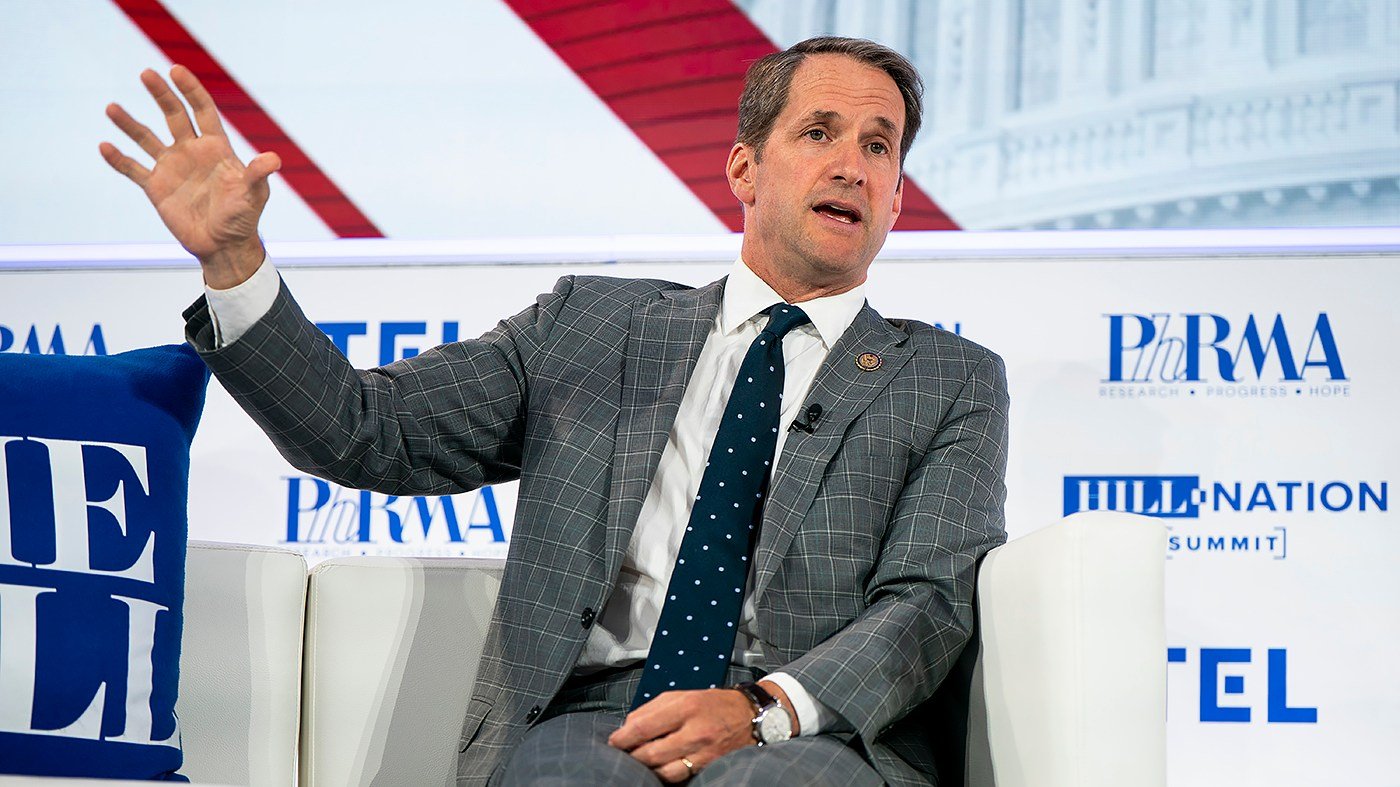
Rep. Jim Himes (D-Conn.) on Wednesday sounded an alarm about the outsized influence that a handful of tech billionaires, including Elon Musk, now wield over global security and artificial intelligence, pointing to the recent controversy over Starlink service in Ukraine.
Speaking on MSNBC's Morning Joe, the top Democrat on the House Intelligence Committee said the world has entered an era where a small group of ultra-wealthy individuals can shape the technology that underpins modern life and defense. “We’re in this world where, you know, five weird trillionaires are going to control the technology that guides and challenges our lives and livelihoods,” Himes said.
His remarks come after reports that Musk ordered a temporary slowdown of Starlink satellite service used by Ukraine’s military, a move that Ukrainian President Volodymyr Zelensky said hampered the country’s ability to defend against Russian aggression. Himes said Congress will investigate the incident, which reportedly resulted in significant Ukrainian casualties. “We’re going to get to the bottom of what exactly happened that resulted in the deaths of hundreds of Ukrainians,” he said. “I don’t know if it was Elon. Every government entity I talk to says, ‘We didn’t dial it back.’ We’ll get to the bottom of that.”
Zelensky and other Ukrainian officials announced over the weekend that Starlink service had been restored to normal speeds. But the episode has intensified concerns about the concentration of power in private hands, particularly when it comes to defense technology. Democratic lawmakers are now calling for a formal investigation into Musk’s decision-making.
Sen. Adam Schiff (D-Calif.) demanded that Musk testify under oath before Congress, writing on social media that “national security decisions should be made in our national security interests, and not based on the personal whim of an unstable executive.” Sen. Elizabeth Warren (D-Mass.) echoed that sentiment, telling CNN that there is “enormous risk” if Musk is “dictating our foreign policy.”
Musk, for his part, appeared to confirm that he authorized the slowdown, alleging in a social media post that Ukraine had violated Starlink’s terms of service by using the technology for offensive drone strikes. He asserted that the U.S. government and President Trump have ultimate authority over the military-grade Starshield service, but not the civilian Starlink network.
“SpaceX has done more to defend Ukraine than any private company on Earth BY FAR,” Musk wrote. He added, with characteristic bluntness: “I have nothing but UTTER CONTEMPT for the virtue-signaling evil warmongers who push for endless slaughter and offer no realistic solution to the conflict. May you burn in hell.”
The controversy has fueled broader Democratic scrutiny of the tech sector, with some lawmakers already eyeing new probes into tech companies should they regain control of Congress. Himes’s warning underscores a growing bipartisan unease about the unchecked power of a few corporate figures over critical infrastructure and AI systems.
As the political fallout continues, the episode has also become a flashpoint in the debate over the role of private enterprise in national security, with critics arguing that decisions affecting the lives of thousands should not be left to the whims of billionaires. The coming months may see renewed efforts to impose stricter oversight on the intersection of technology and defense.