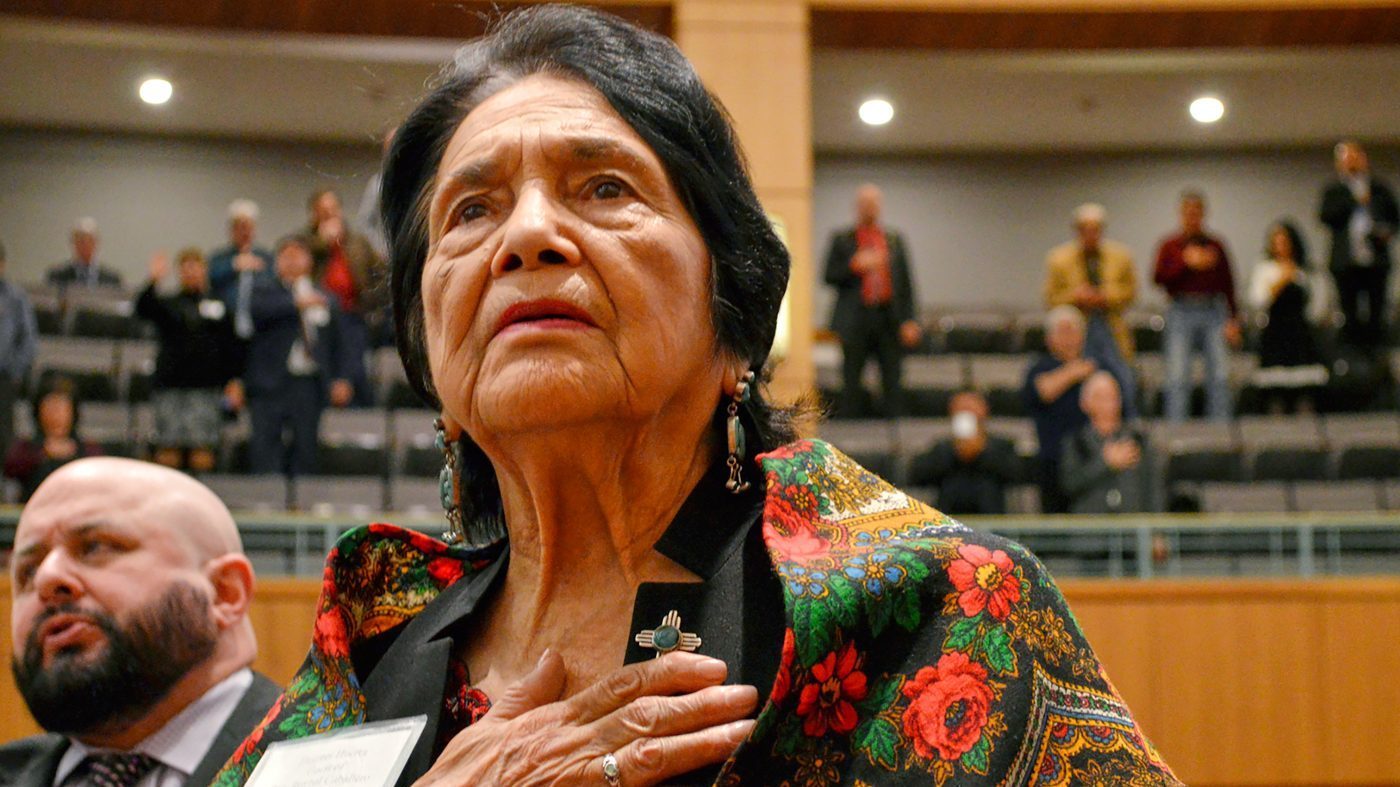
Dolores Huerta, a towering figure in the American labor movement and co-founder of the United Farm Workers, died on Wednesday at the age of 96, her family announced. Her death marks the end of an era for farmworker advocacy, but her legacy is now intertwined with the recent sexual assault allegations she leveled against her longtime partner, Cesar Chavez.
Huerta's family confirmed the news in a statement on Instagram, writing, "We are deeply saddened to announce that our beloved mother, Dolores Huerta, has passed away today at the age of 96." They added, "As you can imagine, this is an incredibly difficult time for us, and we ask for privacy as we grieve this incredible loss to our family."

Huerta was a relentless advocate for labor unions and farmworkers' rights throughout the 1960s, and later in life she also championed women's and LGBTQ rights. Her partnership with Chavez, which began in the 1950s, was instrumental in founding the United Farm Workers and securing better wages and working conditions for thousands of agricultural laborers.
However, earlier this year, The New York Times published an investigation in which several women accused Chavez of sexual assault and abuse, some dating back to when they were as young as 12. In the wake of those revelations, Huerta came forward with her own allegations, stating that Chavez had sexually assaulted her on two occasions in the 1960s, both of which resulted in pregnancies. She said she gave the children up to other families.
Huerta explained her decades of silence by saying she was focused on the movement and the fight for farmworker rights. "The formation of a union was the only vehicle to accomplish and secure those rights, and I wasn't going to let Cesar or anyone else get in the way," she wrote in a statement. "I channeled everything I had into advocating on behalf of millions of farmworkers and others who were suffering and deserved equal rights."
The allegations have complicated Chavez's legacy, which was already a subject of debate. After the accusations surfaced, some California lawmakers urged against celebrating Cesar Chavez Day and called for his name to be removed from the holiday. In Los Angeles, the event was renamed "Farm Workers Day." The Congressional Hispanic Caucus also committed to renaming monuments bearing Chavez's name, and a March poll found that 51% of Americans supported such a move.
Huerta's decision to speak out was praised by many elected officials in California at the time. Her death has prompted an outpouring of tributes, including from Rep. Ro Khanna (D-Calif.), who wrote on X, "Her courageous leadership in civil disobedience set an invaluable example in nonviolence. Dolores's memory will live on."
Her family said they will announce plans to honor her life and legacy in the coming days. "We know that many of you around the world share in our mourning, and we will be following up on plans to recognize and celebrate her incredible life and legacy," they wrote.
Huerta's death also comes at a time when labor issues are at the forefront of national politics, with debates over automation's impact on freelance work and leadership turmoil in Washington dominating headlines. Her life's work remains a touchstone for activists fighting for workers' rights today.