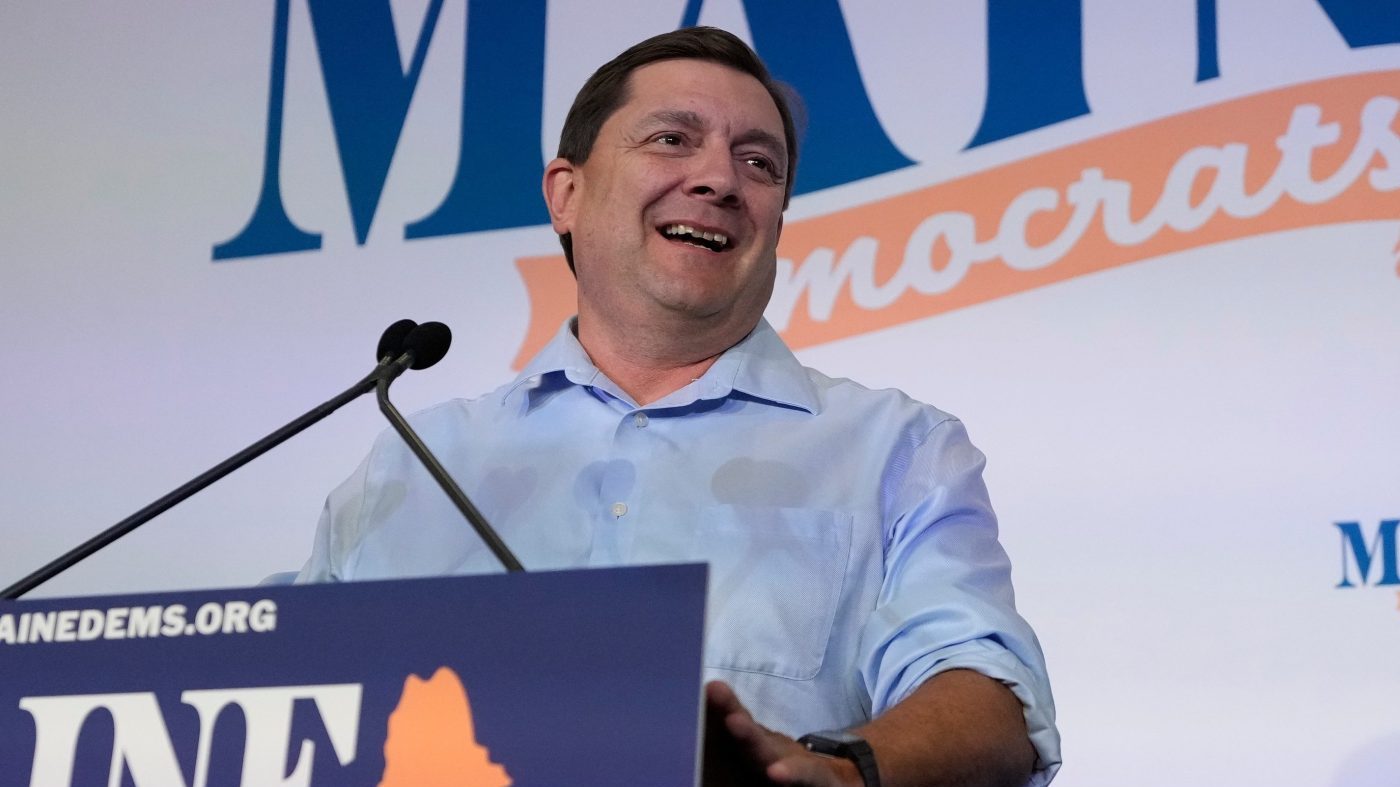
Former Vice President Kamala Harris has thrown her support behind Troy Jackson, the newly minted Democratic nominee for U.S. Senate in Maine, in a race that just got a jolt of national attention. Harris, who secured the Democratic presidential nomination in August 2024 after President Joe Biden stepped aside, highlighted Jackson's compressed campaign schedule as something she can personally relate to.
In a fundraising email sent Monday, Harris noted that Jackson will have only 101 days between his nomination and Election Day, calling it a "short runway to the election." The endorsement comes after Jackson formally replaced Graham Platner, who withdrew from the race following sexual assault allegations from former partners.

Jackson's Rapid Ascent and Polling Lead
Jackson, a former state senator, now faces a steep challenge against incumbent Republican Susan Collins. A University of New Hampshire poll shows him with a slim 3-point lead, but the race remains highly competitive. The Maine Democratic Party has rallied behind Jackson, hoping his working-class appeal can unseat Collins, who has held the seat since 1997.
Beyond Harris, Jackson has also secured the endorsement of Our Revolution, the progressive group founded by Senator Bernie Sanders. This backing signals that Jackson may be able to consolidate support from the party's left wing, though his past positions have drawn scrutiny.
Evolution on Key Issues
Jackson's political trajectory has been anything but linear. He first registered as a Republican in 2000, switched to independent in 2002, and joined the Democratic Party in 2004 while serving in the state House. His stance on social issues has also shifted. In 2009, he voted against same-sex marriage legalization and received support from an anti-abortion group. But in recent years, he has championed abortion rights and earned high marks from Equality Maine, a leading LGBTQ advocacy organization.
This evolution has made him a target for both Collins' campaign and some skeptical voters. Yet Jackson has remained combative, criticizing Collins for accepting donations from corporate PACs and billionaires. He has also stated he would not support Senate Majority Leader Chuck Schumer for Democratic leadership, a position that could complicate his relationship with party brass if elected.
Fundraising Gap and Grassroots Push
One of Jackson's biggest hurdles is money. Collins has raised $16 million, dwarfing Jackson's $2 million since his nomination. The condensed timeline leaves little room to close that gap, but his campaign is betting on grassroots energy. Peter Blachly, a volunteer on Jackson's team, told the New York Times, "I'm supporting him not because I necessarily think he's the smartest or even necessarily would be the best legislator, but he is the most electable."
The race has also drawn attention to broader national trends, including concerns over AI surveillance pricing and economic pressures that are reshaping voter priorities. Jackson's ability to tap into that discontent could prove decisive.
As the campaign enters its final stretch, Jackson is trying to turn his short runway into an advantage, framing himself as a fighter who can take on the establishment. Whether that message resonates in a state that has often split its tickets remains the central question of this race.