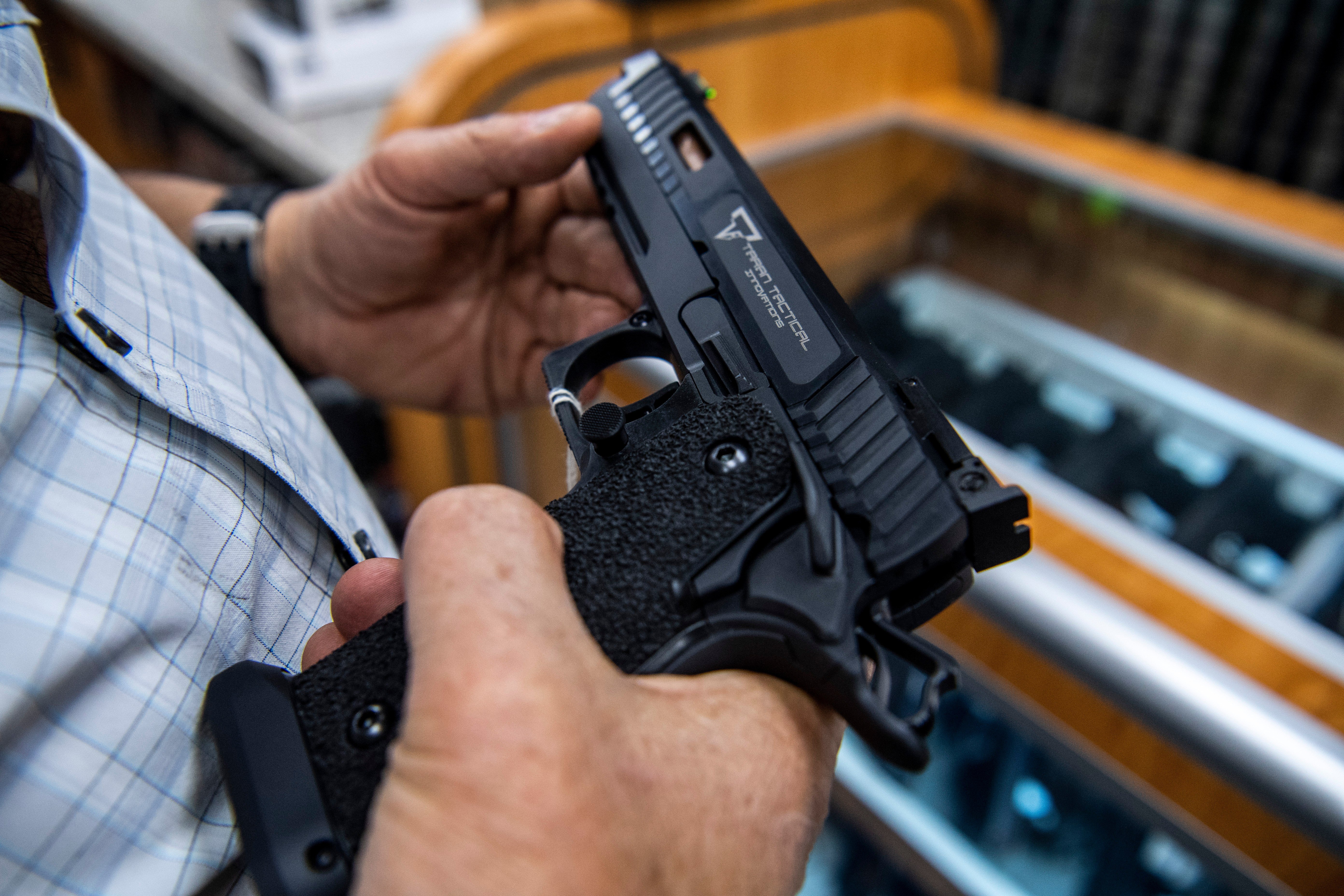
The perennial American debate over gun rights often boils down to a single question: Is the Second Amendment absolute, or does it permit sweeping restrictions, even confiscation? But according to Eric A. de Moya, a licensed Florida attorney and former counsel for the Florida Department of Revenue, that question is moot. Even if courts ruled against gun owners tomorrow, the government could not physically seize the nation's firearms. The obstacles are staggering: cost, courts, verification, and supply—and the attempt would forfeit real, unmeasured benefits.
Start with the price tag. Americans privately own roughly 500 million guns—more than one per person. Compensating owners at just $500 per firearm would cost $250 billion before paying a single lawyer, judge, or warehouse fee. For context, Australia's 1996 buyback collected about 650,000 guns, less than 0.2% of the U.S. stockpile. The sheer scale makes any confiscation program financially prohibitive.
Courts and Verification: A Logistical Nightmare
Then there's the judicial system. Every contested seizure or valuation would spawn lawsuits—takings claims, Fourth Amendment challenges, and criminal prosecutions. With tens of millions of gun owners, even a small fraction fighting back would flood an already backlogged court system with hundreds of thousands of cases. De Moya, who has defended contested government actions, warns that the administrative machinery would grind to a halt.
Verification is perhaps the hardest hurdle. Federal law has barred a national gun registry since 1986, so the government doesn't know who owns what. Confiscation would rely on voluntary surrender—unlikely—or door-to-door searches requiring probable cause, which would stretch law enforcement thin, diverting resources from fighting fraud and drug trafficking.
The Supply Problem and Deterrent Value
And the guns keep coming. U.S. factories made nearly 10 million firearms in 2023, and imports added almost 6 million more. Meanwhile, 3D printers and unfinished parts kits allow hobbyists to build guns at home. De Moya likens confiscation to bailing water from a boat with a hole in the hull—a fool's errand that would neglect real problems.
But there's also what we'd lose. De Moya, who holds a criminology degree, notes that deterrence works partly through uncertainty. A burglar or carjacker who can't know if a homeowner is armed is more likely to be deterred. Criminologists know these crimes are prevented, even if they're never counted.
The same logic applies internationally. The famous (though possibly apocryphal) warning attributed to Admiral Yamamoto—that invading the American mainland would face "a rifle behind every blade of grass"—captures a strategic reality. Occupying a country of armed civilians is costly, as the U.S. learned in Iraq and Afghanistan, and as Britain learned from the Minutemen.
Switzerland and Finland integrate armed citizens into national defense. In 2022, Ukraine handed rifles to civilians in Kyiv as Russian forces approached. America's private arsenal is a standing deterrent that costs taxpayers nothing, paying dividends every day in invasions never attempted.
The constitutional debate over the Second Amendment makes for good legal arguments, fundraising, and television, but it's beside the point. The arithmetic and physics of confiscation have already settled the issue. The debate should move on to what's actually achievable—like encouraging gun safety training—though that's a discussion for another day.