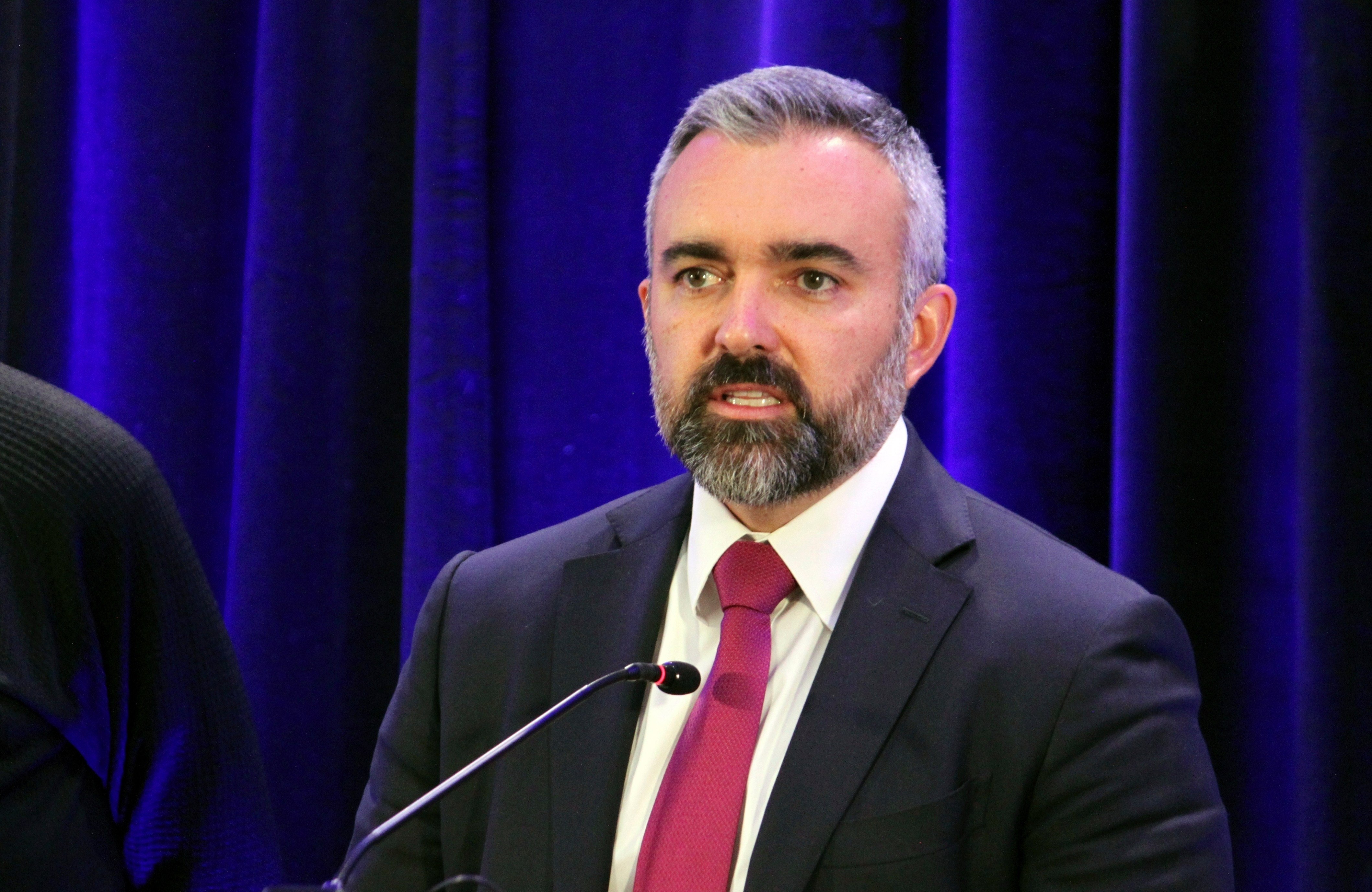
Rep. Brian Fitzpatrick (R-Pa.) used the Labor Day holiday to press the Senate to take up the Faster Labor Contracts Act, a measure he argues would restore a fair bargaining process for newly organized workers and strengthen the economic security of working families.
In an opinion piece published this week, Fitzpatrick recalled his grandfather's journey from Ireland through Ellis Island and his membership in the Iron Workers union, which he said provided the security and opportunity to build a better life. Fitzpatrick contrasted that with what he called the “eroding standard of living” for today’s middle class, pointing to rising costs for housing, health care, education, and childcare that outpace wage growth.

The congressman cited a Gallup poll showing union approval at 71 percent, the highest in recent history, with support spanning party lines. He also noted research indicating union workers earn over 11 percent more than their nonunion peers and are more likely to have employer-sponsored health coverage and paid sick leave. Yet only about 10 percent of American workers belong to a union today.
Fitzpatrick highlighted the obstacles workers face when they attempt to organize, including sophisticated anti-union campaigns and employers who refuse to bargain in good faith. As a result, he said, it takes an average of nearly 18 months for workers to negotiate their first contract. That delay, he argued, undermines the purpose of collective bargaining and contributes to rising income inequality and reduced economic mobility.
The Faster Labor Contracts Act would require employers to begin bargaining within 10 days of a union’s notification. If no agreement is reached after 90 days of good-faith negotiations, the Federal Mediation and Conciliation Service would step in unless both sides agree to extend talks. If mediation fails, federal arbitrators could issue a binding two-year decision to resolve the impasse.
Fitzpatrick pointed to recent examples in his home state. He noted his support for nurses at St. Mary Medical Center in Bucks County who voted to organize. He also referenced nearly 1,000 nurses and advanced practitioners at UPMC Magee-Women’s Hospital in Pittsburgh who voted to form a union last year but have been without a first contract for more than a year, seeking stronger staffing standards, better compensation, and expanded benefits.
Beyond the FLCA, Fitzpatrick highlighted his work with SEIU on the Good Jobs for Good Airports Act, which would protect airport service workers from losing wages and benefits when a new contractor takes over. He argued that both measures share a simple principle: hard work should provide a fair path to stability and opportunity.
“This Labor Day, the Senate has an opportunity to renew a basic American promise: that hard work should still lead to a better life,” Fitzpatrick wrote. He called on colleagues to pass the FLCA and stand with American workers.
For more on labor trends, see the Labor Department's projection of steep job declines and analysis of labor force participation.