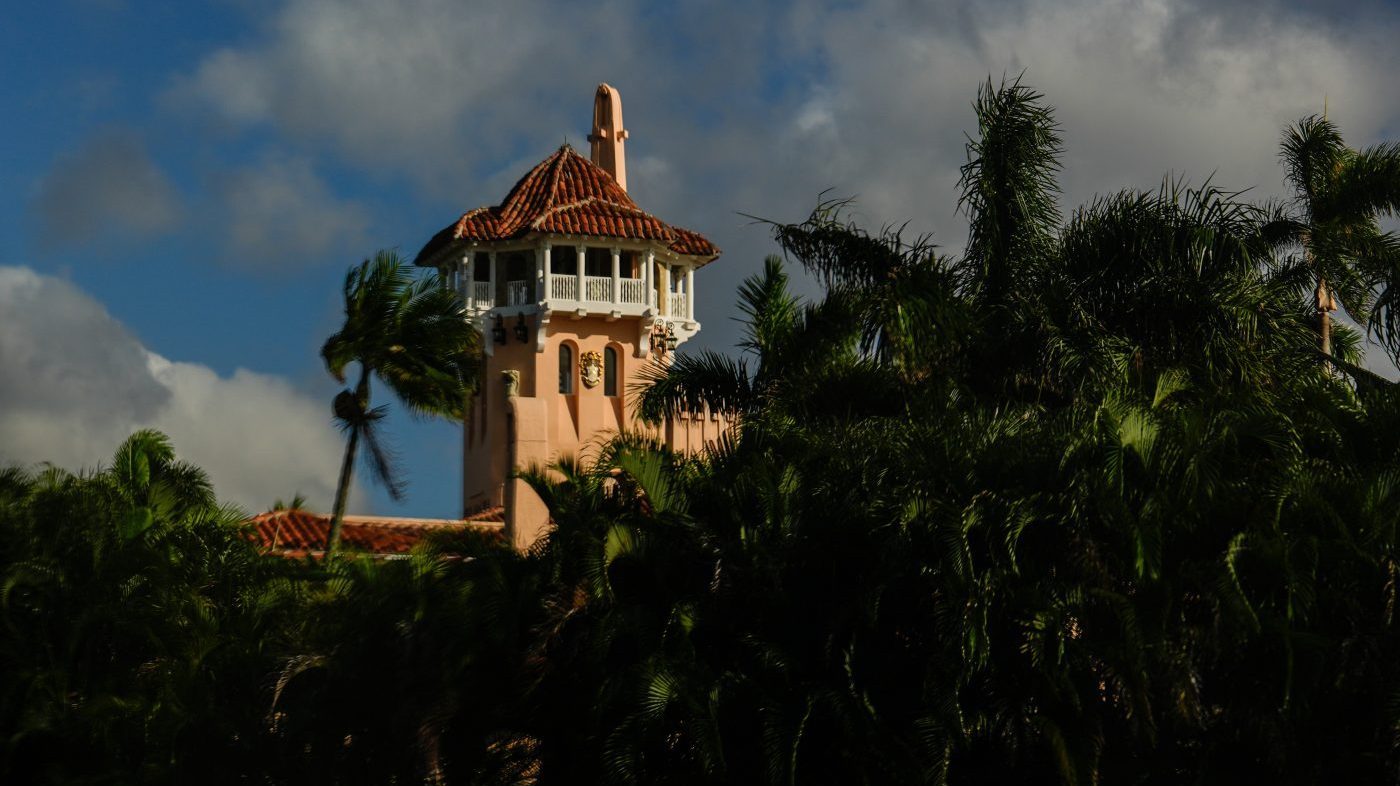
The Federal Aviation Administration on Wednesday proposed a rule that would permanently restrict flights within a one-mile radius of Mar-a-Lago, a move that would significantly alter air traffic over the Palm Beach area and has already sparked legal and community pushback.
The proposed regulation would "establish a flight restriction from the surface to 2,000 feet" above mean sea level "within a one NM radius of Mar-A-Lago Club," according to the FAA. These restrictions were initially put in place in October 2025 on a temporary basis amid heightened security concerns, and the agency now seeks to make them permanent.
If enacted, the rule would effectively shut down use of Runway 28R/10L at Donald J. Trump International Airport, formerly Palm Beach International Airport. That runway is one of three at the airport but serves as its main commercial runway, handling an average of 86 flights per day in 2025.
The FAA is accepting public comments on the proposal until October 2. The agency has already been diverting planes over Mar-a-Lago since the start of President Trump's second term, following requests from the Secret Service. But those diversions have drawn complaints from Palm Beach County residents, who have voiced concerns about noise, pollution, and property values.
"My house is filled with the smell of jet fuel," said Jane Jones, a Palm Beach resident, during a 2025 hearing before the county's Citizens Committee. Other residents reported health concerns and what one person described as a "double-digit decrease in your property value."
"Our white roof was white — it is now gray," said a West Palm Beach resident. "Given the current circumstances, it will eventually get black."
Residents' concerns align with a 2020 University of Washington study that found "airport operations result in noise and air pollution, which are linked to many of the health outcomes experienced by airport communities." The study noted evidence of "lower life expectancy and increased risk of various health problems, from stroke to heart disease to respiratory problems" for those living near airports.
The county, along with West Palm Beach and Palm Beach, has filed a federal lawsuit over the restrictions, echoing residents' complaints. The lawsuit states: "Residents reported: being disturbed by aircraft noise as early as 6:00 a.m. and as late as 11:00 p.m.; an inability to converse outside due to aircraft noise; soot covering their properties; the smell of jet fuel permeating their homes; potential damage to the architectural features of historic homes."
The lawsuit also argues that the FAA failed to follow proper procedures when instituting the initial no-fly zone, including a required environmental review under the National Environmental Policy Act (NEPA). The FAA's new proposal is separate from that litigation but could be seen as an attempt to formalize the restrictions in the face of legal challenges.
This development comes amid broader debates over federal authority and local impacts, including proposals to ban superintelligent AI and a federal judge striking down New York's climate superfund law. The FAA's move to make the flight restrictions permanent will likely intensify scrutiny from both aviation stakeholders and residents who feel their concerns have been overlooked.