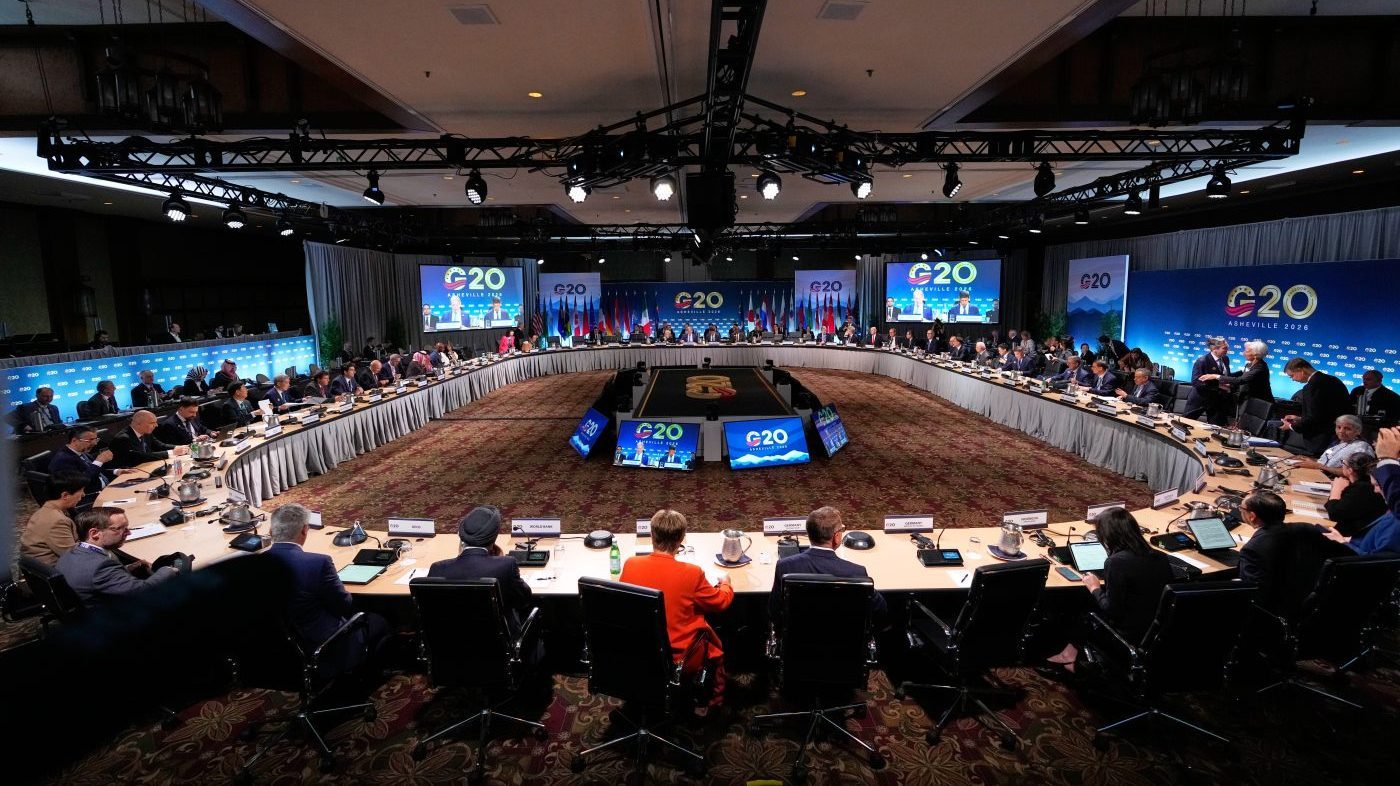
European finance ministers and central bankers openly challenged the U.S. this week over its decision to host Russia's finance minister at the G20 summit in Asheville, North Carolina. The presence of Anton Siluanov, Moscow's top financial envoy, drew sharp rebukes from European officials who argued it undermines efforts to isolate the Kremlin over its full-scale invasion of Ukraine.
Germany's finance minister, Lars Klingbeil, told reporters at the summit that he was troubled by the signal the invitation sent. "A joint approach would be best, yet it is sometimes unclear whether there might be a loosening of the stance over there," he said, according to Reuters. "That is why I find the signal sent by receiving the Russian finance minister here quite troubling. I would have wanted greater clarity from the American side that he should not be received here as a normal guest."
The friction comes as July recorded the highest civilian death toll in Ukraine in months, with intensified Russian missile and drone strikes and a shortage of Ukrainian air defense munitions. Winter fighting is expected to worsen the humanitarian crisis, making European officials wary of any step that could be read as leniency toward Moscow.
Despite the diplomatic tension, Russia's Finance Ministry said Siluanov did meet with U.S. Treasury Secretary Scott Bessent on the sidelines of the G20, and that the two discussed bilateral financial relations and G20 cooperation. A source familiar with the conversation told The Hill that Bessent "made clear" to Siluanov that the U.S. "will not provide Russia with economic relief until the war in Ukraine is over." The source added that when Siluanov tried to raise areas of mutual interest, Bessent "forcefully interrupted and said nothing is possible until the war is over."
The meeting unfolded as Congress weighs a new sanctions package that would empower the president to impose tariffs on the top five purchasers of Russian oil, among other measures. President Trump, who has sought to mediate an end to the war, has at times downplayed U.S. support for Ukraine. But after Russia stalled negotiations, he imposed sanctions on major Russian oil firms Lukoil and Rosneft in October 2025.
European officials also balked at including Siluanov in the traditional "family photo" of G20 participants. Reuters reported that the group ultimately decided to take the photograph without the Russian minister, a symbolic but pointed snub.
The U.S., as host, controls the guest list and also excluded South Africa, last year's G20 host, amid Washington's accusations that Pretoria persecutes white South Africans—charges the South African government denies. The Trump administration has created a special refugee program for white South Africans, giving them priority resettlement in the U.S. Spain was also absent; Trump has criticized Madrid for refusing to commit to a 5% of GDP defense spending target and for its criticism of U.S. and Israeli actions in Iran.
The discord underscores a growing transatlantic rift over how to handle Russia. While Europe has signaled it is preparing another sanctions package, the U.S. appears to be sending mixed signals, even as it maintains economic pressure. German officials have also pointed to the broader need for a united front, especially as European NATO members rethink defense spending amid the ongoing threat.
The G20 meeting in Asheville was meant to address global financial stability, but the shadow of the Ukraine war loomed large. European ministers stressed that any appearance of normalcy with Moscow would be a strategic mistake, and they vowed to keep up pressure through sanctions and diplomatic isolation.