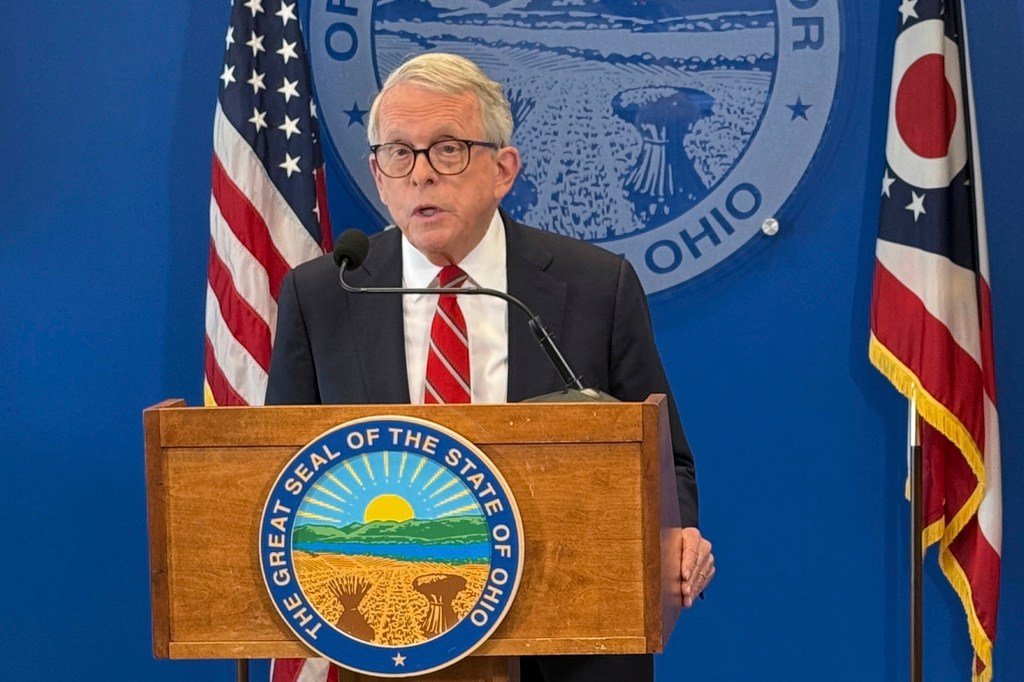
Ohio Gov. Mike DeWine (R) has spent nearly five decades in public office, a feat almost unheard of in modern politics. At 79, he has been elected and reelected to seven different positions, from county prosecutor to governor, surviving two electoral losses that would have ended most careers. His journey offers a rare blueprint for political longevity and effective governance.
DeWine's first win came in 1977 as Greene County Prosecutor. He then moved through the Ohio state Senate, the U.S. House, lieutenant governor, and the U.S. Senate, where he lost his 1992 bid and was ousted in 2006. Rather than retiring, he returned to Ohio, taught college courses, and won the attorney general's office in 2010—an unusual comeback after a Senate stint. He was reelected overwhelmingly in 2014, and his work on the state's rape-kit backlog, which uncovered 300 serial rapists linked to over 1,100 crimes, propelled him to the governorship in 2018. He won a second term in 2022 by 25 points.
DeWine attributes his success to a disciplined approach. "My biggest regrets are when I didn't have all the facts or didn't drill down deep enough before making an informed decision," he said. He advises leaders to "acknowledge that you aren't always the expert, find the experts who can give you the data you need, and listen to those you want to lead and encourage them to come up with ideas."
His philosophy of focusing on "a few big things" has translated into tangible results. In 2026, CNBC named Ohio "America's top state for business," a recognition DeWine touted as proof that his long-term investments are paying off. "When I took office, I promised to 'plant the seeds' of long-term investments that will positively impact Ohio for years to come," he said. "Today's announcement is proof that these seeds are growing."
As his term ends in January, the political landscape in Ohio is uncertain. The governor has endorsed Republican businessman Vivek Ramaswamy to succeed him, but Democrat Amy Acton, a physician, is running a competitive race. Meanwhile, the special election for the Senate seat vacated by Vice President JD Vance pits Republican Sen. Jon Husted against former Sen. Sherrod Brown. DeWine appointed Husted in January 2025, setting up a contentious battle that could affect control of the Senate. The GOP's narrow majority is at stake, and Brown, who defeated DeWine in 2006, is seeking a comeback.
DeWine's leadership style is rooted in transparency and urgency. "You should be transparent and communicate what you know—and don't know—focus on just a few big things, and then, be willing to make the tough decisions," he said. He also teaches his team the "but for" test: "But for you taking this action or that action, this change or the result would not have happened. If others are already doing it, then focus on something else."
Ann O'Donnell, his longtime chief advisor, describes him as "a radical optimist who believes deeply in the potential of all Ohioans. He loves Ohio and genuinely cares about the well-being of the people he has represented or governed." She adds, "He is the real deal, one of the last of a rare breed of public servants."
DeWine's advice to young officeholders: "Don't waste time; treat every day you are in office with urgency while focusing on the things where you can make a difference." He says he doesn't dwell on legacy, but rather "intends to help all Ohioans reach their full God-given potential." In an era of showhorse politics, DeWine's workhorse approach stands as a testament to the power of persistence and principle.