Tuesday's midterm elections delivered a stinging rebuke to the data center industry, as voter anger over the facilities' impact on energy costs, local communities, and the environment helped carry Democrats to key victories and drove overwhelming support for ballot measures restricting construction.
Exit polls underscored the salience of the issue: 23 percent of voters called data centers "crucial" to their congressional vote, and 33 percent said they were a "major" factor. Seventy-six percent said they would oppose a new data center in their community. The results represent the most significant electoral test yet for the sector, which has become a visible symbol of AI's rapid expansion and its associated costs.

"Data centers represent a fear and an angst that voters have about being replaced by AI, losing their jobs, losing their livelihoods [and] the rising price of energy in their local area," said Brendan Steinhauser, who managed Sen. John Cornyn's (R-Texas) 2014 campaign and now leads the Alliance for Secure AI. He also linked the backlash to "corruption" from "Big Tech oligarchs."
The issue proved decisive in several battleground races. In Ohio, League of Conservation Voters President Pete Maysmith pointed to the Senate contest, where Republican Jon Husted's support for data center tax breaks became a liability. "That was litigated extensively in that race, and it cost them, and it helped propel [former Sen.] Sherrod Brown [D] to winning that race," Maysmith said. The National Republican Senatorial Committee had even warned that data centers were an "anchor hanging around Husted's neck."
Texas saw a dramatic shift as well. Gov. Greg Abbott, who had once proclaimed the state the "epicenter of AI development," abruptly reversed course and halted new data center permits amid public outcry. But his opponent, Democrat Gina Hinojosa, hammered him for the timing, calling the pause "in name only." She defeated Abbott, and her victory throws the state's data center buildout into uncertainty. Attorney General Ken Paxton also lost his Senate bid to Democrat James Talarico.
Steinhauser suggested Abbott's late pivot may have cost him. "If he would have come out earlier stronger, not only for a moratorium, but maybe for restrictions, holding big tech more accountable, he might have performed better," he said. "But again, to lose by the amount of votes he's losing by, it'd be hard for me to say that he would have won."
The industry now faces a hostile political environment. "For AI, the Hinojosa win is truly earth-shaking. The data center buildout is a Texas story, with only slight exaggeration," wrote former Rep. Brad Carson (D-Okla.), president of Americans for Responsible Innovation, on X.
Populist messaging resonated broadly. Shaunna Thomas, executive director of the labor-backed super PAC Guardrails Alliance, said the results show "data center backlash is one of the most bipartisan political issues of our time as people across the country face noise pollution, rate hikes and Big Tech trying to steamroll local governments."
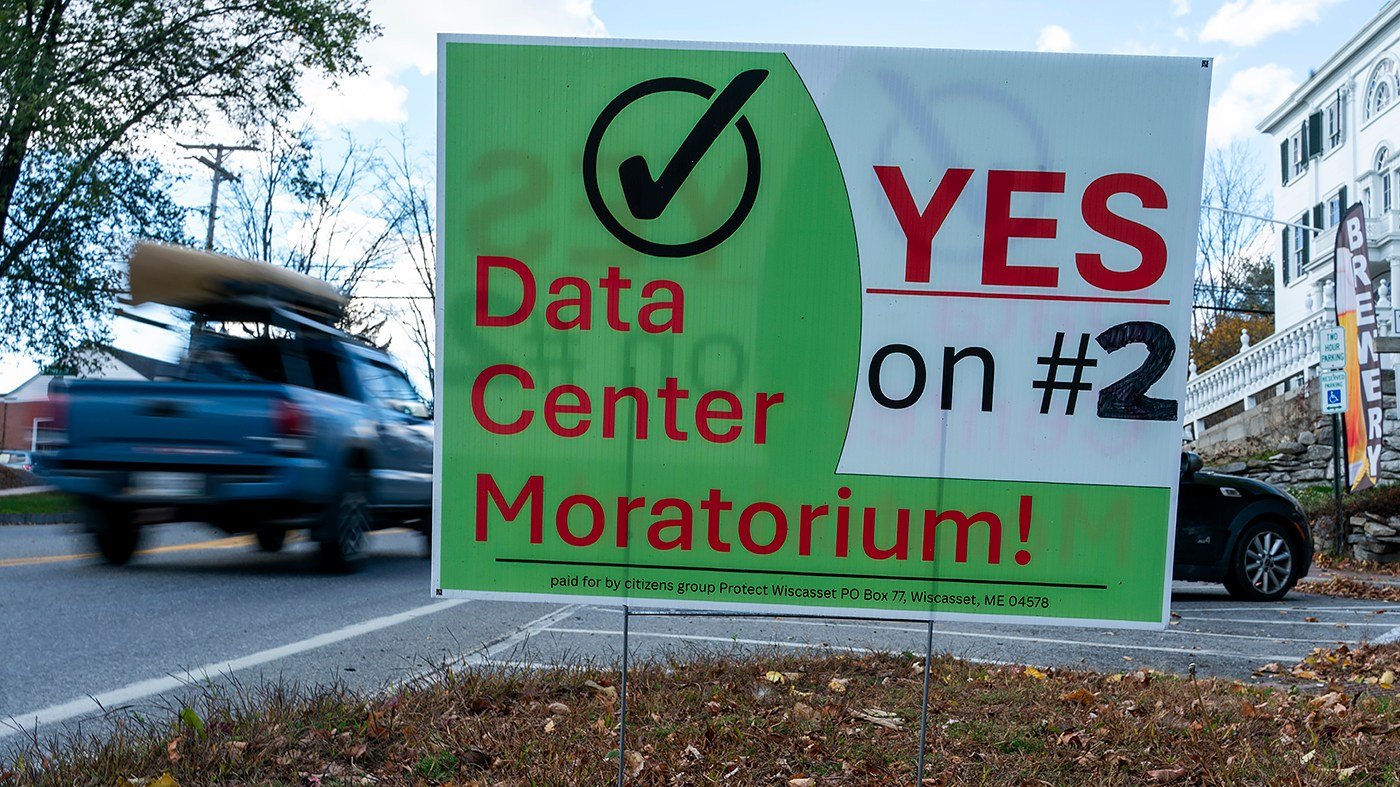
Local ballot measures reflected the trend: of 41 such measures to restrict data center construction, voters rejected the centers in all but a handful. The outcome signals that the industry's growth will face increasing political resistance, even as Washington debates AI policy. For related context, see young voters' decisive shift and the GOP's broader midterm troubles.