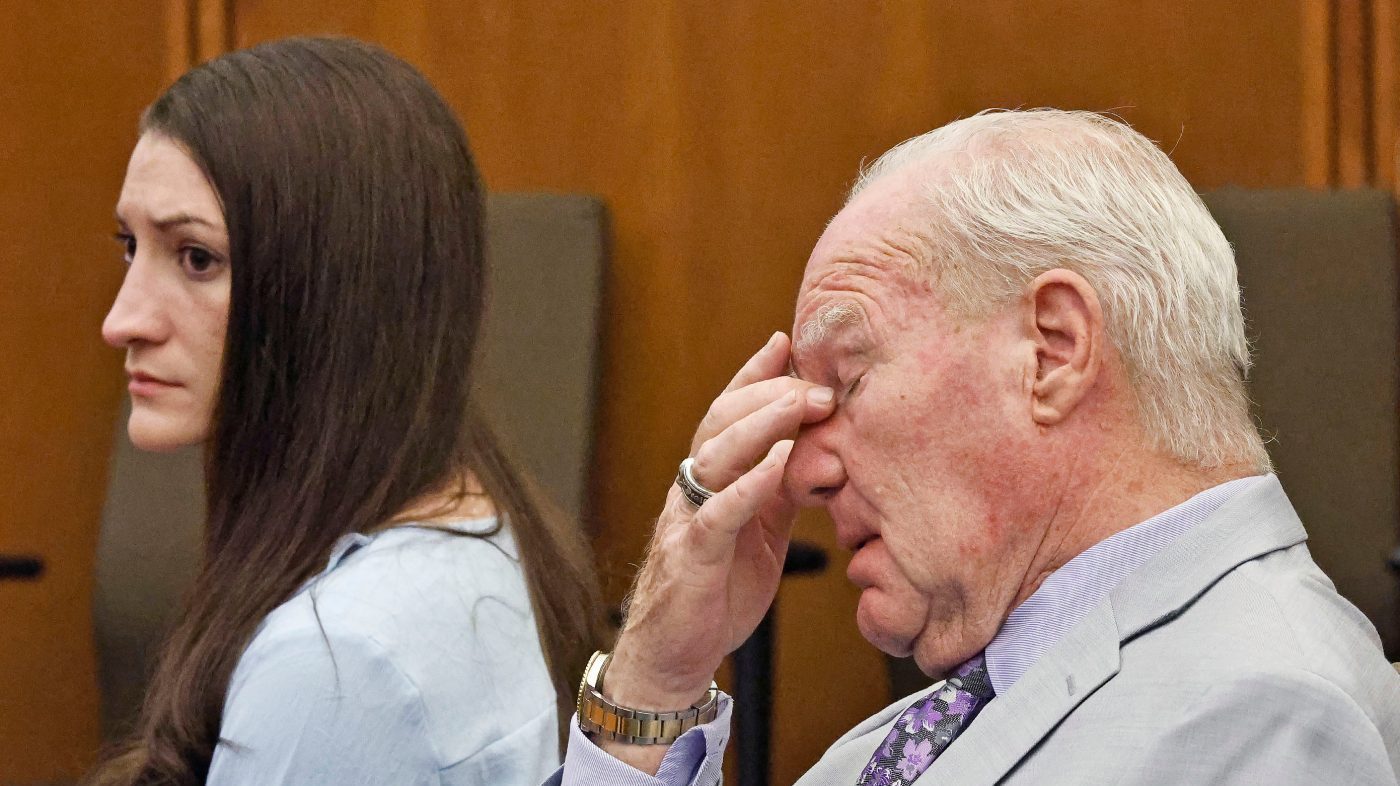
The Massachusetts judge presiding over the Lindsay Clancy murder trial dismissed the jury for the day Wednesday after delivering a pointed instruction meant to break a deadlock that has now stretched past 28 hours. The panel has been unable to reach a unanimous verdict on whether Clancy, 36, is criminally responsible for the deaths of her three young children in January 2023.
Clancy, a former labor and delivery nurse, is charged with three counts of first-degree murder in the strangulation deaths of 5-year-old Cora, 3-year-old Dawson, and 8-month-old Callan in the family's Duxbury home. She has pleaded not guilty by reason of insanity, with her defense arguing that she suffered from postpartum psychosis at the time of the killings.

Plymouth Superior Court Judge William Sullivan invoked the so-called “dynamite charge,” formally known as the Tuey-Rodriguez instruction, a legal tool used in Massachusetts when a jury signals it cannot agree. The charge urges jurors to reconsider their positions while respecting the views of others.
“In conferring together, you ought to pay proper respect to each other's opinions and listen with an open mind to each other's arguments,” Sullivan told the jury, reading the instruction. He added that jurors favoring acquittal should consider whether their doubts are reasonable if they do not persuade others who are “equally honest, equally intelligent” and who have heard the same evidence.
Conversely, he said, those favoring conviction should ask themselves whether they might “reasonably doubt the correctness of a judgment that is not concurred in by other members of the jury.” After the instruction, the jury was sent home and is scheduled to resume deliberations Thursday.
The Tuey-Rodriguez charge stems from a 1973 Massachusetts Supreme Judicial Court ruling in Commonwealth v. Rodriguez, which gave judges the authority to encourage continued deliberations. It is typically a final attempt to avoid a mistrial.
If the jury remains deadlocked, Sullivan could declare a mistrial, which would leave the door open for prosecutors to retry Clancy. The case has drawn national attention, in part because of the strain a retrial would place on the defendant, who has been paralyzed from the waist down since a suicide attempt following the children's deaths.
The jury, composed of nine women and three men, has been deliberating since late last week. A hung jury would echo another high-profile Massachusetts murder case: Karen Read's first trial ended in a mistrial in July 2024, though she was acquitted in a second trial in June 2025. The prospect of a retrial in Clancy's case remains a real possibility if the panel cannot reach a verdict.
Clancy's defense has not disputed that she killed her children, but maintains that her mental state at the time—severe postpartum psychosis—meets the legal standard for not guilty by reason of insanity. Massachusetts law allows such a finding if a defendant suffered from a “mental disease or defect” that prevented them from understanding that their actions were wrong.
If acquitted on those grounds, Clancy would be committed to a state psychiatric hospital, where her condition would be reviewed periodically to determine whether she could safely return to the community, according to The Boston Globe.