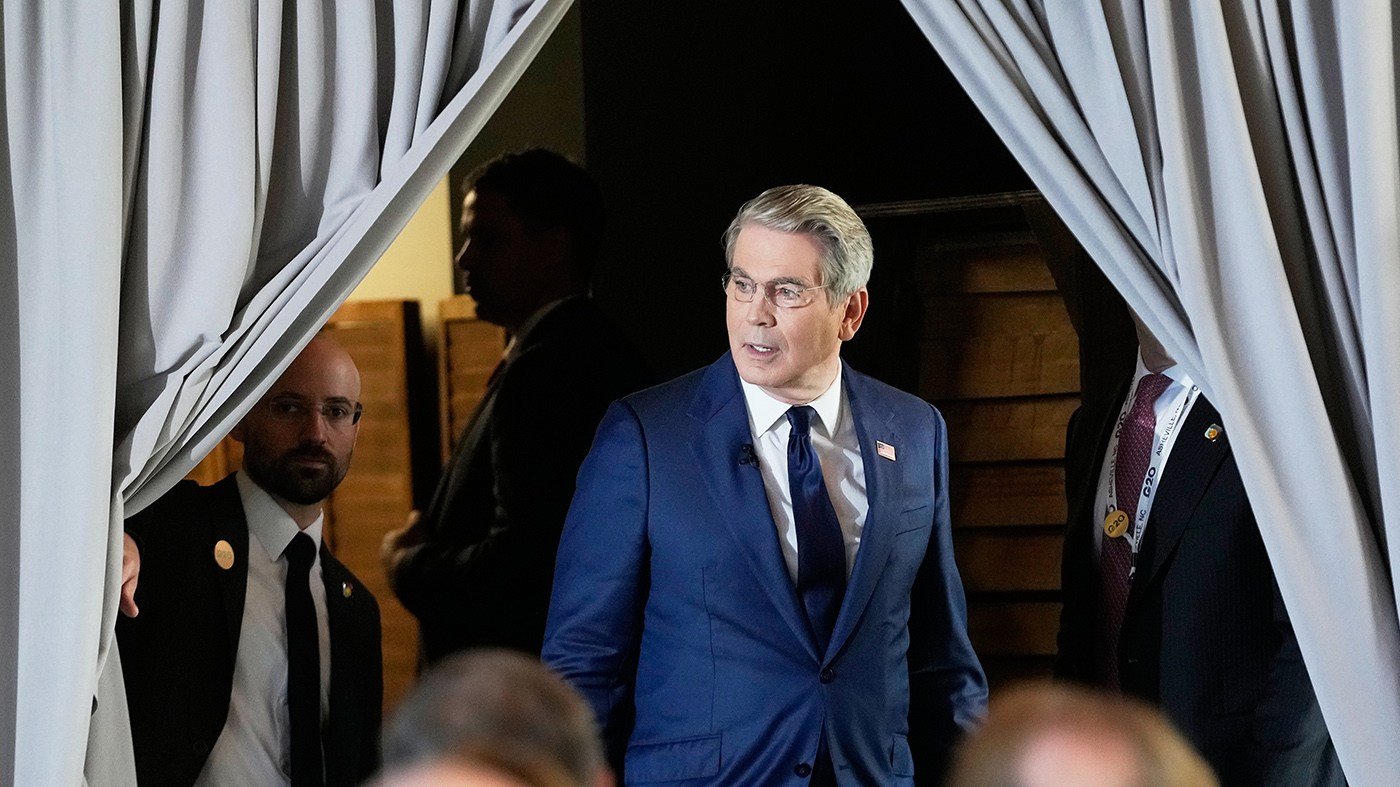
Asheville, N.C. — Treasury Secretary Scott Bessent hosted finance ministers and central bank governors from the world’s largest economies this week, using the Group of 20 summit to press the Trump administration’s economic agenda on Iran and China. The gathering came as the administration seeks to build a united front on sanctions and trade policy.
In his opening remarks, Bessent argued that the global economy faces risks from "excessive and persistent" trade imbalances, a clear reference to China’s large surplus. He urged countries with significant external surpluses to "remove distortions that constrain domestic consumption," while those with deficits should focus on "domestic savings and fiscal consolidation."
But the Chinese delegation was the lone holdout, refusing to sign on to the statement. Beijing’s finance ministry responded by calling for "genuine multilateralism" and free trade, signaling a sharp divide over the administration’s approach.
Bessent’s Iran push
The summit opened a week after the Treasury expanded sanctions on Iran, targeting nearly 60 entities, individuals, and vessels linked to the regime’s nuclear program, cyber operations, and oil revenue. Bessent made clear he expects allies to choose sides, telling Fox Business’s Larry Kudlow, "Either you are with us, or against us."
He warned that the U.S. is tracking anyone doing business with Iran’s Islamic Revolutionary Guard Corps, saying, "We know where in the British Virgin Islands your accounts are at these trust companies. We know the $100 million houses you have around the world. And we are going to freeze those."
China, Iran’s largest trading partner and primary oil buyer, has criticized the sanctions as escalating tensions. But Bessent insisted there is common ground, noting that both Washington and Beijing agree Iran should not have a nuclear weapon and that the Strait of Hormuz should remain open. He said the two sides have held private discussions on the matter.
Bond market concerns downplayed
Against a backdrop of rising sovereign bond yields in the U.S., France, Japan, and the U.K., Bessent sought to reassure investors. He described the increase in the 10-year Treasury yield as a "growth story" and noted that the yield is "flat" since President Trump took office. He argued that if there were a real problem, investors would be selling U.S. bonds in favor of others, but "we are the best performing market."
Still, the 10-year yield has risen about 17 basis points since Inauguration Day, and the Treasury announced it will double its bond buyback operations starting next week to manage the market. Critics, including investor Stanley Druckenmiller, have called the move market tampering.
AI regulation on the sidelines
Separately, business leaders at a G20 innovation ministerial discussed AI regulation, with some urging a light-touch approach to foster innovation. The administration has signaled it will prioritize American competitiveness in AI, though no concrete policy emerged from the summit.