
New York House candidate Darializa Avila Chevalier did not hold back after two Democrats sided with Republicans this week to pass a resolution denouncing socialism in all its forms. In a sharp rebuke posted on X, Avila Chevalier accused her own party's members of betraying the progressive base by aligning with GOP priorities, including the SAVE Act, which she said could disenfranchise millions of voters.
“Democrats love talking about a ‘big tent,’ but then they vote with Republicans hell-bent on destroying our democracy and stripping Black and brown people of the right to vote,” she wrote. “Today, some Democrats voted with Republicans to bring a resolution condemning democratic socialism to the House floor, and then to pass it. This resolution was aimed squarely at democratic socialists like me, paired with renewed support for the SAVE Act, a dangerous bill that would require a passport or birth certificate to vote and could strip millions of Americans, including Black voters and seniors without birth records, of their right to vote.”
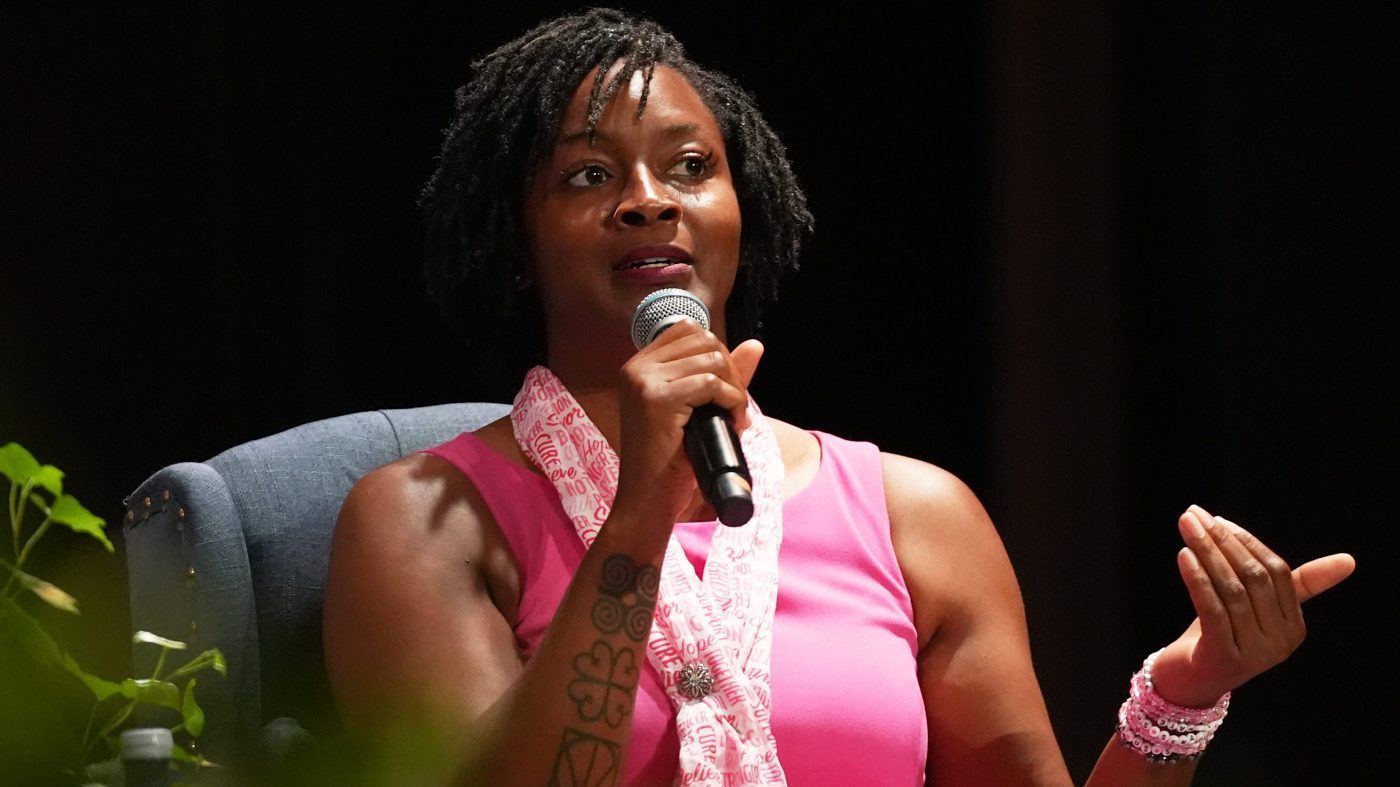
Avila Chevalier, a self-described democratic socialist running in a heavily Democratic district, went on to argue that the party’s willingness to compromise with Republicans on symbolic resolutions undermines its ability to address economic hardship. “Here’s the truth,” she continued. “A big tent doesn’t pay your rent, lower your grocery bill, or take on the corporations bleeding our country dry. Democratic socialism does. Democratic socialism, at its core, is simple: working people deserve power over their own lives — in their wages, their housing, their healthcare, and their communities. That’s not radical. It’s what my neighbors Uptown and in the Bronx ask for every single day.”
Her comments come after the House voted on a rules package that included a broad condemnation of socialism, a move that drew support from nearly all Republicans and two Democrats: Jared Golden of Maine and Marie Gluesenkamp Perez of Washington. The resolution was seen as a political jab at the left wing of the Democratic Party, particularly those who align with the Democratic Socialists of America (DSA), of which Avila Chevalier is a member. The vote also dovetailed with GOP efforts to tie Democrats to socialist policies ahead of the 2024 election.
Avila Chevalier’s response highlights a growing rift within the Democratic Party between moderates who want to distance themselves from socialism and progressives who embrace it as a solution to inequality. Her defense of democratic socialism is likely to intensify debates over the party’s direction, especially as she campaigns on a platform that includes Medicare for All, the Green New Deal, and defunding the police—positions that have drawn both enthusiasm and criticism.
Critics, however, argue that socialism, even in its democratic form, has historically led to economic stagnation and authoritarianism. They point to examples like Venezuela and the Soviet Union, where central planning replaced market mechanisms, resulting in shortages and repression. Proponents of free-market capitalism contend that it has lifted billions out of poverty and fostered innovation, while socialism concentrates power in the hands of bureaucrats, undermining individual freedom.
Avila Chevalier’s allies, though, see her as a champion of working-class interests. They note that her district, which includes parts of Manhattan and the Bronx, faces high costs of living and income inequality, and that her message resonates with constituents who feel left behind by the current system. Her campaign has emphasized grassroots organizing and has rejected corporate donations, positioning her as an authentic voice for the disenfranchised.
The resolution, which passed with bipartisan support, also sparked a counter-resolution from House Democrats, who sought to clarify that they oppose socialism while also criticizing Republican motives. That measure, however, failed to gain traction, underscoring the political sensitivity of the issue. The SAVE Act, which Avila Chevalier linked to the socialism vote, remains a contentious proposal, with Democrats warning it would create unnecessary barriers to voting for minorities and the elderly.
As the 2024 election approaches, Avila Chevalier’s outspoken stance is likely to make her a lightning rod in the primary. Her willingness to challenge party leadership and embrace democratic socialism could energize the progressive wing, but it also risks alienating moderate voters who view such ideology as extreme. For now, she remains undeterred, vowing to continue fighting for a vision of America where “working people have power over their own lives.”