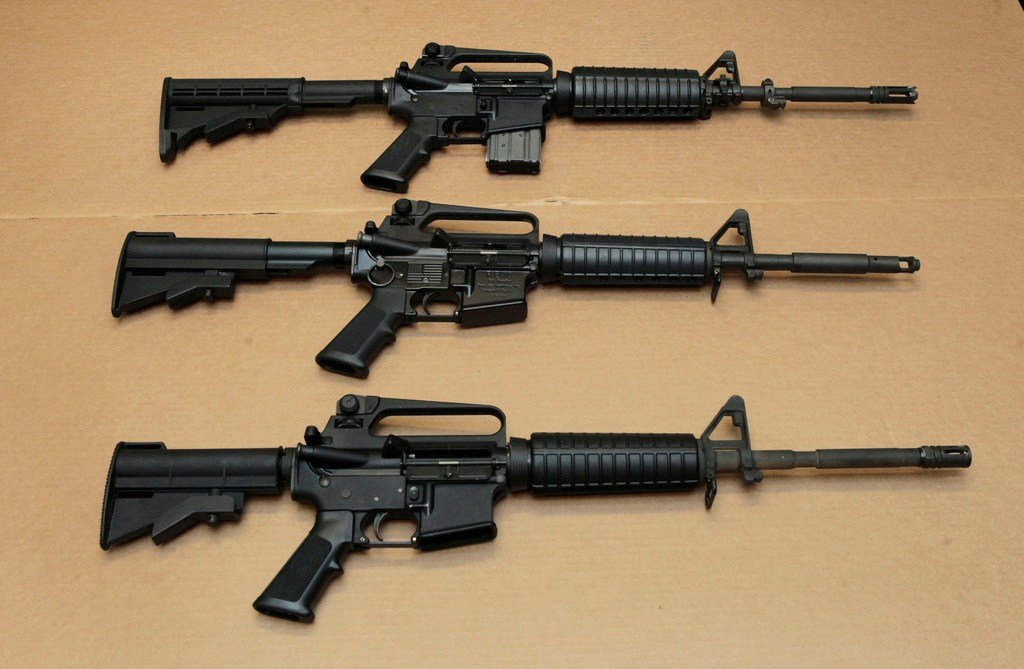
The Supreme Court is set to hear arguments in December in Viramontes v. Cook County, a case that could decide the fate of state and local bans on AR-15 semiautomatic rifles. The challengers argue the rifles are “in common use” for lawful purposes like self-defense, while the governments defending the bans describe them as “weapons of war” unfit for civilian life.
Both sides may be missing a key point: the Second Amendment’s reference to a “militia” actually cuts in favor of protecting AR-15s, regardless of how the debate is framed. That is the central argument in a friend-of-the-court brief filed by the Cato Institute, which urges the justices to look beyond the self-defense versus military utility dichotomy.

The Second Amendment’s text is explicit: “A well regulated Militia, being necessary to the security of a free State, the right of the people to keep and bear Arms, shall not be infringed.” That preamble is unique among constitutional amendments, pairing an individual right with a collective purpose. Gun control advocates have long argued this purpose limits the right to militia service, as Justice John Paul Stevens wrote in his dissent in District of Columbia v. Heller.
But the Heller majority, led by Justice Antonin Scalia, interpreted the militia clause differently. Historically, the militia was composed of “all able-bodied men,” called to duty in emergencies. The “free State” meant a free polity, not the individual states. The Framers saw an armed citizenry as a safeguard against invasion, insurrection, and the rise of standing armies that could threaten liberty. A people trained in arms would be “better able to resist tyranny.”
That last point is critical. The militia was designed to be a check on government power, not a tool of it. A government-controlled militia could not serve that function. The Second Amendment thus protects an individual right for reasons beyond self-defense, including the preservation of a free society.
The Heller court was careful to note that “dangerous and unusual weapons” remain outside the amendment’s protection, and it anticipated the objection that banning military-style arms like M-16s would sever the right from its militia rationale. The governments defending the bans in Viramontes echo that concern, arguing that AR-15s are too military to be protected.
But the historical record offers a clear answer. At the founding, citizens were expected to keep small arms suitable for infantry service and bring them when summoned for militia duty. They were not expected to own artillery or crew-served weapons. The AR-15, a portable semiautomatic rifle, fits squarely within that class. Its main distinction from the fully automatic M-16 is that it is semiautomatic, making it even more suited to civilian ownership.
In deciding Viramontes, the Court should reject an ahistorical divide between protected self-defense guns and unprotected “weapons of war.” The militia clause, far from undermining AR-15 protection, actually strengthens it.
Matthew Cavedon is the director of the Cato Institute’s Project on Criminal Justice.