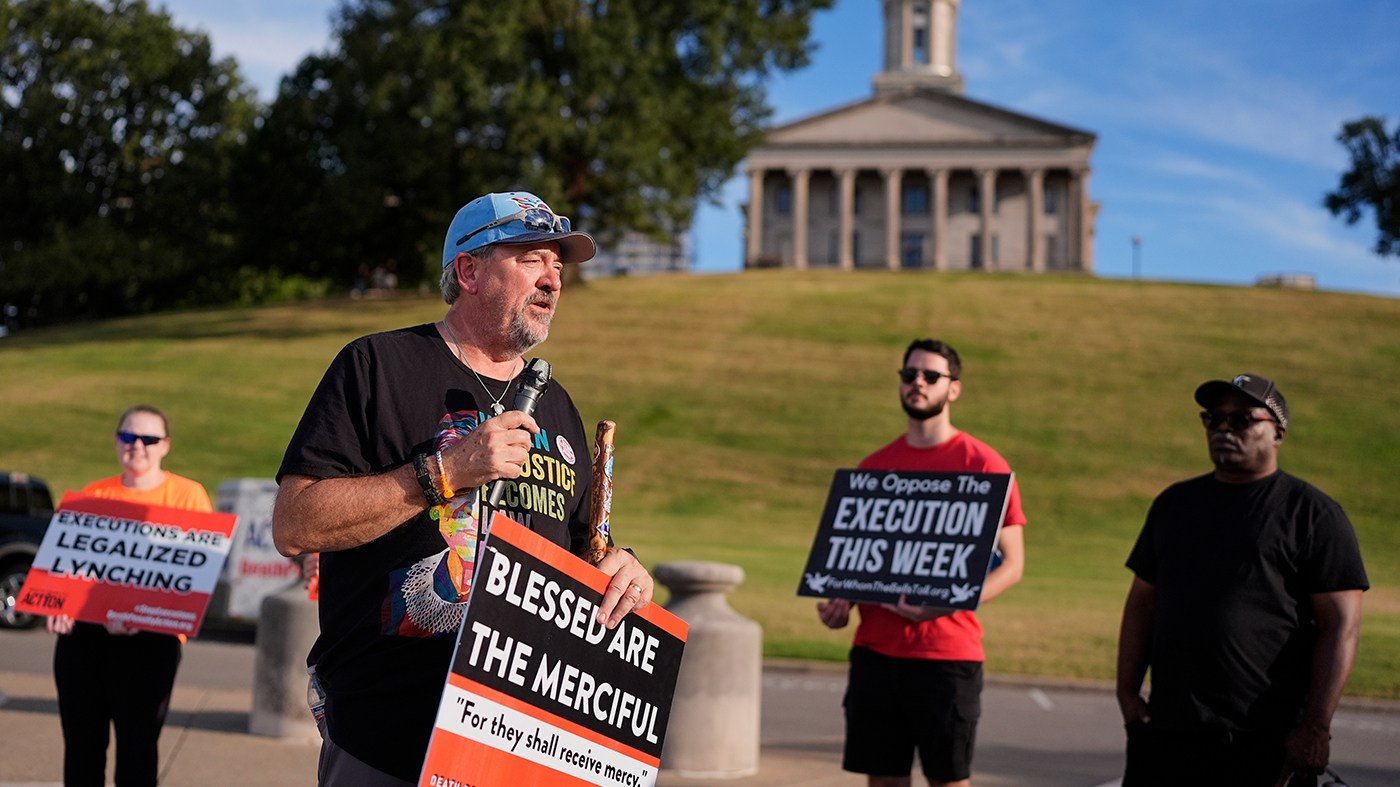
For over a decade, Alabama death row inmate Jeffrey Lee has insisted he does not want to die by lethal injection. Yet that is exactly what the state has scheduled for September 17, after a federal court blocked the alternative method he had chosen—nitrogen hypoxia—due to constitutional defects.
The state's about-face has sparked a legal battle over broken promises and procedural fairness. In 2016, Lee sued to challenge Alabama's three-drug lethal injection protocol, arguing it posed a substantial risk of excruciating pain. Two years later, Alabama offered death row inmates the option to choose nitrogen hypoxia, and Lee accepted. In exchange, he dropped his lawsuit, and the court dismissed it based on the state's explicit commitment: if Lee were to be executed, it would be by nitrogen hypoxia, not lethal injection.
That agreement now lies in tatters. In June, the 11th Circuit Court of Appeals ruled that Alabama's nitrogen hypoxia protocol presented a substantial risk of severe pain and was unconstitutionally cruel. The state has not revised the protocol. Instead, it has moved to execute Lee by lethal injection—the very method he fought to avoid.
Lee's attorneys argue that the state cannot simply reverse course after securing dismissal of his challenge. They contend that Lee reasonably relied on the state's representation, and that executing him by lethal injection would impose an unfair detriment. The state's own execution statute, they note, makes lethal injection available only if nitrogen hypoxia as a method—not just the protocol—is ruled unconstitutional by the Alabama Supreme Court, the U.S. Supreme Court, or the 11th Circuit if certiorari is denied. None of those conditions has occurred.
On July 22, U.S. District Judge Emily Marks sided with the state, ruling that the June decision constituted a change in essential facts. She also cited the victims' interest in timely enforcement of the sentence and warned that blocking lethal injection would delay the execution while the state develops a new nitrogen hypoxia protocol.
But critics say that logic rewards the state's own negligence. The nitrogen hypoxia protocol was flawed from the start; the court ruling merely acknowledged that reality. If Alabama promised an alternative to lethal injection, it should be required to make that method legally sound—not fall back on the method Lee rejected.
This case unfolds against a backdrop of Alabama's troubled history with lethal injections, including multiple botched executions in recent years. That record, Lee's attorneys argue, makes the risk of cruel and unusual punishment especially acute. The state's insistence on lethal injection, they say, is a death penalty bait-and-switch that undermines due process and the integrity of the justice system.
The 11th Circuit's ruling on nitrogen hypoxia has broader implications, potentially affecting other states that have adopted the method. But for Lee, the immediate question is whether Alabama can be held to its word. As Austin Sarat, a professor at Amherst College, wrote, unless Alabama can deliver what it promised Lee, it should not be allowed to put him to death at all.
The case now heads to higher courts, where judges will weigh the state's obligations against the finality of a death sentence. For Lee, the stakes could not be higher: a promise broken, a method feared, and a life on the line.