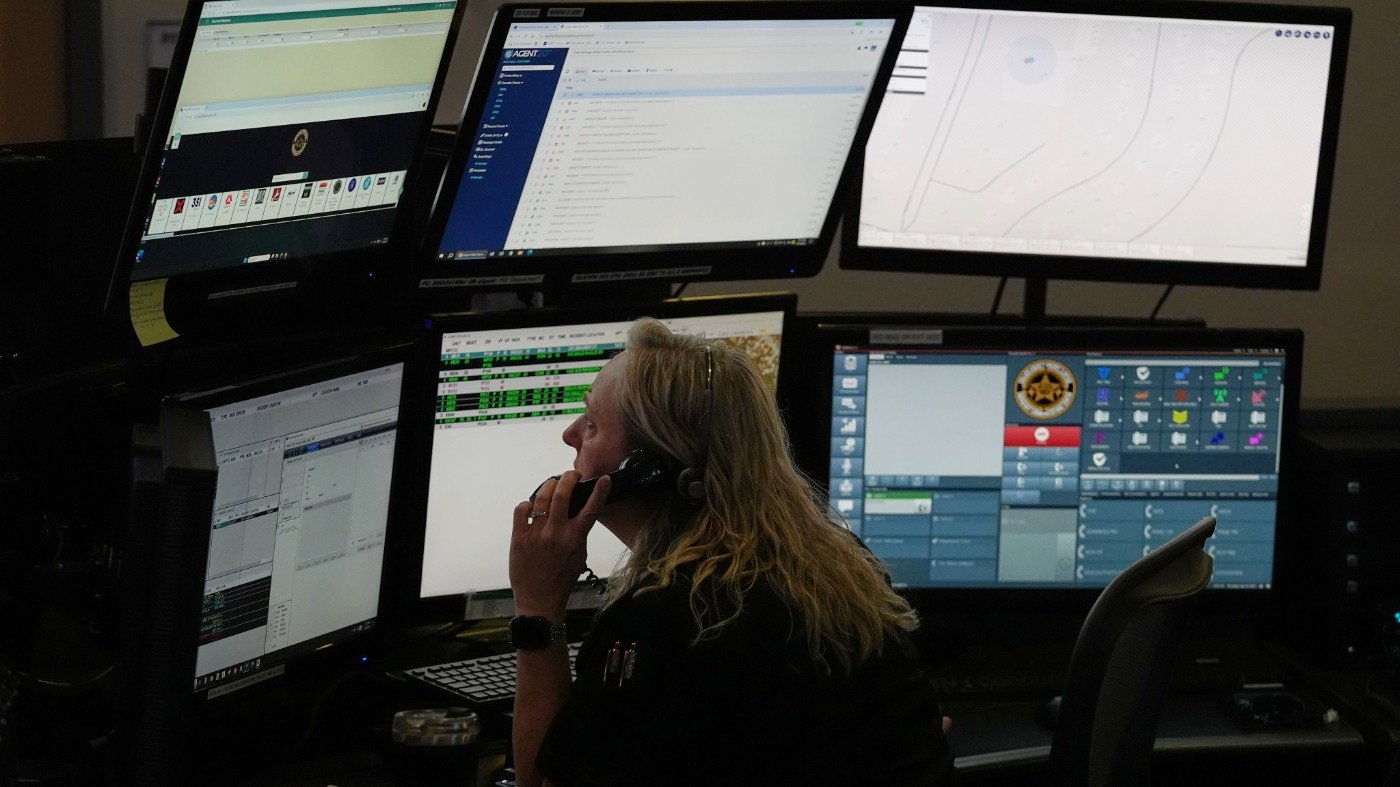
For decades, the men and women who answer America's 911 calls have been classified under federal labor law as administrative workers, lumped in with clerical assistants and receptionists. But a growing movement in Congress, backed by a unanimous Senate vote, seeks to finally recognize them as what they truly are: the first of the first responders.
The Enhancing First Response Act, passed by the Senate on Sept. 10, 2025, would reclassify 911 professionals as "protective service personnel," a designation that carries significant implications for pay, benefits, and mental health support. The bill now awaits action in the House, where advocates are pressing for a vote before the session ends.

The push comes as research highlights the extreme psychological toll of the job. A 2019 incident in Ohio, where a 911 call taker named Tim Teneyck deciphered a coded plea for help from a domestic violence victim posing as a pizza order, illustrates the life-saving creativity required of these workers. But such heroics are often met with inadequate training and support.
According to a study by the University of Chicago's Health Lab, 48% of 911 professionals have handled calls involving kidnappings or hostages, 42% have dealt with nonaccidental deaths, and 37% have been exposed to serious assaults. Three in ten have fielded suicide-related calls. The cumulative trauma is staggering: 911 responders are ten times more likely than the average person to suffer from anxiety, PTSD, suicidal ideation, and depression, and they face double the risk of mental health conditions compared to law enforcement officers.
Yet despite these harrowing statistics, the federal government has done little to address their plight. Rebecca Neusteter, executive director of the Health Lab and a researcher who has traced the 60-year history of the 911 system, attributes this neglect to a root cause: gender discrimination.
Women make up nearly 80% of 911 professionals, a legacy of hiring practices that favored "quieter, better listeners" but also justified lower pay and fewer benefits. This disparity persists today, with the highest-paid 911 professional earning roughly the same as the lowest-paid police officer. The misclassification under the Bureau of Labor Statistics and Office of Management and Budget guidelines directly ties them to other female-dominated clerical roles, rather than to male-dominated first responder positions.
Rep. Norma Torres (D-Calif.), the only former 911 dispatcher in Congress, has spoken of the stigma attached to the job, recalling that a police captain's transfer to a call center was seen as a punishment. Dispatchers report being called "lazy" or "dumb," and some say police officers ignore their radio transmissions, hampering public safety.
Eighteen states, including Washington and Arizona, have already reclassified 911 professionals as first responders, granting them access to pension systems and early retirement benefits. These changes have helped states hire and retain experienced personnel. Now, advocates argue, the federal government must follow suit.
The Senate's unanimous passage of the Enhancing First Response Act came one day before the 24th anniversary of the September 11 attacks, a tragedy that underscored the indispensable role of 911 call takers. The bill would cost the federal government nothing, as it simply changes a classification. "It's about respect," Neusteter said. "These are the people you speak to on the worst day of your life. They deserve to be recognized as the first responders they are."
As the House weighs its next move, advocates are hopeful that the bipartisan momentum will carry the bill to the president's desk. The measure aligns with broader efforts to address worker protections and mental health, and it has drawn attention from lawmakers across the aisle. For the thousands of 911 professionals who answer an average of 450 calls every minute, the change cannot come soon enough.