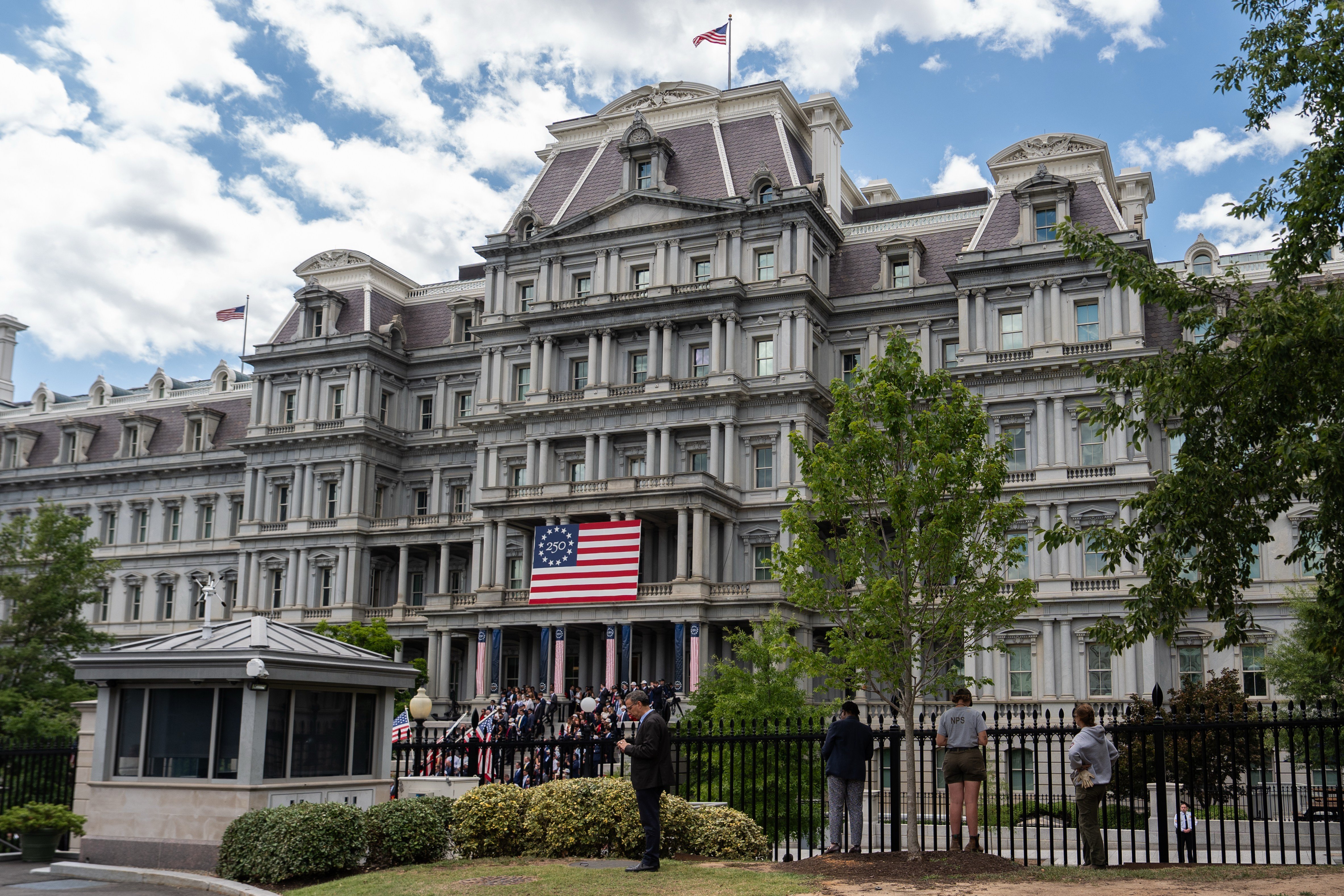
The Trump administration's proposal to paint the Eisenhower Executive Office Building would compromise the historic integrity of the 19th-century landmark, according to a draft environmental assessment released Friday. The report concludes that the building's unpainted granite exterior, with its carefully selected grey and pink tones, is central to its architectural significance.
“The unpainted exterior granite walls, including their natural detail (e.g., grey and pink hues), were hand-selected by the architect and are central to the building's historic character and original design intent,” the assessment states.

The paint job is part of President Trump's broader initiative to beautify the nation's capital, with an estimated cost of at least $7.5 billion. The plan has drawn sharp criticism from preservationists, architects, and historians, who argue that granite should not be painted because paint can trap moisture and cause deterioration over time.
However, Friday's report counters that the proposed white mineral silica paint is highly breathable and weather-resistant, reducing the risk of moisture entrapment. “Mineral silicate paints are advertised as highly breathable and durable wall coatings that are composed of natural minerals and potassium silicate,” the report notes.
In August, a federal judge allowed the administration to conduct paint tests on the building, ruling that preservation groups had not demonstrated that testing would cause “irreparable harm.” The judge emphasized that the ruling applied only to testing, not to the full project.
Trump has previously expressed disdain for the building's current appearance, calling its gray exterior a “really bad color” last year. The Eisenhower Executive Office Building, located adjacent to the White House, was designated a National Historic Landmark in 1969 and added to the National Register of Historic Places and the D.C. Inventory of Historic Sites in 1972.
The draft assessment is open for public comment, and a final decision on the paint job has not been made. The controversy highlights ongoing tensions between the administration's aesthetic ambitions and federal preservation laws. As the administration pushes forward, the fate of the landmark's original stonework remains uncertain.
Critics argue that even with breathable paint, the irreversible nature of painting historic granite sets a dangerous precedent for other federal landmarks. The debate comes amid broader discussions about the maintenance of historic properties in Washington, D.C., and the balance between modernization and preservation.