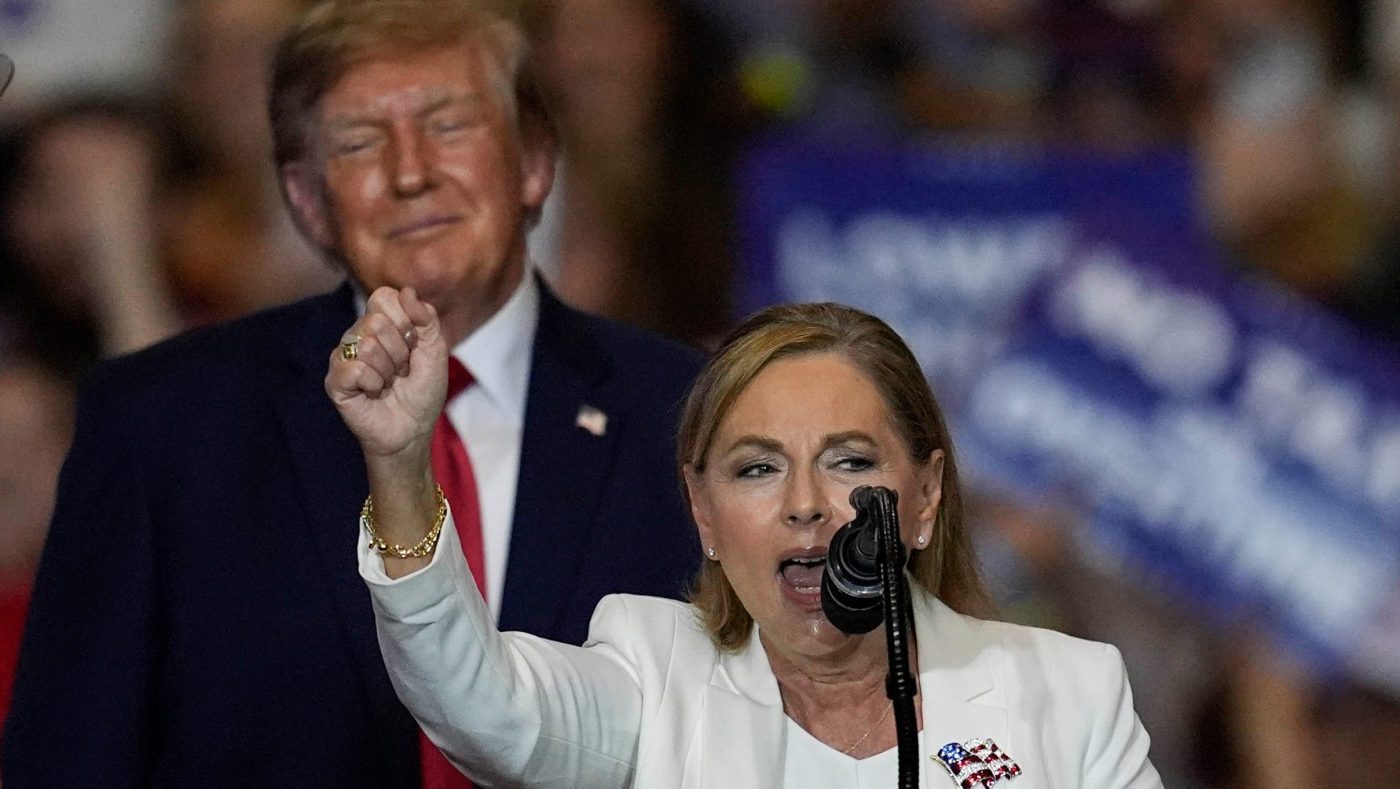
President Trump is set to return to South Carolina on Thursday for a campaign rally in Rock Hill, marking his second visit to the Palmetto State in just over a week. The Republican National Committee confirmed the stop on Monday, underscoring the president's intense focus on tightening Senate contests in the final days before the midterm elections.
Last week, Trump appeared in Clemson to support Senator Darline Graham, the Republican incumbent locked in a surprisingly competitive race against Democrat Annie Andrews. That visit was part of a broader effort to energize the GOP base in a state long considered safely Republican, but recent polling has shown the race tightening.
The Rock Hill event is strategically positioned to reach voters in the Charlotte, North Carolina, media market, given the city's proximity to the state line. That geographic advantage means Trump's remarks will likely also be aimed at boosting Republican Senate nominee Michael Whatley, who is facing former North Carolina Governor Roy Cooper, a Democrat, in a race that has drawn national attention.
Trump campaigned for Whatley on Tuesday in Greenville, North Carolina, signaling the White House's concern about both seats. The Cook Political Report, a nonpartisan election forecaster, recently shifted its rating for South Carolina's Senate race from “likely Republican” to “lean Republican.” North Carolina's contest is currently rated “likely Democrat,” a reflection of Cooper's strong standing in a state that has trended purple in recent cycles.
The dual-track strategy highlights the president's willingness to invest political capital in races that were once considered safe, but now appear more volatile. With control of the Senate hanging in the balance, every seat matters, and Trump's travel schedule reflects that urgency.
Thursday's rally is part of a whirlwind final week of campaigning. Trump is also scheduled to visit Mississippi on Monday, Texas on Tuesday, Ohio on Wednesday, and Florida on Friday, with an additional stop in Iowa on Sunday. The president's itinerary is designed to maximize media coverage and rally turnout in key states, even as some races remain stubbornly close.
The Rock Hill appearance also comes as the White House juggles foreign policy challenges, including tensions with Iran and ongoing scrutiny of Trump's approach to Russia. But for now, the president's focus is squarely on the midterms, where Republicans hope to reclaim the Senate and expand their House majority.
Political analysts note that Trump's repeated visits to states like South Carolina and North Carolina are a double-edged sword. While they can boost enthusiasm among the base, they also risk alienating moderate voters who may be weary of the president's polarizing style. Still, with Election Day just days away, the Trump campaign is betting that high-octane rallies will make the difference in razor-thin contests.
Both Graham and Whatley have embraced Trump's backing, appearing with him at joint events and touting their alignment with his agenda. Their Democratic opponents, meanwhile, have sought to tie them to the president's more controversial policies, including his handling of the economy and international affairs.
As the clock ticks down, the Rock Hill rally is expected to draw thousands of supporters, many of whom will cross the border from North Carolina to hear the president speak. The event is likely to be a final push for undecided voters in both states, with the outcome of the Senate majority potentially hinging on these two races.