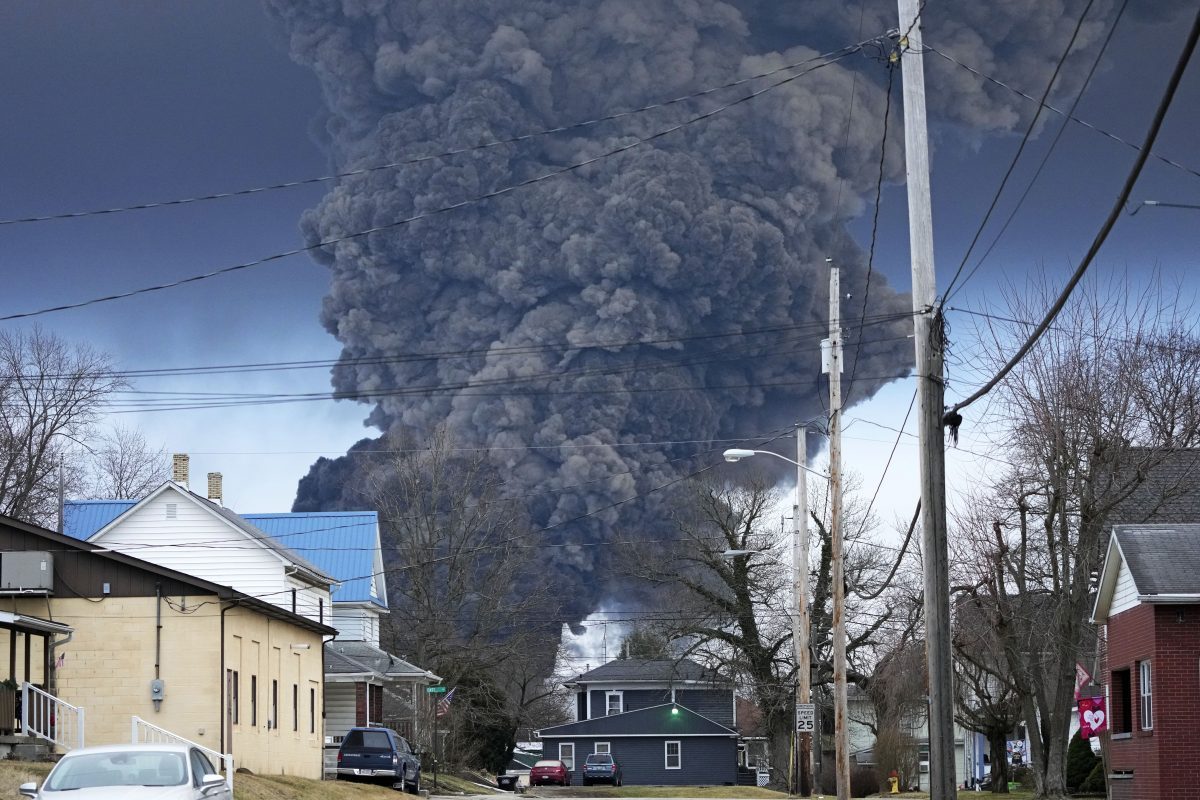
Months after the Norfolk Southern derailment and chemical burn in East Palestine, Ohio, residents were told by their own attorneys that the environmental data didn't support long-term health concerns. But a previously undisclosed report from the lawyers' own expert paints a far more alarming picture, according to documents obtained by NewsNation.
Stephen Petty, an industrial hygienist specializing in exposure warnings, was hired by class-action attorneys to test soil and water in the aftermath of the February 2023 disaster. His findings—never shared with the residents he was supposed to represent—show elevated levels of dioxins and polycyclic aromatic hydrocarbons (PAHs), some of the most carcinogenic substances known, exceeding EPA cancer screening thresholds.

“Somewhere between 50% and 70% of the data points, whether they be for dioxins or PAHs, exceeded screening levels” for cancer, Petty told NewsNation. “There is a problem there.” He emphasized that the levels require further analysis and remediation, directly contradicting the narrative that the area is safe.
Independent expert Scott Smith, who tested on his own, corroborated Petty's findings. “It's astounding in that it was suppressed,” Smith said. “Forty-nine percent of the testing exceeds the EPA cancer screening level. Seventy percent of Stephen Petty's data and analysis shows polycyclic aromatic hydrocarbons above the EPA cancer screening level.” Smith's own data aligns with Petty's, he said.
Residents say their lawyers kept the results secret to push the $600 million settlement with Norfolk Southern. East Palestine resident Linda Murphy shared an audio recording from a meeting where attorneys stated, “The data is nowhere near as bad as we thought it was going to be,” and that the chemicals didn't persist enough to cause long-term health effects. Another resident, Austin Druckenbrod, said lawyers dismissed Petty and Smith as “hacks” who didn't know what they were talking about.
While withholding Petty's report, the attorneys enlisted Dr. Arch “Chip” Carson, a toxicologist, to record a video reassuring residents that “the levels that people were exposed to in the community were so small that we don't expect any kinds of cancers or health effects.” Petty called such claims “factually false” and accused those making them of “flat out lying or are wrong.”
Mindy Bish, an attorney now representing residents trying to exit the settlement, noted that cancers are emerging in the community. “Arch Carson told everyone that there was, that he would expect no cancers as a result of this exposure. No cancers. And there are cancers developing almost every week in East Palestine and someone dying of cancer almost every month,” Bish said.
The suppressed report adds to growing scrutiny over disaster response and legal accountability. As residents grapple with the implications, the case highlights broader concerns about transparency in class-action settlements and the handling of environmental health risks. Similar issues have emerged in other contexts, such as federal inaction on scams and local climate action, where communities face systemic hurdles in seeking justice.
Norfolk Southern has maintained that its own testing shows safe conditions, but the withheld expert data raises serious questions about what residents were not told. The new legal efforts to rescind the settlement could force the release of all related documents, potentially reshaping the outcome for a community still fighting for answers.