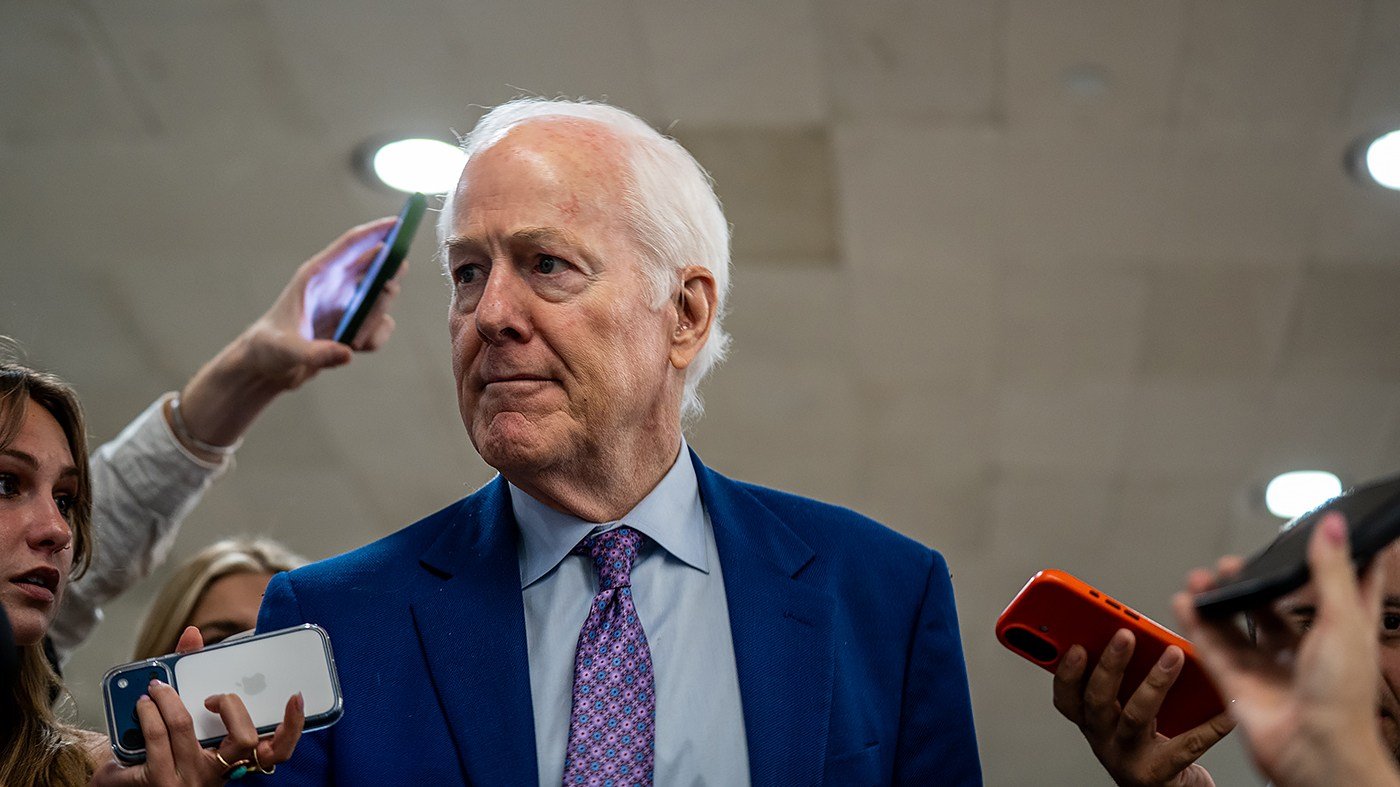
Senate Democratic Leader Chuck Schumer (N.Y.) declared on Wednesday that Democrats will press for an immediate end to U.S. military involvement in Iran, warning that if necessary, they will use their control over federal spending to force a withdrawal. Speaking at the Democratic Senatorial Campaign Committee headquarters, Schumer invoked the constitutional “power of the purse” as a check on a president who acts without congressional approval.
“We are going to end the war,” Schumer said. “We have some Republicans already who have joined us in ending the war, and the Founding Fathers had the power of the purse as one of the ways of deterring a president who does war without the consent of the American people.” His comments signal a hardening Democratic stance as the conflict continues without a formal authorization for use of military force (AUMF).

The push comes as four Senate Republicans have previously sided with Democrats on a war powers resolution that would direct President Trump to withdraw troops from hostilities against Iran absent explicit congressional approval. Those Republicans — Thom Tillis (N.C.), Susan Collins (Maine), Lisa Murkowski (Alaska), and Rand Paul (Ky.) — voted to advance the measure when it last reached the floor.
Notably, Sen. Bill Cassidy (R-La.) had supported a similar resolution in June but reversed course in late September after a heated private confrontation with Trump. Cassidy ultimately voted against the measure following a huddle with Senate GOP leaders in the Mansfield Room, underscoring the political pressure Republicans face on the issue.
Even if the Senate passes a war powers resolution with the force of law, Trump could veto it, and Democrats lack the two-thirds majority to override. That reality has shifted Democratic strategy toward funding as the primary lever. The White House requested nearly $70 billion in emergency Pentagon funding in June, but that request has stalled amid intense Democratic opposition. The annual defense appropriations bill is likewise stuck.
Sen. Brian Schatz (D-Hawaii), the incoming Senate Democratic whip, has made the connection explicit. “My own view is that if the war is over, then the opportunity for bipartisanship on defense authorization and defense appropriations is there,” he said. “I think if the war’s not over it’s going to be extremely difficult.”
Democrats are threatening to block both the National Defense Authorization Act and the defense spending bill as long as U.S. forces remain engaged in Iran without a new AUMF. This tactic would put the onus on Republicans to either force a vote on ending the war or risk a government shutdown over defense funding.
The standoff has broader political implications. Schumer’s aggressive posture could energize progressive and anti-war voters ahead of the next election cycle, while also testing Republican unity on national security. Some GOP senators, especially those in competitive states, may face pressure to break with the president.
As the debate heats up, Schumer’s leadership remains secure, as he has expressed confidence in retaining his post. Meanwhile, the Democratic strategy of linking defense funding to war authorization could reshape the legislative agenda, potentially delaying other priorities. The coming weeks will reveal whether the threat of the purse is enough to force a change in course.