Earlier this summer, while touring the National Galleries of Scotland, I came across a portrait of Sean Connery. The accompanying text noted his seven films as James Bond, but also candidly acknowledged his sexist remarks, including his infamous defense of hitting women. It was a model of balanced historical portrayal—acknowledging both the talent and the flaws.
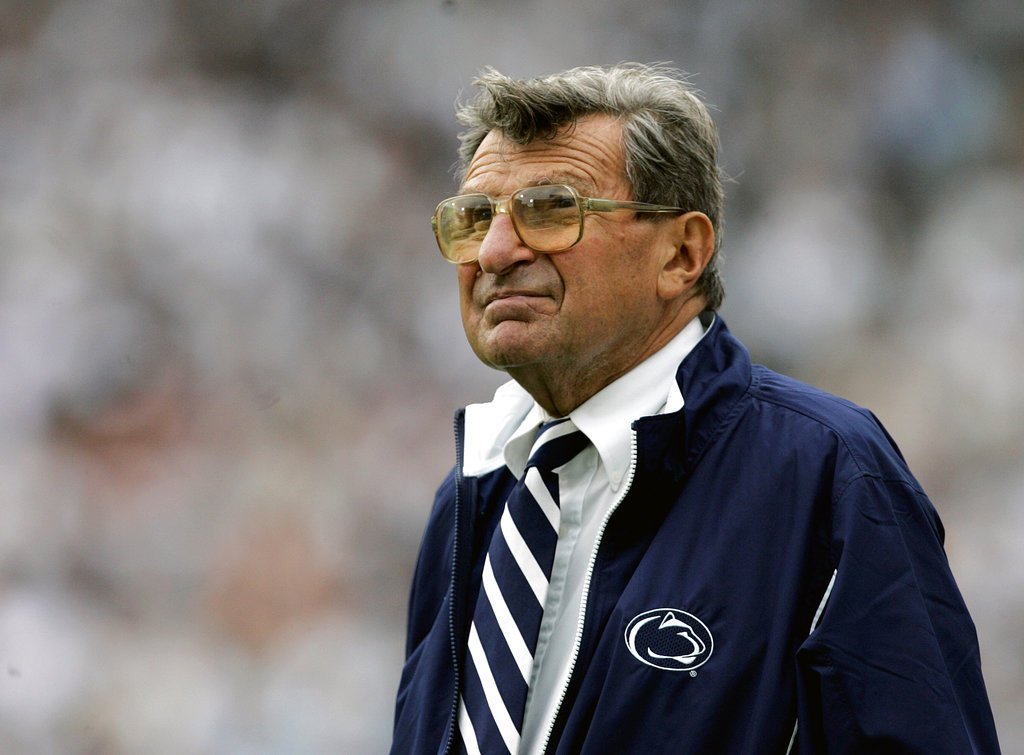
That kind of nuance seems foreign to American public discourse, where figures are often reduced to heroes or villains. We either whitewash or cancel, leaving little room for honest reckoning. This binary is now playing out in the controversy over a new exhibit at Penn State's sports museum, dedicated to legendary football coach Joe Paterno.

The exhibit, part of the "Paterno Family Football Experience Room," features Paterno's desk, a Wheaties box, and a timeline of his six-decade career. But it conspicuously omits the scandal that ended it: the 2011 arrest of his longtime assistant, Jerry Sandusky, on dozens of counts of child sexual abuse. In 2001, another assistant witnessed Sandusky raping a boy in the shower and reported it to Paterno, who passed the information up the chain but never contacted police. A later investigation by former FBI director Louis Freeh revealed Paterno had been informed of a similar allegation in 1998.
None of this appears in the exhibit. It's a sanitized version of history, a whitewash. New coach Matt Campbell praised the exhibit, saying, "It means the world to me to understand our history." But visitors will not understand the full history—the very reason Paterno's career ended in disgrace.
This selective memory is reminiscent of authoritarian regimes that airbrush inconvenient pasts, or of recent efforts by Trump and his allies to remove panels about George Washington's enslaved workers at the President's House in Philadelphia. The pattern is troubling: we cannot hold two truths simultaneously.
Paterno was indeed a brilliant coach, winning 409 games and building a program of integrity. But he also failed to protect children. As he said upon retirement, "I wish I had done more." The exhibit could have been an opportunity to explore that contradiction, to let viewers grapple with his legacy in full. Instead, it trusts no one with the uncomfortable facts.
Nor does the opposite impulse—cancellation—offer a path forward. Calls to remove or rename the exhibit would also erase history, just as whitewashing does. Sandusky's victims deserve acknowledgment, but that doesn't mean obliterating Paterno's memory. The answer lies in context.
Penn State should bring back the seven-foot, 900-pound bronze statue of Paterno, removed from Beaver Stadium in 2012, and place it in the exhibit with signage explaining why it was taken down: at least ten boys were sexually abused under Paterno's watch. The statue currently sits in a secret location—a cowardly choice. Let's see it, alongside the full record of his life, good and bad. Let's talk, let's learn. That would truly honor our history.