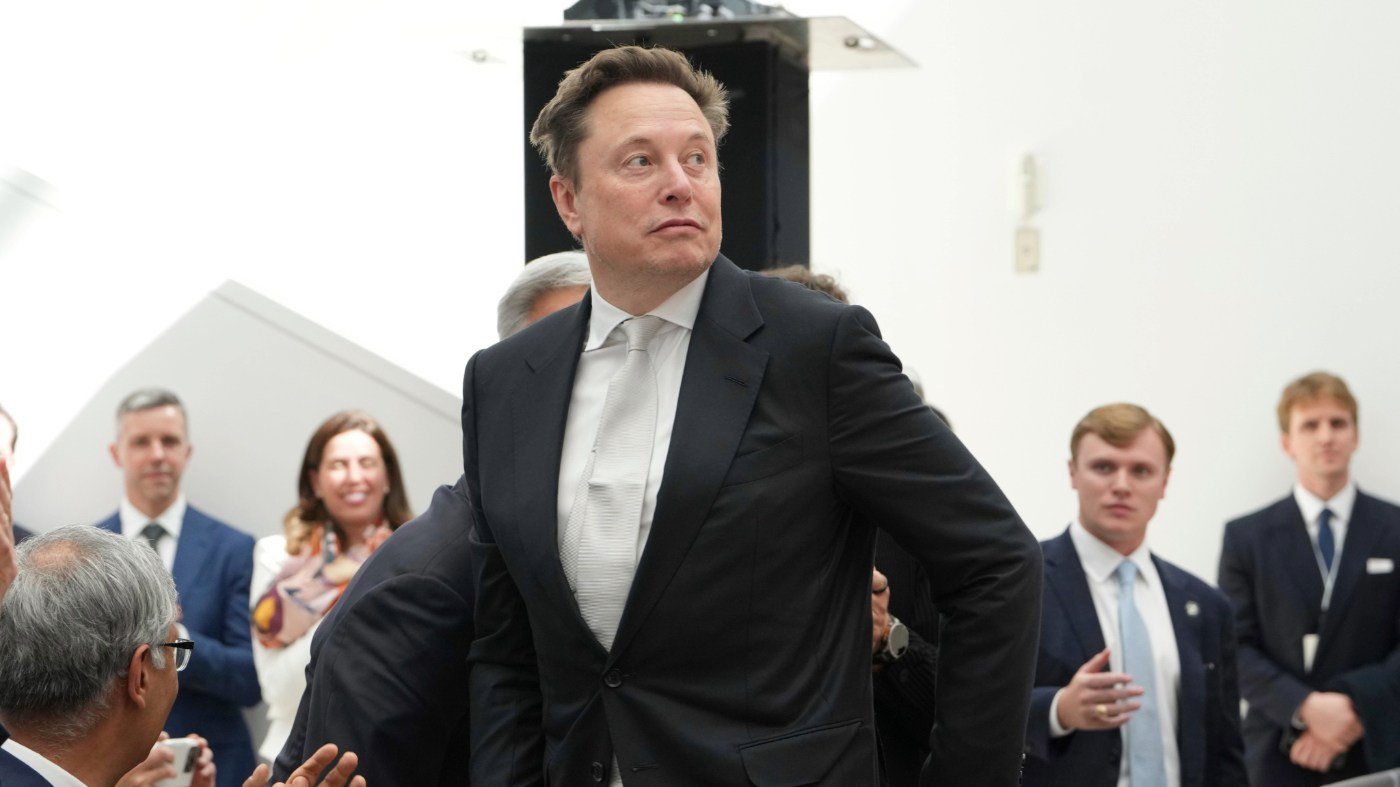
In Alexandre Dumas's swashbuckling tales, the Musketeers fought with swords against Cardinal Richelieu, bound by the motto "one for all and all for one." Today, a fifth Musketeer—Elon Musk—has traded the blade for a balance sheet that approaches a trillion dollars. That wealth, equivalent to the GDP of the world's 23rd-largest economy, places him among the most powerful figures in America, arguably eclipsing the president's influence.
Musk's political clout is most visible in the electoral arena. Ahead of the November midterms, he is pouring close to half a billion dollars into Republican campaigns, dwarfing all other major donors. Should those candidates prevail, his sway over policy and party leadership will only deepen. He is a frequent White House visitor, recently honored by President Trump with an award—though the specifics remain vague.
But Musk's power extends far beyond campaign finance. He is the only individual—including Trump and Russia's Vladimir Putin—who can unilaterally alter the course of the war in Ukraine. By withholding access to Starlink's Starshield service, Musk recently crippled Ukraine's command-and-control systems, particularly its drone operations. Without a viable workaround, Kyiv faces a potentially fatal vulnerability. This leverage could force President Volodymyr Zelensky into a draconian peace favorable to Moscow. Trump has already signaled support for Russia by purchasing millions of gallons of Russian diesel fuel, the proceeds of which are likely to finance the Kremlin's war effort. Cutting off Starlink would be the final blow.
Musk's reach also extends to the Middle East. The ongoing conflict between the Houthis and Saudi Arabia presents an opportunity. With a few billion dollars, Musk could theoretically escalate Houthi attacks on Saudi infrastructure—such as the strike that shut down King Khalid Airport in Riyadh—thereby destabilizing Crown Prince Mohammed bin Salman's regime. Bin Salman already faces simmering resentment from his 2017-2018 crackdown on wealthy families, whom he detained at the Ritz Carlton until they paid what amounted to ransom. That resentment remains a political powder keg.
While the U.S. and UK overthrew Iran's Prime Minister Mohammed Mossadegh in 1953, Musk's financial firepower could achieve a similar outcome in Saudi Arabia. However, such a move would have collateral consequences, including for Jared Kushner's investment fund, which is backed by bin Salman. Still, the possibility exists.
Looking ahead to 2028, Musk's constitutional ineligibility for the presidency—he was born in South Africa—does not bar him from the vice presidency. Any presidential candidate, from either party, might welcome a running mate who could inject $5 to $10 billion into the race. In the event of a president's death or incapacity, the vice president would assume office, though Musk's ineligibility would complicate succession, potentially handing power to the Speaker of the House.
Historically, few Americans have wielded such concentrated power. J.P. Morgan's interventions in the panics of 1895 and 1907 are the closest parallel; even Rockefeller and Carnegie lacked Morgan's combined wealth and influence. Musk, with Tesla and SpaceX, now stands alone in that league.
The implications for international politics are profound. If Xi Jinping or Putin proposed an alliance with Musk, it could upend the Westphalian system of state-based sovereignty, as Musk does not require a state as a power base. He could even purchase a small country. In this scenario, the Fifth Musketeer rides alone, where "one for all" has become "all for him."
As public polls show growing concern about wealth concentration, Musk's power raises questions about accountability. His influence over defense and diplomacy, as seen with technology's role in warfare, is unprecedented. Whether he uses it for good or ill, his capacity to shape events rivals that of any head of state.