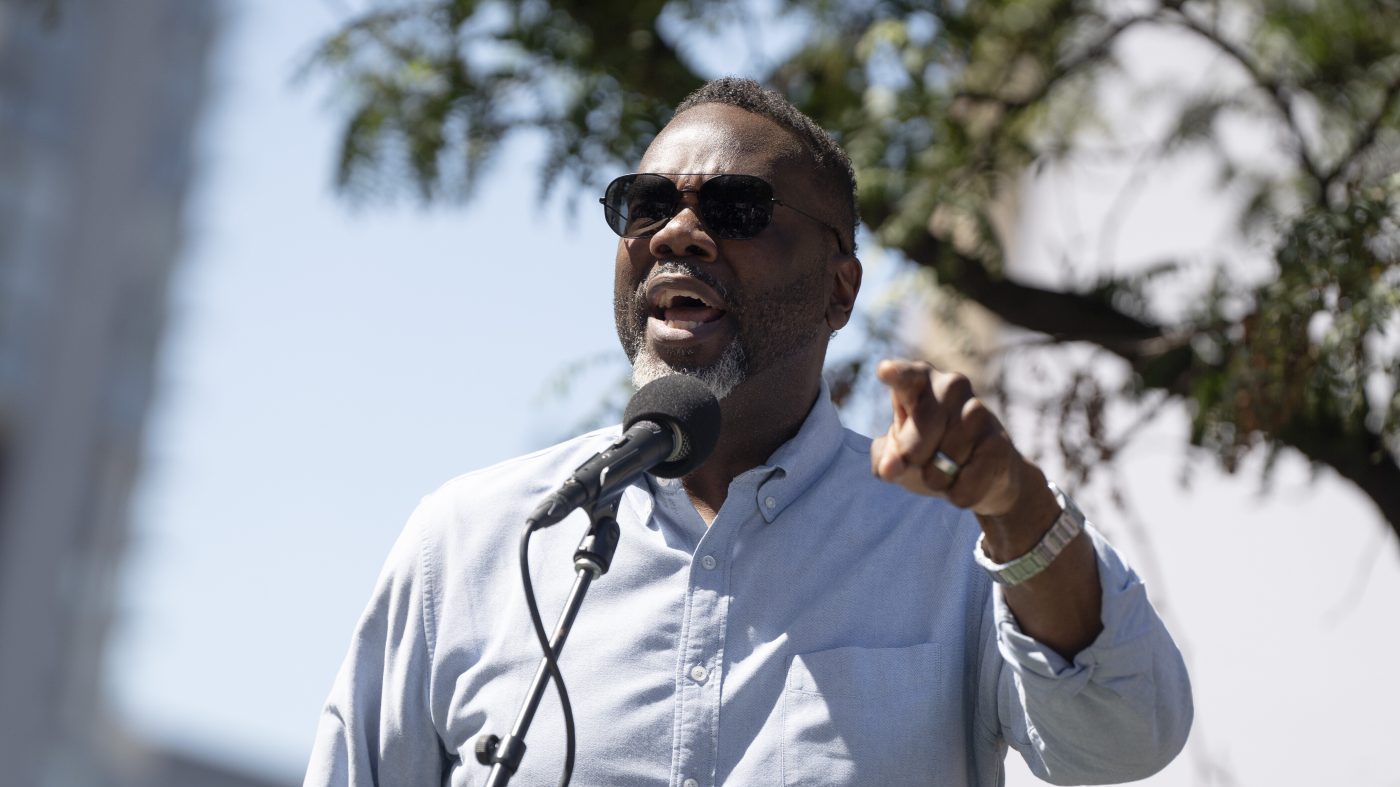
Chicago Mayor Brandon Johnson declared his candidacy for reelection on Sunday, setting up a competitive race in the city's February primary. Johnson, a Democrat and former Cook County commissioner, won the 2023 nonpartisan mayoral election after defeating then-incumbent Lori Lightfoot and a crowded field.
At a rally in Chicago, Johnson framed his campaign around progressive achievements and a vision for inclusive growth. "My name is Brandon Johnson, and I am running for reelection in the greatest fricking city in the world, Chicago," he said, as supporters chanted "four more years."
The 50-year-old mayor emphasized his commitment to working "for the many, and not the few," and argued that "real transformation has never come from the top down but from the bottom up." His remarks underscored the progressive platform that defined his first term.
Economic and public safety record
Johnson touted economic gains during his tenure. According to Bureau of Labor Statistics data, private industry salaries in the Chicago metro area rose 3.9% in June, outpacing the national average of 3.3%. He also pointed to declines in several violent crime categories, citing Chicago Police Department figures.
Compared to 2023, murders are down 33%, sexual assaults down 10%, robberies down 53%, and burglaries down 25%. However, thefts have increased by 3%, and the murder rate is slightly up from last year. These mixed figures are likely to be a focal point in the campaign.
Johnson's record has not been without controversy. In December, Fitch Ratings downgraded Chicago's credit rating after a prolonged budget standoff with the city council. The impasse centered on Johnson's proposal to reinstate a head tax on employers, which he eventually dropped to secure a spending plan.
Federal clashes and fiscal challenges
The mayor also clashed with the Trump administration over its immigration enforcement surge last year. A University of Illinois Chicago study found that the two-month federal operation cost local businesses over $1.2 billion. Johnson has framed these battles as part of his broader fight for Chicago's working families.
Despite his achievements, Johnson faces a tough path to a second term. His challengers include Illinois Secretary of State Alexi Giannoulias, State Comptroller Susana Mendoza, and U.S. Rep. Mike Quigley, all Democrats. The primary is set for February, with a potential runoff in April if no candidate secures a majority.
Political observers note that Johnson's progressive policies have energized his base but also drawn opposition from more moderate factions. The race is shaping up to be a test of whether Chicago voters endorse his vision or seek a change in direction.
As the campaign unfolds, Johnson will need to defend his record while addressing ongoing concerns about public safety and fiscal stability. His ability to rally support among the city's diverse electorate will be crucial.