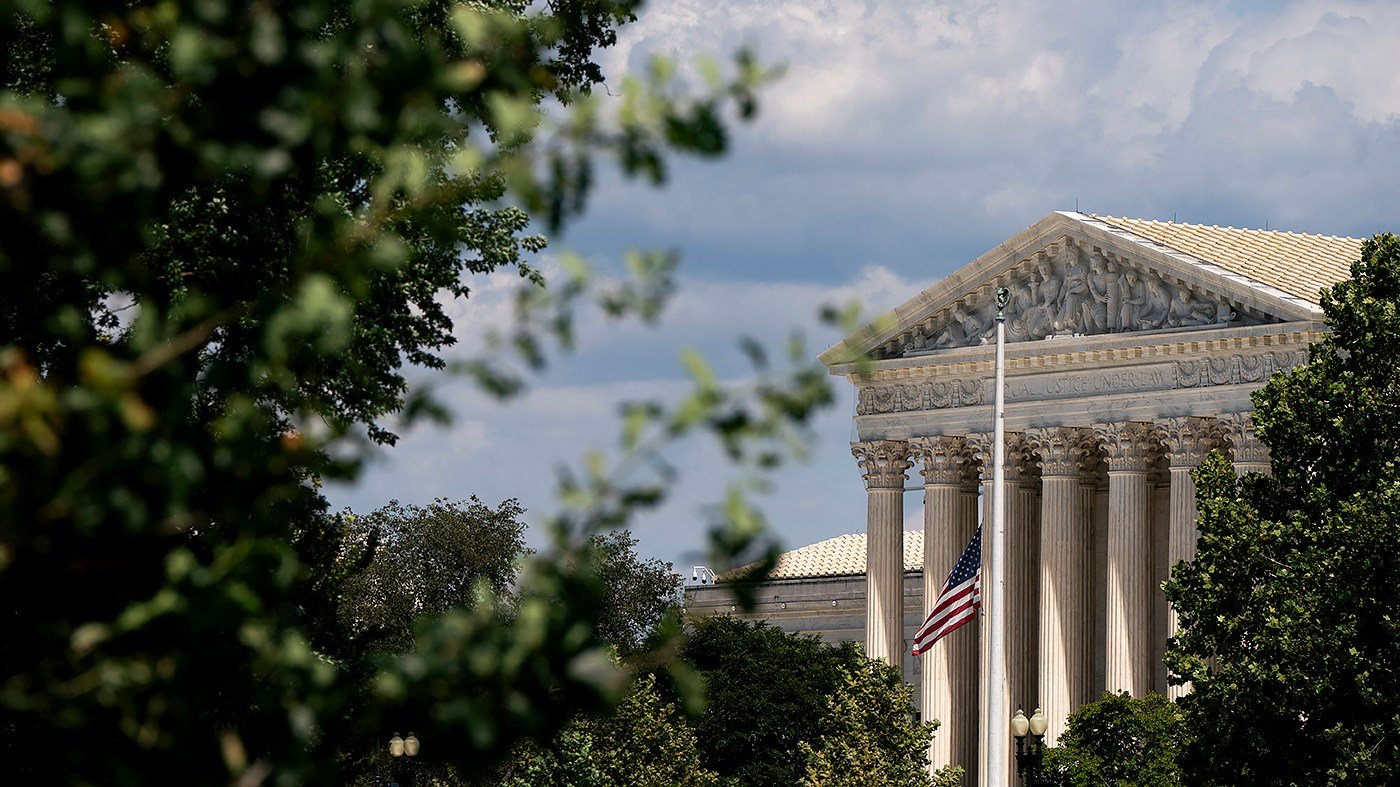
The Republican Party's top congressional fundraising committees filed an emergency appeal with the Supreme Court on Friday, seeking to restore their access to discounted television advertising rates ahead of the November midterms. The move comes after a federal appeals court ruled that only candidates—not political parties or outside groups—are entitled to the lowest available ad prices.
Lawyers for the National Republican Senatorial Committee (NRSC) and its House counterpart, the National Republican Congressional Committee (NRCC), argued in their filing that a divided panel of the Fourth Circuit U.S. Court of Appeals had improperly rewritten long-standing Federal Communications Commission (FCC) guidance that extended the discount to party committees. They warned that broadcasters have already begun rescinding the preferential rates, forcing the committees to either pay more or scale back their planned outreach.
“Applicants have budgeted tens of millions of dollars in ad buys under these rules,” the attorneys wrote. “But because of the Fourth Circuit’s decision, broadcast stations are already rescinding those rates.”
The legal battle centers on the “lowest unit charge” (LUC), a federal statute that requires TV stations to sell airtime to “legally qualified candidates” at the cheapest rate during the 45 days before a primary and 60 days before a general election. The FCC had interpreted that language to include political parties and joint fundraising committees, but a 2-1 ruling last week sided with four Democratic Senate candidates—Sen. Sherrod Brown (Ohio), Sen. Jon Ossoff (Ga.), former North Carolina Gov. Roy Cooper, and Rep. Kristen McDonald Rivet (Mich.)—who argued the agency’s guidance was unlawful and gave Republicans an unfair advantage.
Judge Robert King, a Clinton appointee, wrote for the majority that the statute and campaign finance laws are “clear that neither political parties nor joint fundraising committees with non-candidate members can be entitled to the LUC.” He added that the FCC’s public notice “is plainly contrary to law and cannot stand.”
Republicans, who have long relied on their financial edge to dominate the airwaves, view the ruling as a major setback. The Supreme Court’s decision in June to strike down limits on coordinated spending between candidates and parties had given them new flexibility, and the discounted ad rates were seen as a key tool to stretch their war chests further. The committees’ lawyers argued that the appeals court overstepped its authority and that the ruling unconstitutionally burdens their political speech.
“Every day its judgment remains in effect means fewer voters they can reach,” the attorneys wrote. “And those lost opportunities to speak to voters before election day cannot be recovered after the election.”
The emergency application urges the justices to intervene before the LUC window opens on September 4. If the high court declines to act, the GOP committees will be forced to pay market rates for their ads, potentially hampering their ability to compete in key races.
Heading into the midterms, Republicans hold a significant cash advantage. Combined, the NRSC and NRCC report roughly $148.6 million in cash on hand, compared with about $120 million for their Democratic counterparts, according to federal campaign finance filings. The outcome of this case could determine how effectively each side can deploy those resources in the final weeks of the campaign.