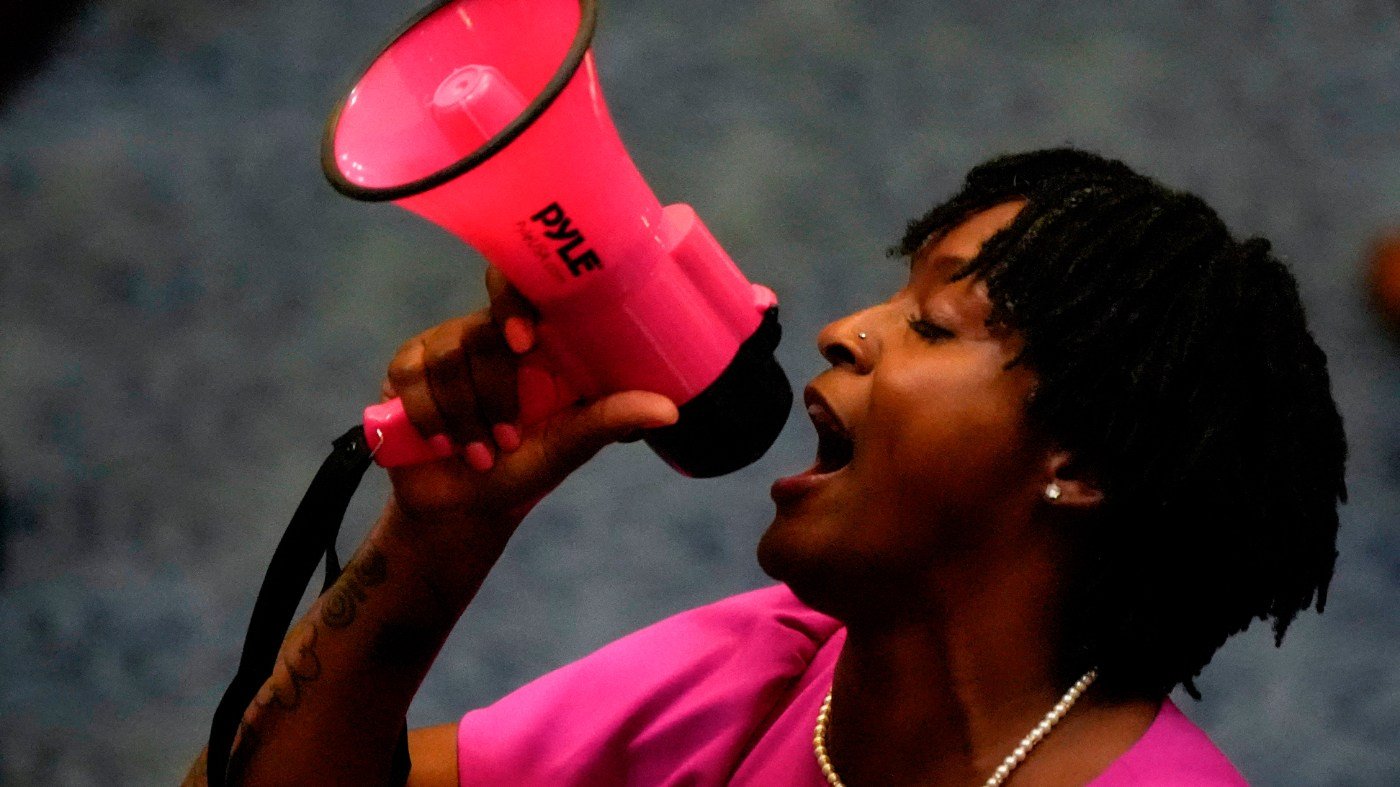
With nearly every primary contest now decided, Black women are on track to make historic gains in the November midterm elections. According to data compiled by Rutgers University's Center for American Women in Politics and the advocacy group Higher Heights, 77 Black women have secured ballot spots for the U.S. House, Senate, governorships, and other statewide offices. The overwhelming majority—71—are Democrats.
This wave of candidacies marks a significant milestone in American political representation. Forty-four Black women—41 of them Democrats—have won nominations for the U.S. House across 20 states and the Virgin Islands. That number already exceeds the 29 Black women currently serving in the House, including two nonvoting delegates. All current Black women in Congress are Democrats.
Senate and Gubernatorial Races
In the Senate, four Black women Democrats have been nominated in Florida, Illinois, Oklahoma, and Tennessee. Currently, two Black women serve as senators, representing Delaware and Maryland. Meanwhile, three Black women—two Democrats and one Republican—are running for governor in Georgia, Minnesota, and the Virgin Islands. No Black woman has ever been elected governor in U.S. history, so any victory would be a first.
Beyond these top-ticket races, 26 Black women are on the ballot for other statewide offices across 16 states. This broad field reflects a deepening bench of Black women seeking executive and judicial roles at the state level.
Overcoming a Legacy of Exclusion
The surge in candidacies comes against a backdrop of centuries of systemic barriers. As Donna Brazile, a former Democratic National Committee chair and ABC News contributor, writes in her analysis, Black women have had to fight both racism and sexism to reach this point. Brazile, who grew up in Louisiana, recalls the era of segregated schools and the persistent denial of educational and economic opportunities for Black Americans.
“A mind is a terrible thing to waste,” she notes, quoting the United Negro College Fund’s motto. Yet for generations, Black people were denied the chance to fully develop their talents. Teaching enslaved people to read was illegal in most Southern states, and after emancipation, Black children were often forced into low-wage labor. Even after the Supreme Court’s 1954 Brown v. Board of Education ruling, segregation persisted in many Southern schools well into the 1970s.
Black women also had to wait for the franchise. The 19th Amendment in 1920 granted women the vote, but millions of Black Southerners were effectively barred until the Voting Rights Act of 1965. Pioneers like Rep. Shirley Chisholm, the first Black woman elected to Congress in 1968, faced intense discrimination. Chisholm, who ran for president in 1972, famously said she encountered more prejudice as a woman than as a Black person.
Sen. Carol Moseley Braun, the first Black woman elected to the U.S. Senate in 1992, later ran for president and called for removing the “men-only sign” from the White House door. Four years after her bid, Barack Obama became the nation’s first Black president.
Proving Critics Wrong
Brazile, who has held numerous governmental positions but never run for office, writes that Black women have long been told what they cannot do—and have ignored those messages. She points to recent attacks by right-wing provocateur Laura Loomer, who dismissed Florida Senate nominee Angie Nixon, Supreme Court Justice Ketanji Brown Jackson, and several Black women in Congress as unqualified. Brazile argues such insults are nothing new: “If a Black woman succeeds, her success cannot be earned.”
The growing number of Black women candidates is not a sign of sudden capability, Brazile insists. “Our abilities are just finally being recognized.” If elected, these candidates will help fulfill the Constitution’s promise of a more perfect union, bringing diverse perspectives to bear on the nation’s challenges.
As the midterms approach, the potential for record-breaking representation is a story of resilience and determination. For political observers, the data signal a shift in the landscape—one that could reshape Congress and statehouses for years to come.