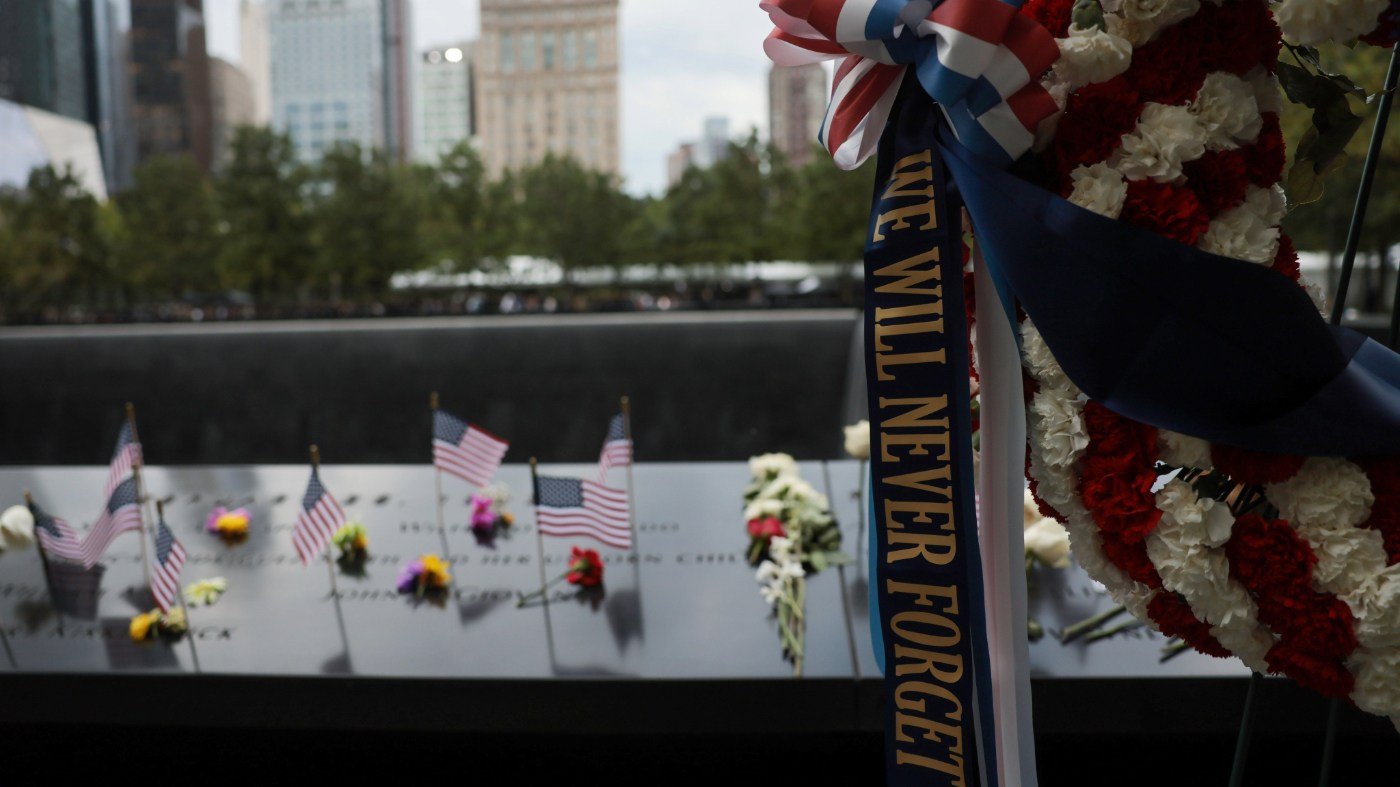
More than two decades after the September 11 attacks, the families of victims are still fighting for the right to sue Saudi Arabia in U.S. courts. Their long-running legal battle may be nearing a turning point, as a federal appeals court weighs whether Congress's explicit 2016 change to the law should allow the case to proceed to trial.
The families allege that Saudi officials aided the hijackers, pointing to the fact that 15 of the 19 attackers were Saudi nationals. While the 9/11 Commission found no evidence that the Saudi government or its senior officials funded al Qaeda, the kingdom had long been a major donor to charities that promoted extremist ideologies. Some Saudi officials also had apparent ties to the attackers.
When the families first sued in 2002, Saudi Arabia invoked sovereign immunity, arguing that the 1976 Foreign Sovereign Immunities Act only permitted lawsuits against countries on the State Department's terrorism list. A federal district court agreed in 2005, and the case stalled for years.
In 2016, Congress stepped in with the Justice Against Sponsors of Terrorism Act, passed by overwhelming bipartisan majorities and overriding President Obama's veto. The law removed the requirement that a state sponsor of terror be on the State Department's list, and it explicitly allowed suits against foreign governments for acts of international terrorism in the U.S., provided the injury was caused by a wrongful act of the government or its officials acting within the scope of their employment.
Central to the case are Fahad al-Thumairy, a Saudi diplomat, and Omar al-Bayoumi, alleged to be an intelligence asset. The families argue that the two men helped two of the hijackers in Southern California, including opening a bank account and finding an apartment. In August 2025, a district court ruled that the lawsuit could proceed, finding sufficient evidence to establish jurisdiction for the claims, though it noted that the families must still prove their case at trial.
Saudi Arabia appealed to the Second Circuit, which heard oral arguments on Oct. 7. The kingdom's lawyer told the court that "the Kingdom of Saudi Arabia has never supported its enemy, al Qaeda, against its ally, the United States." He argued that al-Bayoumi and al-Thumairy were not acting within the scope of their employment, as the law requires, and that no Saudi official directed them to assist the hijackers.
The appellate judges signaled that the legal issues are complex, and those involved do not expect a ruling until next year. But the families and their advocates stress that Congress changed the law a decade ago precisely to give them a chance to test their claims in court. As the case continues, the families—and the nation—are looking for closure through a rigorous and fair legal process.