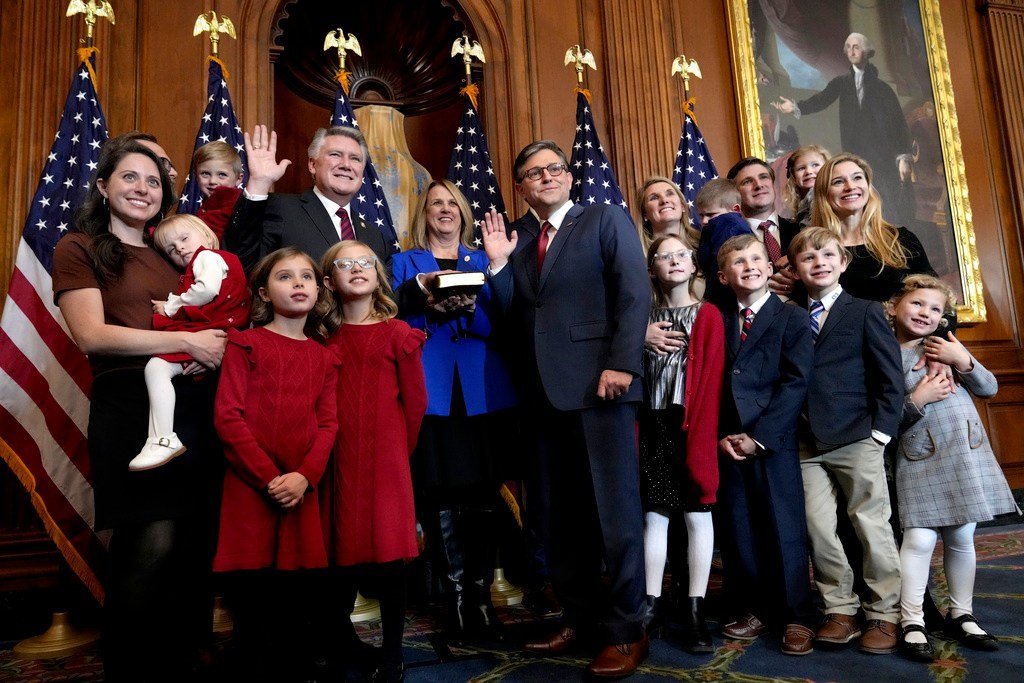
As the new Congress prepares to convene on Jan. 3, what is traditionally a festive day of swearing-in ceremonies is now shadowed by anxiety over potential disruptions. Lawmakers and staff remember all too well the violent attack on the Capitol during the electoral vote count on Jan. 6, 2021, when members were evacuated to a secure underground location for hours as overwhelmed Capitol Police struggled to regain control. While security precautions have presumably been bolstered, the specter of political interference in the midterm results has raised fears that the House could descend into chaos on opening day.
The administration's efforts to influence the midterms have been extensive. The Justice Department recently warned California election officials that they could face federal criminal liability if they count ballots from voters flagged as potential noncitizens. Earlier attempts included pressuring states to redraw congressional maps, imposing new restrictions on mail-in voting, deploying federal agents to polling places, and even seeking to seize voting machines. Most of these heavy-handed tactics have been blocked by courts or state officials, but they signal that the administration may escalate if Democrats gain control of one or both chambers.
The House's Seating Process and Its Vulnerabilities
On opening day, the House Clerk conducts an electronic quorum call using the certified list of members-elect. The Speaker is then elected, followed by the swearing-in of members. If an election opponent files a challenge, that member is asked to stand aside, and the contest is referred to committee. However, any member-elect can also challenge the seating of another member-elect, a procedure that has been used sparingly but could be weaponized.
In 2021, Rep. Chip Roy (R-Texas) objected to seating all members-elect from six contested states, but House Majority Leader Steny Hoyer (D-Md.) countered with a privileged resolution to swear them in, which passed overwhelmingly 371-2. That episode demonstrated that broad challenges are unlikely to succeed, but they can still create significant delays and political theater.
Historical Precedent: The 1985 McIntyre-McCloskey Dispute
One of the most contentious seating battles occurred in 1985, when the House faced the “bloody eighth” district in Indiana. Republican Rick McIntyre had narrowly defeated incumbent Democrat Frank McCloskey by 34 votes, but Majority Leader Jim Wright objected to his swearing-in, citing “facts and statements that I consider reliable.” Speaker Tip O’Neill ordered McIntyre to remain seated, and a task force spent nearly four months investigating before declaring McCloskey the winner by four votes. The episode fueled Republican outrage and helped elevate Newt Gingrich to the speakership a decade later.
Bipartisan Pledge Faces Uphill Climb
In an attempt to head off such disruptions, Reps. Josh Gottheimer (D-N.J.) and Don Bacon (R-Neb.) have circulated a letter urging colleagues to pledge to recognize the legitimacy of certified members-elect and oppose any attempt to delay their seating. However, the effort is unlikely to attract many signatures. Lawmakers are typically reluctant to commit to hypothetical scenarios, and election challenges are a legitimate part of the process under certain circumstances. Yet, as history shows, they can become dangerous partisan weapons that paralyze the House.
The coming weeks will test whether the institution can avoid repeating the turmoil of past disputes. With the shadow of the Jan. 6 attack still looming, the stakes for a smooth opening day could not be higher.